


The question we rarely ask
Imagine a small group of same-aged children in a room together. There is one table set out with art materials, another with junk modelling resources, a floor area with some Lego and dolls, and a cosy corner with a small shelf of books.
What might we see if we had a bird’s-eye view of the room after the children had settled in?
I expect we’d see a couple of children sat at the table drawing. A few more absorbed in cutting, bending and sticking pieces of cardboard. Others might be sitting or lying on the floor building something, others engaged in pretend play with the dolls either on their own or with another child. A few, perhaps, reading.
There might also be a child who is not joining in but watching. There might be a child who moves around from place to place, picking things up and putting them down again. One who does an activity for a couple of minutes, then moves on to the next. There may be some more vocal children, perhaps one or two who direct what others do. A couple might have an argument over a toy. Another still might simply stand at the window looking out.
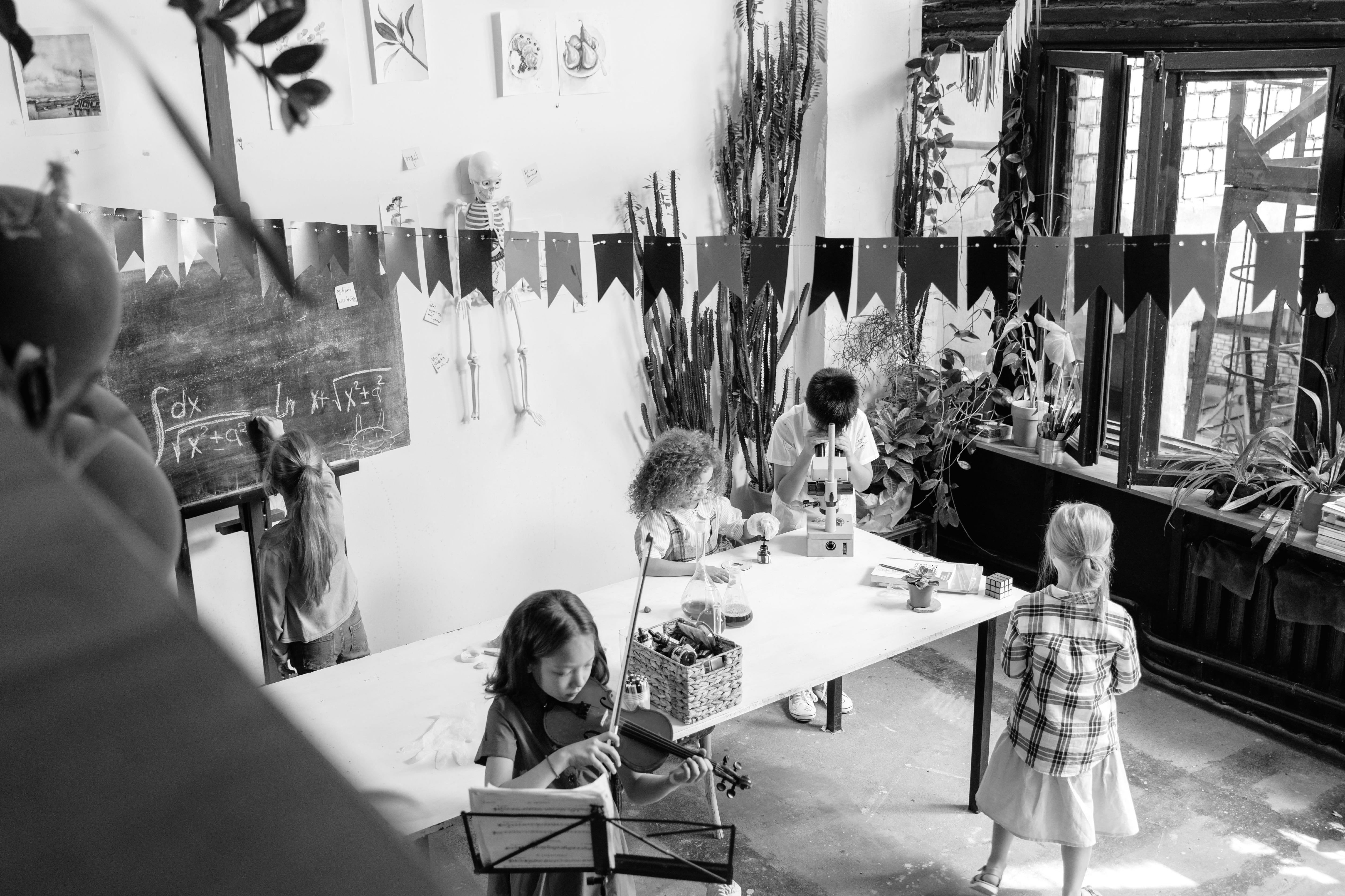
How might we interpret any of these different responses to the same environment?
“He needs to learn to share.”
“She needs to learn to stick with something.”
“He’s struggling to concentrate.”
“She needs to join in.”
“They need more structure.”
“They’re not actually learning anything.”
“He’s very advanced for his age.”
“She’ll need to catch up.”
Each of these sentences reveals an idea about what a child is.
They reveal how we expect them to use their time, and that we value things like purposeful activity, visible concentration, appropriate social behaviour, sustained engagement, observable learning and adult-defined participation. These are all reasonable things to value if we want children to grow up as functioning members of society.
Yet the value judgements we make about what should be achieved, at what time and to what level can be quite different from one adult to the next. And what happens when we value observable participation more highly than a child’s own way of engaging with the world?
We might watch the same scene and see something quite different: a child negotiating ownership and boundaries, a child experimenting with an idea, a child discovering what happens when a plan fails, a child observing before participating. We might see children regulating their involvement, developing persistence through genuine interest, learning how to negotiate difference, constructing an understanding of the physical world.
The children are the same, the scene is the same, yet now we have a completely different story.
As adults, we constantly ask: What does a child need? What should they learn? How should we raise them? But I wonder what sits beneath those questions and the decisions we take to answer them. Where did our picture of children come from? What do we assume a child actually is?
If we had never been told what childhood was supposed to look like, what might we assume when we simply watched children? I wonder if we can become more conscious of the frame through which we’re seeing them.
The child as “not yet”
When I used to visit young children in nurseries professionally, I often saw examples of very different expectations for the same-aged children.
In many settings, children were given plastic crockery with the reasonable assumption that this was safer for them, given their underdeveloped physical skills. In other settings, children were given china crockery with the equally reasonable assumption that they could and should learn to be safe with it.
In both settings, I was there to meet children who, in some way, were not meeting the adults’ expectations. I might be asked to observe the child who was using the plastic crockery appropriately but was not looking at anybody, or the child who was banging the china crockery and squirming in her chair.
I became curious about what the adults were seeing as problematic and what that said about how we view children. If we expect too little of them, might we overstate our role in supporting them, filling in their gaps, shaping them, preparing them? Yet if we expect too much of them, might we give them behavioural, regulatory, decision-making and performance demands that exceed their developmental capacity?
It seems to me that both examples show how easily the child can be seen in relation to the adult they are going to become.
A child is already a whole person — and still developing
If we take a child in this very moment, it is clear that they do not have the same capacities and capabilities that an adult does. But does that make them less whole as a person? I don’t think many would answer “yes” to this. Yet, if our expectations are out of line with their individual developmental capacities at that stage, might the child experience the answer as “yes”?
This is where the legacy of developmental norms and age-based averages, and the role they have played in shaping our systems, becomes important to consider. As I have explored before, if we pick any aspect of a child that is measurable — be it height, language level or SATs test score — a normal curve of distribution will always include outliers that are higher and lower than the range where most children fall.
Being an outlier is not, in itself, a problem. But the distance from an expected range can have consequences for how a child is understood and what is offered to them.
A child can be a complete human being while still having enormous amounts of development ahead. They have rudimentary equipment that is gradually refined, yet their dependence in earlier stages isn’t deficiency, and their immaturity isn’t failure. Their timeline is something individual and worthy of respect.
The problem, as I see it, is when blanket expectations laid out in our systems meet this individuality — when being unfinished in their development becomes confused with being incomplete as a person.
What might change when we allow “whole” and “developing” to coexist?
No two children unfold in quite the same way
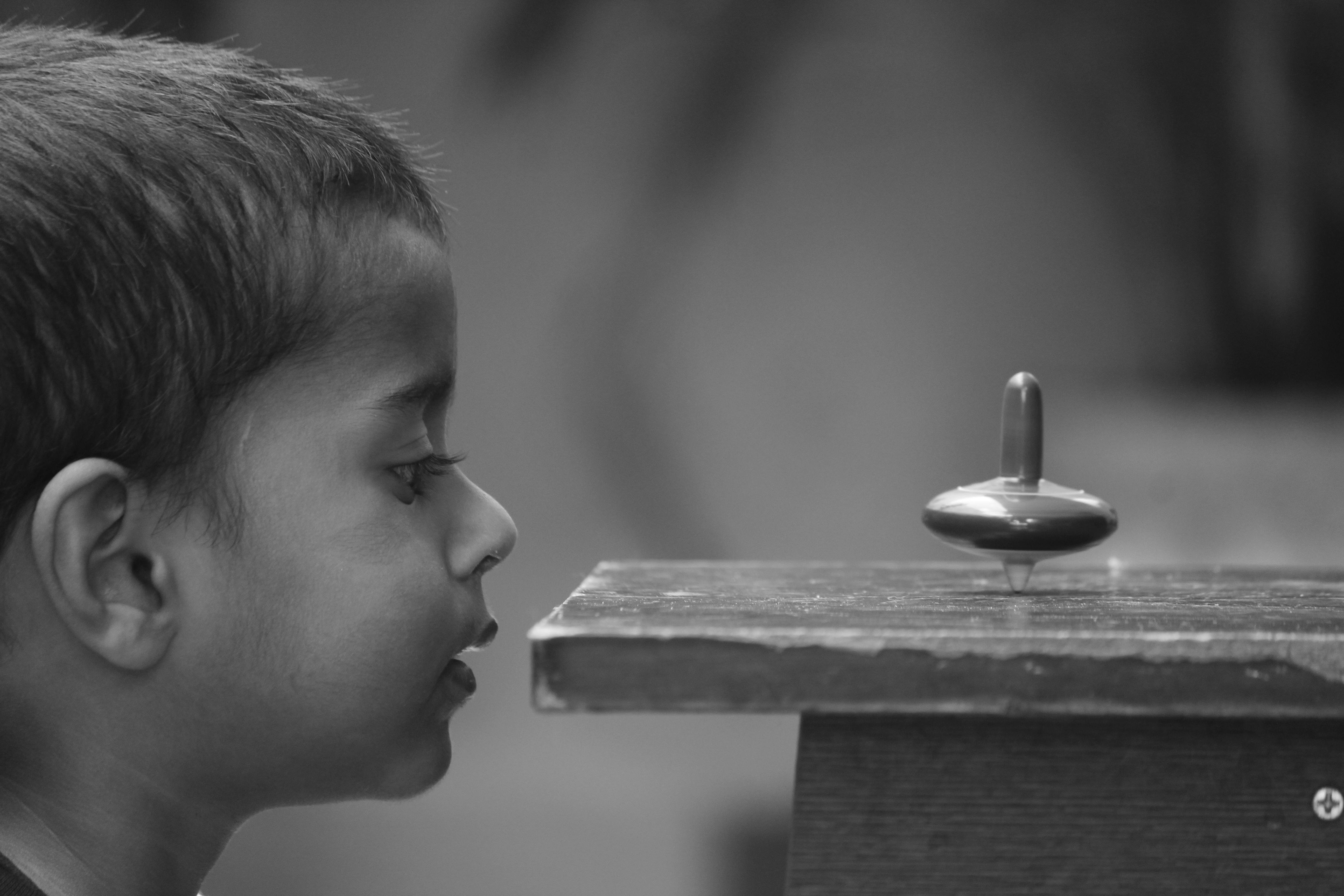
I love talking with other parents about the differences between their children. It’s something no parent could ever disagree with — that each set of siblings, despite usually being raised in the same environment and in the same ways, contains radically different people.
I have one daughter who observes and one who gets stuck in immediately. A friend of mine has one child who spoke in long, articulate sentences at age 3 and another whose words were very difficult to understand at the same age. Another friend has a child who loves to listen to audiobooks for hours and another who hates them. There are endless examples we could list.
Individual children have wildly differing sensitivities, interests, energy patterns, rhythms, strengths, preferences, challenges and ways of relating. Do any of these variations make them any less whole, any less of a participant in childhood? Of course not. Yet depending on which measuring stick we pick up, they might end up feeling like less.
Two people connecting in relationship also differ. We all experience people we immediately resonate with and those we jar with. This happens between two adults, between two children, and between adults and children too. Children inevitably meet and affect us as people, not simply as recipients of our parenting or teaching.
Perhaps, then, the question is not how we make every child fit the same picture of childhood, but whether our picture of childhood has enough room for the children who actually inhabit it.
What does this mean for the way we organise childhood?
If we take seriously the idea that children are unique, developing and whole, what conditions would allow us to stay with this idea and nurture the child accordingly?
Time, patience, relationship, protection, individualised guidance, space, invitations to participate, appropriate challenge and room to become all seem hugely important.
Yet the tension with modern life is laid bare by this list. Instead of space to become, children are often under constant pressure to demonstrate becoming. Urgency, timelines, measurement, comparison, productivity, outcomes — all these things surround children constantly.
Are we giving development enough time to actually unfold, or are we continually asking children to demonstrate where they have got to?
What might children reveal to us about being human?
Here’s the thing I’ve been circling. Surely childhood isn’t only meant to be about preparation for later? What are children here to experience, and perhaps, to teach us or embody in the world?
This might be one and the same thing as what we love and admire about children. Their presence in the moment. Their total absorption. Their unbounded joy and uninhibited expression. Their endless energy for play, and their imagination and creativity within it. Their unguarded perception, their unfiltered insights. Their delight and wonder for the world around them. Their easy humour and infectious smiles and laughter. Their fierce curiosity and drive to discover. Their trust, their compassion, their love. Their deep bonds and loyalty in relationships. Their ever-renewing ability to encounter and overcome challenges. Their fascinating journey of growth and becoming, unfolding so visibly before our eyes.
Are these not wonderful qualities to aspire to for us as adults? We could look across the varied fields of spiritual development, religious practice, creative endeavours, sporting achievements, loved hobbies and meaningful work or endeavour and find that many of us are aspiring to these things, or finding them there.
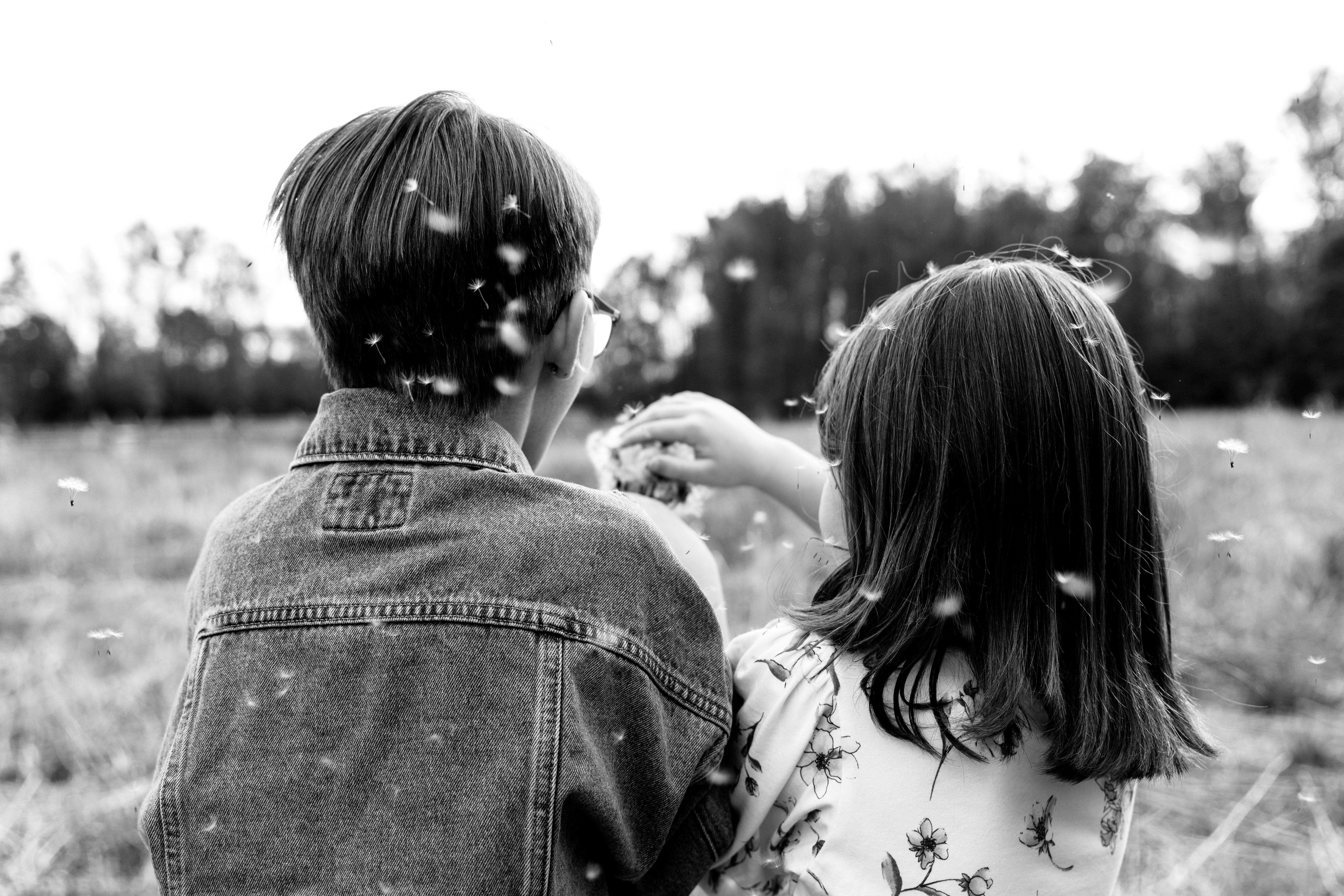
What if we sometimes look at children only in terms of what they need to acquire from us, rather than considering what their way of being might reveal to us?
And I don’t think this means that childhood should be engineered to eliminate all difficulty, by the way. The sticky bits, the friction, the hurdles to jump — these are all part of becoming, and our role is not to try and smooth every path for our children.
What kind of world follows from the picture we hold?
So returning to the central question — what is a child? This question sits beneath much of what we do, individually and collectively, but has potentially powerful effects on our everyday world.
If we see children primarily in relation to what they are going to become, then certain structures make logical sense. Time-intensive, labour-heavy and stimulation-loaded environments can become the norm, because we believe this is what children need to become the adults we expect them to be. It follows, however, that these structures could unintentionally limit, or at worst, harm children.
But if we can hold something different alongside this — that children are already whole people, who are nevertheless developing — then different structures might begin to make sense. I am not claiming to know what these should look like or how to make them happen. I only think the idea is important enough to examine.
Most adults caring for or working with children are doing it with hearts full of love and good intentions for their young ones. Yet if we never examine the constructs we have been swimming in all of our lives, we might never achieve the better outcomes we so desperately wish for children and the wider world.
What if we approached children with a little less certainty about what they are supposed to become? What might become visible then?
If our image of the child changed, what else might have to change with it?
If this piece stirred something, I’d love to hear.
What assumptions about children have you noticed yourself carrying — perhaps without ever consciously choosing them?
And has there ever been a moment when looking at the same behaviour differently changed what you saw?
Subscribe below to receive future essays exploring what we see, what we miss, and what becomes possible when we look again at children and childhood.