



There wasn’t a single dramatic moment when I knew something was wrong with my job. It crept in quietly, disguised as professionalism.
I remember sitting at my desk, writing targets for two- and three‑year‑olds. Targets like “will do X 4 out of 5 times in a session” or “will demonstrate X over 80% of the time.” On paper, it looked reasonable. Sensible. Evidence‑based.
In my body, it felt ridiculous.
These were toddlers. They should have been playing chaotically, moving freely, following curiosity wherever it led. Instead, I was trying to force something deeply non‑linear into neat little boxes. A strange question started to surface beneath the task itself:
Should we really be exerting this much control over children so young?
That question darkened as my role shifted more toward assessment and diagnostic pathways. I found myself scanning for deficits — looking for where a child didn’t fit, didn’t meet expectations, didn’t align — and then writing those observations into reports that would follow them, sometimes for life.
I imagined being that child one day, older, reading those words. Seeing myself flattened into a list of problems, stripped of context, complexity, and humanity. I felt sorrow for how vulnerable children are to these subtle harms — harms that almost always come from a place of care, yet still wound.
The cruel irony was this: so often, the process didn’t even result in much that was tangibly better for the child.
That realisation both broke my heart and lit a fire in me.
Being Valued — and Still Feeling Wrong
Outwardly, I was doing well.
When I raised my discomfort in supervision, I framed it safely — for example a lack of confidence in early years target‑setting. My supervisor was supportive, offering examples, frameworks, links to the EYFS. I was reassured.
But the deeper critique had no home. The unspoken message was clear: this is the job; this helps children.
In other spaces, my questioning landed differently. Some colleagues welcomed it. I was invited to work on re‑framing assessment tools to include children’s strengths alongside deficits — still within diagnostic structures, but with more humanity. It felt like a small win.
When I later left that service, my team gave me a framed poem titled “Gemma’s Legacy.” It praised my ability to see the whole child, to listen, to challenge norms gently, to keep pushing for change.
It was deeply touching.
And yet — inside — I still felt unsteady. A quiet, persistent wrongness followed me through much of my work. Praise didn’t resolve it. Validation didn’t dissolve it.

The Wooden Toys Incident
One meeting crystallised everything.
We were told that all wooden toys in the department were to be thrown away. From now on, only plastic toys would be allowed — easier to sanitise with chemical wipes, more compliant with infection‑control policies.
I blurted out, before I could stop myself: “Is this a joke? How can a natural material be more harmful than plastic and chemical wipes?”
Silence.
Then: “That’s the decision. It’s evidence‑based.”
In that moment, I knew how misaligned I was. Not just intellectually — but at the level of values, intuition, and care. I also knew I was expected to fall back into line.
Most of the time, I did.
When Expertise Becomes Exhausting
As a Speech and Language Therapist specialising in autism, the work became heaviest when I was positioned as an expert.
I was often expected to tell parents and teachers what to do — sometimes after only brief contact with a child. What I noticed wasn’t parents consciously handing over their authority, but something more subtle: many had already been conditioned to doubt their own instincts long before they met me.
By the time a child reached services, the family had usually tried to adapt themselves to the system — nursery, school, expectations — and struggled. Labels helped, but never fully captured the child they knew. And so they looked back to the system again, hoping it could finally explain what still felt elusive.
What I slowly realised was that when parents felt helped by me, it was rarely because of the specific strategies I offered.
It was because I was seeing their child clearly.
Naming patterns they already sensed. Reflecting back the intelligence, sensitivity, or coherence they recognised but hadn’t trusted themselves to articulate. In many cases, I wasn’t giving new information — I was validating an inner knowing that had been quietly sidelined.
With educators, the same pattern appeared. We worked to bend children toward what needed to be achieved — curriculum targets, developmental averages, acceptable timelines — even when something in the room knew the child was developing in their own way.
I spent far more time than allocated agonising over reports and targets, trying to personalise something that fundamentally resisted personalisation.
Ironically, the moments parents felt most supported were also the ones that made me most uneasy.
I was good at training — translating theory into something engaging and practical. But standing there as an expert, declaring “this is the way,” felt false. We were all operating on assumptions.
The parts of me that didn’t fit were precisely the parts that mattered most: nuance, relational attunement, intuition, depth. My best work with children was heart-led, not process-driven — and impossible to package or replicate.
Junior colleagues wanted steps to follow. I had none.
Flattening Children to Data Points
What finally became unbearable was the demand to turn living, relational moments into data.
When a child who once ignored me began to smile, laugh, or seek closeness, my whole body recognised progress. My heart expanded. Something real was happening.
But how do you write that up?
Eye contact couldn’t be measured ethically. Joy wasn’t a target. Connection didn’t fit a spreadsheet. Instead, I found myself timing interactions, tallying responses, pulling my attention away from the child and into compliance.
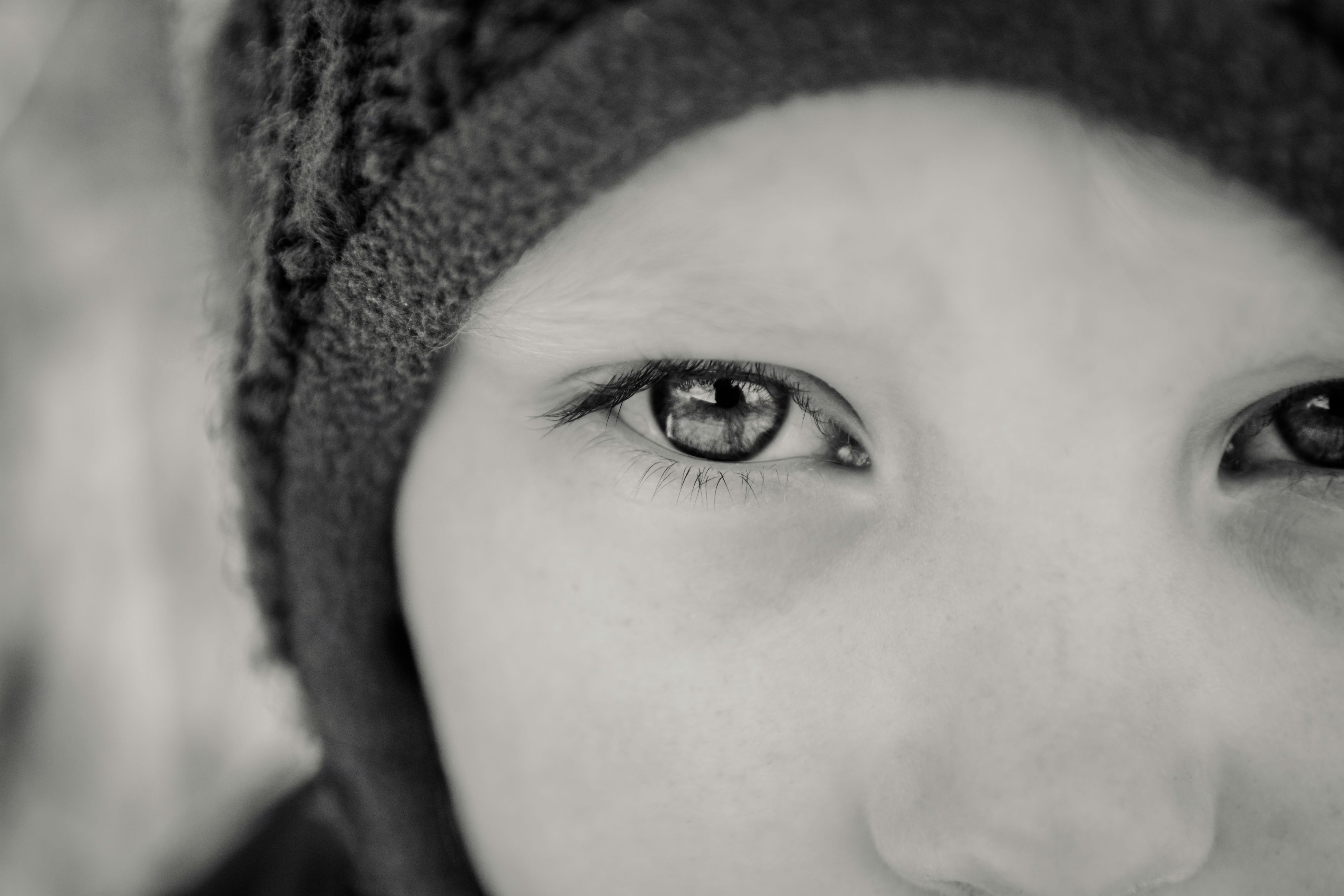
Part of the problem was how fragmented the work had become. My remit was speech and language — even when it was obvious that a child’s nervous system was in fight, flight, or shutdown, and that regulation was the real priority.
In theory, we worked “holistically.” In practice, professional silos meant carrying on with targets even when a child wasn’t safe enough to meet them.
Often, the only way any real progress happened was by quietly attending to regulation first — slowing down, connecting, helping a child feel safe enough to engage and seen enough to respond. Those were the moments that worked.
Parents wanted data. Systems required evidence. I was licensed, regulated, constrained.
Session after session, I felt a quiet sense of rightness in the room — followed by frustration — as I tried to translate something relational and responsive into something countable.
I started to wonder if I was simply not cut out for the job.
Choosing Integrity Over Compliance
Outside the system, I glimpsed another way.
A close friend’s young son showed delayed speech patterns. Referral was suggested early. Instead, we chose watchful waiting — grounded in relationship, trust, and gentle awareness.
At four, when he and his parents were ready, I offered light guidance. Within months, his speech patterns resolved naturally.
Had he entered services at two, he would likely have received targets done to him — alongside subtle messages of deficiency.
This time, he was held — not fixed.
Alongside experiences like this, I also began exploring ways of understanding children more individually — paying attention to how different children processed information, made decisions, regulated, and learned best. Through this lens, children’s behaviour began to make sense — not as problems to correct, but as signals to respond to.
It confirmed what I had always sensed: children are self‑organising systems with their own timelines. Our role is to create conditions — not control outcomes.

Resistance Was Never Failure
Between 2020 and 2024, alongside deep inner work, something shifted. I stopped fighting my resistance and started listening to it.
I saw my awareness not as a flaw, but as a signal.
Leaving my profession came with shame. But it also revealed something truer: resistance points to inner tension asking to be honoured.
Looking back, I can see that this tension wasn’t new. I’d spent much of my life learning how to succeed inside systems that rewarded compliance, even while a quieter part of me sensed a wider lens — a call for more humanity, nuance, and care than the structures could hold. I don’t regret any of it. That career shaped my discernment. The unease I felt all along finally made sense.
I didn’t realise at the time that this professional awakening was also preparing me for the most important role of all — becoming a parent who could stay anchored to their own knowing. What I had been doing with parents all along — reflecting back the truth they already sensed about their child — was the same muscle I now rely on as a parent, learning to trust my own inner compass and those of my children.
From that place, I can now see how early we’re conditioned away from trust — first in ourselves, then in our children. The joy of simply being together gives way to pressure, comparison, and fear.
We are taught to flatten difference — even though deep individuality is the point.
What If We Stopped?
What happens when we stop trying to fit ourselves — and our children — into systems never built for deep individual difference?
What if professional disillusionment isn’t failure, but a sign that your lens has widened?
Some roles aren’t meant to last forever. They shape us, refine our discernment, and quietly prepare us for what comes next.
It takes courage to trust yourself against conditioning.
But it might be the most honest work there is.

If this piece stirred something, I’d love to hear.
Where have you felt that subtle sense of “this doesn’t feel right” — even when everything around you said it should?
And what happens when you begin to listen to that, rather than override it?
Your reflections often help others recognise what they’ve been sensing but haven’t yet named.
Subscribe below to receive future essays exploring what we see, what we miss, and what becomes possible when we look again at children and childhood.
Further reading


I absolutely love this! I’m a former educational psychologist & relate to this on so many levels
I feel very similarly, but I didn’t arrive at the same conviction through work — it came through parenting my children. I can see that each of my children is different and needs a different amount of time and space, and that some of the commonly recommended “standard” approaches work for one of them, while one of them is so unique that what works one day doesn’t apply at all the next.
I don’t yet know what life will bring, but this experience — not trying to fit children or people into boxes and templates — is something I would like to carry with me.