


A few months back, my toddler and I visited a local library. Instead of looking at books, she wanted to climb the shelves and walk along the windowsills. Whilst other children sat rapt as a parent or grandparent read them a new story, my daughter shouted “No!” with vehemence at every such offer. When I asked her to come down from the window or stop climbing the shelves, she flashed me a devilish smile and did no such thing. When I plucked her off of the shelving or sill, she laid on the floor, screaming. I sighed. It was one of those days.
In fact, it was one of those weeks. She’d been cranky for a couple of days. Nothing seemed to be right for her. Little things she normally took in her stride, routines that normally flowed easily all just seemed like hard work — both for her and for me. Her usual cheery, flexible, reasonable, affectionate nature seemed to have taken some sort of hiatus.
Yet a few days later, a calmer little girl returned. And with her came a noticeable change. She was talking in longer and more complex sentences than I had heard from her before.
This was not my first encounter with a situation like this. When my oldest was younger I had seen a similar pattern: Periods of a few days, or even a week or two, when everything felt like it was falling apart. Her behaviour would become suddenly more challenging, and I’d be turning to a trusted parenting blog or book to try and fix what was “going wrong”. At these times, she would often be hungrier, clumsier, more sensitive, and somehow a little harder to connect with. It was easy to slip into self-criticism and anxiety at these times. Did she have significant problems? Were we parenting her well?
But then, almost imperceptibly, we would notice that she was more settled again. Just as quickly as these tough days would start, something would shift. Her vocabulary would explode, her imaginative play deepen, or she might master a new physical skill. Her confidence seemed to go up a notch and things felt exciting and fresh once more.
Now, years later, my husband and I have got used to seeing these patterns. Now when our youngest child enters a difficult phase, we say to each other “I wonder what she’s about to learn.” And usually, that’s exactly what happens — she acquires a new skill, understands something in a new way, or just seems to have “levelled up” in her maturity.
For a long time, I interpreted those difficult days as signs that something needed fixing. Now I wonder if they’re actually an integral part of how development naturally unfolds.
How many processes look messy before they take a new shape? I think of a garden being weeded one week and the next displaying beautiful new plants in neat beds. I think of the writing process and how ideas are scattered, drafts are reworked, and words edited until something coherent emerges. Even reorganising or redecorating a room tends to look extremely chaotic before a new order emerges.
Although we can never know exactly what is happening within a child’s inner world at any time, these observations have led me to a question I keep coming back to:
What if healthy development has a rhythm of its own?
Not a steady rhythm of constant progress, but one that includes bursts, pauses, reorganisation, and periods where very little seems to be happening at all.
Looking back, I wonder how many of my eldest daughter’s greatest developmental leaps I almost missed because I was so busy focusing on the minutia of my parenting and the supermarket meltdowns that came just beforehand.
I had been watching for problems, but perhaps I should have been learning to recognise a pattern.
Development doesn’t unfold evenly
I used to think of development as something that moved steadily forward in an upwards trajectory. Of course, I knew there were bad days and good, but overall, new skills simply built on the ones before in a linear fashion.
It certainly looks like this when you zoom out. Toddlers grow into children, children grow into adolescents, and new increasingly complex skills emerge over time. From 30,000 feet, development looks to follow a clear path. But I don’t think that’s what it looks like closer up. On the ground, it seems to pulse.
Sometimes one area surges forwards while another appears to stand still. Sometimes a child returns to something they seemed to have mastered months before. Sometimes development becomes highly visible, and sometimes it seems to disappear almost entirely beneath the surface.
None of this surprises us when toddlers are learning to walk. We expect the falls, the wobbles, and the uneven progress because we understand that balance is still organising itself. Yet when children begin developing more complex capacities — reading, emotional regulation, creativity, social understanding — we seem to stop expecting development to behave developmentally.
Perhaps one of the reasons we stop noticing these rhythms is that they become harder to see. In very young children, the milestones are bigger and more dramatic. But later, the changes become more subtle. Instead of sudden big leaps, they’re making smaller, more gradual changes internally — like starting to think differently, solve problems, learning how to get along with others, or understand feelings. And when they pass through unsettled periods, it can be easier to treat these solely as behaviour, rather than recognising them as development.
What if those apparent interruptions aren’t pauses in growth at all? What if they’re one of the ways growth happens?
Development moves around
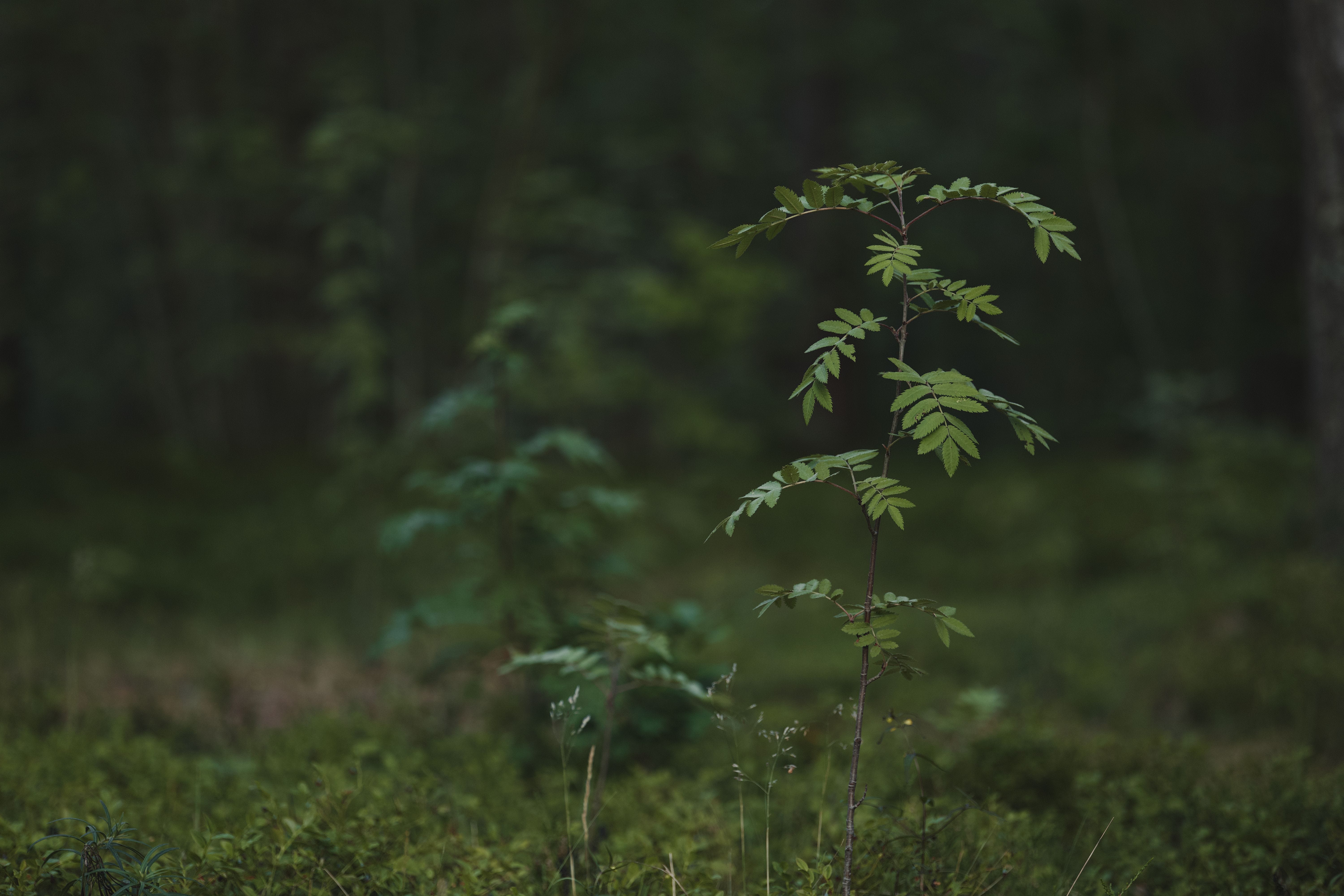
The more I paid attention, the more I began noticing another pattern: Development doesn’t only move in rhythms. It rarely spreads itself evenly.
I’ve seen this most clearly in my eldest daughter’s interests. A few months ago, Pokémon became her entire world. She wanted a Pokémon birthday party, dressed as Misty, read Pokémon books, watched endless episodes, played Pokémon games and spent hours immersed in that universe. Then a few weeks later, it was over. Not because she’d lost interest in learning, but because, I suspect, that particular interest had simply done what it came to do.
I’ve also noticed her energy levels go through phases, where some weeks she’s full of enthusiasm and wants to be out and about, exploring, creating, and socialising with friends. But there are other times when she seems to need a slower pace, preferring quieter days at home with solo activities. What’s interesting is that neither of these versions feels like the “true” her — they just seem to be different beats in the same rhythm.
I’ve noticed it in her play too. She has recently started playing with her dolls again when I had assumed she had outgrown them. But what caught my attention was that she wasn’t playing with them in the same way as she used to. A couple of years ago, her doll play revolved around acting out everyday family scenes. Now, they inhabit intricate little worlds which she builds for them. Detailed rooms and houses, complete with tiny handmade furniture, clothes, and beauty products. It’s fascinating to observe how her imagination has evolved. The dolls themselves haven’t changed, but the way she uses them to express her developing inner world has.
I think it’s easy to overlook the quiet, internal work that’s always going on. When a child seems to lose interest in reading or a favourite activity, it’s tempting to assume that development has paused, and it’s sometimes easy to start worrying about that. But the truth is, any activity is always part of a bigger picture. Long before children can read fluently, they’re building understanding of the world — characters, relationships, life events, challenges, emotions. They’re making meaning through stories in different forms, through conversation, in play, by observing, and by living life. When they finally meet those ideas in books, they are not usually encountering them for the first time. They’re connecting the words to worlds they have already been building.
I think this is what integration often looks like: development happening somewhere other than where we’re looking. If we’re only watching for visible progress in one particular skill, we may miss the underlying rhythms that make that progress possible in the first place.
Development doesn’t only need input — it needs timing
If development has its own rhythm, another question naturally follows: What determines when the next step becomes possible?
I don’t think every part of development can be hurried. That doesn’t mean children shouldn’t be challenged. Rather, it seems that each new capacity rests upon countless others that have been developing beneath the surface, often long before they become visible.
When my eldest daughter was four, we sought help for persistent glue ear. During this process, we were told that some of the underlying systems important for learning weren’t working together yet in the way that formal learning would eventually require. The observation made a lot of sense, because, at that time, just holding a pencil and trying to form letters seemed to completely overwhelm her system, and she became exhausted very quickly. Her body and brain were clearly still in the earlier stages of organising the foundation skills.
Had she started in a traditional school setting at this time, she would have been expected to begin formal literacy — her rhythm measured against a timetable. But we didn’t follow that path. Instead, we carried on living and learning together. We spent our days reading, talking, playing, and exploring the world around us. We climbed trees, built things, and let her interests guide our activities. We leaned into the frequent “gentle days” she needed when her hearing was low. We didn’t see this as postponing her learning, but rather as placing trust in her natural developmental unfolding. We knew that she was still growing and learning, even if it wasn’t yet visible in traditional ways, like reading and writing.
When she was seven, something shifted. She began asking to read and picked up a pen to write. What had once felt out of reach to her became something she was genuinely ready to stretch towards. There was still challenge of course — as there always is with learning something new — but it felt more like the healthy challenge of growth, instead of the exhausting struggle of building before the foundations are ready.
Watching this changed how I thought about development in a wider sense. I recall another observation from around the time when reading was still out of reach for her: I watched another child of the same age struggling to use scissors, while she was using them with ease and precision. It was clear that neither child was ahead and neither was behind. They were simply developing different capacities at different times.
The more children I’ve observed, the more I’ve come to see development not as a straight line. One child might develop extraordinary spatial awareness while language takes longer. Another might read fluently, but have weaker hand-eye coordination. One child learns to ride a bike at three, another at nine. Which child is further ahead? It depends if and what we are measuring, and to me the question begins to feel impossible.
As I’ve written about before, perhaps development is less like a race and more like a garden. We don’t expect every plant to flower on the same day. Some spend longer establishing deep roots before sending shoots above the surface. Given healthy soil, sunlight, water and time, each follows its own unique pattern of growth.
Children, I think, are no different. Reading rests upon foundation skills of language, attention, memory, curiosity, and an understanding of the world those words describe. Emotional regulation develops through years of being co-regulated. Executive functioning emerges through countless opportunities to plan things, try them out, make mistakes, solve problems, persist with challenges, and negotiate with others. Creativity is nourished by time, space and freedom to explore and experiment.
These abilities don’t just show up because we decide it’s time for them to. They emerge through the ordinary business of living.
This is why I think the idea of waiting is often misunderstood. Waiting doesn’t mean doing nothing. Giving development time often allows us to see more clearly. We begin to notice the difference between variation and genuine difficulty, between a child who simply needs more time and a child who genuinely needs additional support.
Patient observation doesn’t postpone support. It helps us offer the right support.
Perhaps this is one of the most significant acts of trust in parenting and education. Not assuming that growth will simply happen by itself, but trusting that when we provide rich conditions and observe with care, development naturally carries within it a wisdom about timing. Our role is not to force the season, but to tend the garden well enough that, when the child is ready, growth can emerge in its own time.
What distorts rhythm?
If this way of understanding development feels unfamiliar, I don’t think it’s because we’ve stopped caring about children. I think it’s because we’ve become immersed in a culture that struggles to trust slow, uneven, living processes of almost any kind.
I’ve observed that something changes once children reach school age. In the early years, there is a shared culture of developmental thinking. We’re noticing what’s emerging, we know the foundations that are forming, we have a good idea what experiences they need. But as they get older, our questions begin to change: Is their reading is where it ought to be? Are they falling behind? What level are they working at? Almost without noticing, we start thinking less about how they are developing and focusing more on measuring their progress against a curriculum.
Large education systems have a challenging task. They need broad expectations about what most children will be able to do at certain ages, because without shared reference points, it would be almost impossible to organise teaching on a mass scale. And there is nothing inherently wrong with that.
But the difficulty begins when averages designed to organise systems become expectations for individuals. An average is simply a description of what is common. It was never intended to become a timetable that every child should follow. Yet, almost without noticing, many of us begin to treat it that way.
So much around us encourages acceleration. We work to deadlines, measure productivity, optimise our time and celebrate efficiency. From an early age we’re taught that moving forwards is good, standing still is risky, and falling behind is something to be avoided. It is hardly surprising that we begin to view childhood through the same lens.
Urgency creeps in. If they aren’t reading by this age... If they haven’t learnt their times tables by then... If everyone else’s child seems to be doing it already... If we don’t act now... But in all this worrying, we can unintentionally begin to ignore the child who’s right in front of us. Instead, we’re looking at an invisible clock that is constantly ticking, asking whether we’re keeping up.
Comparison adds another layer. Sometimes we compare our children with classmates, sometimes with siblings, sometimes with carefully curated snapshots shared online, and sometimes with developmental charts that imply there is a narrow window within which progress should occur.
Rarely do children’s unique qualities take centre stage. We don’t tend to compare the richness of their curiosity, or the depth of their questions, their kindness, their imagination, or their capacity to notice the world around them. Instead, we focus on comparing the things that are easiest to measure. Visible milestones become a way to judge how well a child is developing, but they don’t tell the whole story.
Beneath much of this sits a simple assumption: If we don’t keep moving, we will somehow miss our chance. Not necessarily that our children won’t learn, but that they won’t learn quickly enough. That one delay will become another. That one missed opportunity will close countless doors.
These fears are deeply understandable. Many of us were raised within systems where keeping pace mattered enormously. We’ve learnt to associate progress with safety and delay with risk. No wonder waiting can feel so uncomfortable. It asks us to live with uncertainty.
There is no chart that can fully describe the unfolding of an individual child. No framework can tell us exactly when curiosity will blossom into reading, when tentative marks will become writing, or when years of pattern-making will suddenly find expression in mathematics.
From the outside, patient observation might be perceived as neglectful. Doing less can feel irresponsible in a culture that constantly tells us that more input produces better outcomes. But perhaps this discomfort tells us something about ourselves rather than about children.
When I think back to driving lessons, one of the first things you learnt was that travelling safely does not mean keeping your foot on the accelerator. Sometimes you slow down. You stop. Often you must pause to look ahead, behind, and all around you, because the conditions require careful observation rather than constant forward motion. Failing to slow down when the conditions demand it would be considered poor driving.
No one interprets those pauses as failure because they’re simply part of travelling well. Yet when it comes to development, we often interpret pauses very differently.
A child revisits familiar play for months. A previously enthusiastic reader loses interest for a while. From the outside, there is simply less to see. Our instinct is to ask, What has gone wrong? But perhaps nothing has. Perhaps the child is doing what living systems have always done: consolidating, reorganising and preparing for what comes next.
In a culture that prizes acceleration, pauses become suspicious. Stillness is mistaken for stagnation, repetition is mistaken for lack of progress, and waiting is mistaken for doing nothing. Yet rhythm has taught me that some of the most important work happens when very little appears to be happening at all.
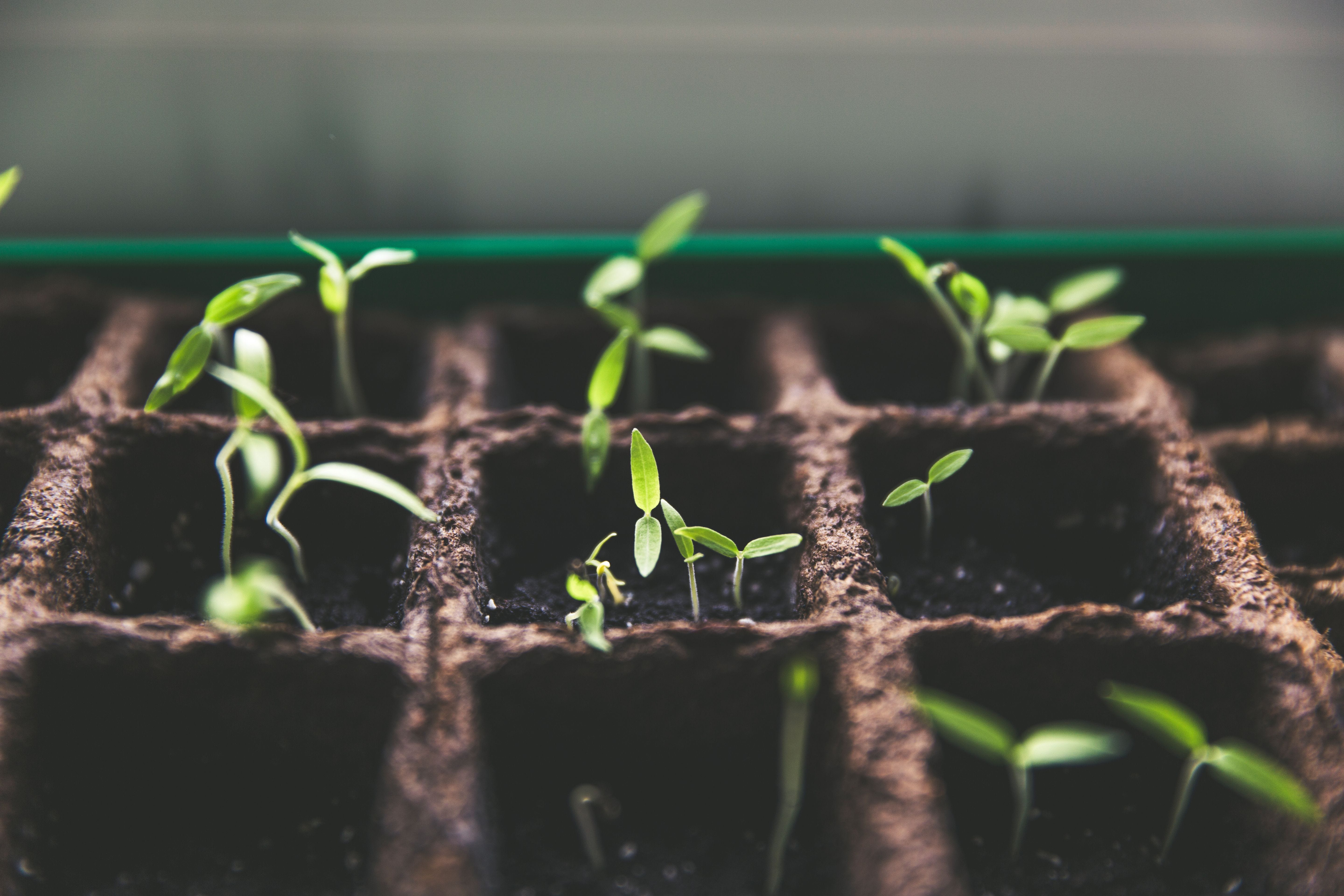
Roots deepen long before new growth appears above the soil. Seeds germinate in darkness. Fruit trees do not produce all year round, not because something is wrong with them, but because rest is woven into the pattern of healthy growth.
Children, I think, are no different. Perhaps one of the greatest distortions of modern childhood is not that we have forgotten how to help children grow. It is that we have become so uncomfortable with the pace at which healthy growth often unfolds.
What children lose
If all of this is true, then another question inevitably follows: What happens when a child repeatedly learns — not all at once, or dramatically, but gradually — that external timing matters more than their own?
Perhaps one of the first things they lose is trust in their own pace. The child who becomes absorbed in building worlds from cardboard is redirected towards handwriting practice because that’s what comes next. The child who still wants to spend every afternoon pretending is told it’s time for something more productive. The child who isn’t yet ready to read begins to notice that everyone else seems to be moving on without them. They hear that what they’re doing isn’t good enough, and that what others think they should do holds more value.
Sometimes they learn the skill anyway. But they may also learn something else: that their interests aren’t fully trustworthy, that someone else decides when they are ready for something, that there’s a “right” pace for growing up, and that falling out of step means something has gone wrong.
Over time, it becomes harder to hear the small signals that arise from within. Curiosity begins to compete with expectation. Intrinsic motivation gives way to external measurement. Children start asking not, What am I drawn towards? but What should I be doing?
Perhaps the greatest loss is not a particular skill delayed or acquired, but the gradual erosion of self-trust. The confidence that says, I can feel when I’m ready.
I don’t think this ends with childhood. How many adults still struggle to rest without guilt? To follow an interest that serves no obvious purpose? To learn something simply because it fascinates them? How many of us feel uncomfortable slowing down, even when every part of us is asking for it?
Maybe we’ve learnt to distrust our own natural rhythms too.
When I look back, I wonder whether many of the struggles we associate with motivation are not always about a lack of discipline, but about years of practising life according to someone else’s timetable.
A different way of seeing
As I’ve watched more and more children grow, I’ve come to think that development isn’t like a staircase. A staircase has each step clearly defined, visible, and leading upwards. If you miss a step, you’ve fallen behind.
But development feels nothing like that to me anymore. It feels more like the changing of the seasons, or the ebb and flow of the tides.
There are times of rapid visible growth, of flowering, when new capacities seem to emerge almost overnight. But there are quieter seasons too... periods of gathering, repeating, consolidating and resting. From the outside, they can appear uneventful. Yet beneath the surface, roots continue to deepen.
What I’ve noticed changing in myself is not so much what I’m doing, but more what I’m paying attention to. These days, I’m not just waiting for the next milestones, but looking out for the small, subtle signs that something is organising itself beneath the surface: the return to a familiar game, new questions asked repeatedly from different angles, growing confidence with something that seemed impossible only weeks before, or the child reaching, almost imperceptibly, towards the edge of the person they are becoming.
I used to think about how I could push development forward, but now I ask What is development already trying to do here? The former way of thinking centres the adult in the process, but the latter question requires that we become careful observers and thoughtful companions.
Perhaps development has always known where it is going. Maybe our role is less about directing its course than creating the conditions in which it can unfold well.
Returning to rhythm
When my little one has one of those difficult weeks now, I still find them hard. She is more emotional, easily overwhelmed, and the things that usually bring comfort don’t seem to work like they did before. There’s part of me that still wants to fix it and still wonders if I’m doing something wrong. But I’ve learnt to pause, to look a little more closely, and to remember that, so often, these unsettled days have come just before something new gently makes an appearance.
In just a short time, she will likely be speaking in longer sentences, making new connections and seeing the world differently. And so even on the tough days, I can find cause to smile, because I have come to realise that they are part of a much larger pattern.
This is what rhythm has taught me. Not that development is always easy. Not that children don’t need support. Not that waiting is always the answer. But that living things grow in unexpected ways, rarely in straight lines.
Perhaps children have been showing us these rhythms all along. The question is whether we’ve forgotten how to see them.
If this piece stirred something, I’d love to hear.
Where have you noticed development unfolding in its own time?
What changed when you began looking for rhythm instead of constant progress?
Subscribe below if you'd like future essays exploring childhood, education, and the hidden assumptions that shape how we see children — and what becomes possible when those assumptions begin to shift.
This is such a beautiful and powerful essay - thank you.
After reading it, I feel a bit of grief - grief for the self-trust that so many of us have lost (or are in the process of losing) while being raised in systems in which "we've learnt to associate progress with safety and delay with risk," as you so eloquently state above.
Over the past week, I have watched one of my children suddenly become interested in playing the piano that's been sitting, mostly untouched, in our house for years. A few years ago, I was grappling with whether I 'should' put her in piano lessons - she's always loved music, but despite my efforts at home to model playing in order to inspire her curiosity, she never became interested.
What stopped me from enrolling her in lessons was actually my complicated relationship with piano. I was put into lessons at a young age and botched my way through using awful practice techniques (because 1) I never learned to use deliberate practice approaches, and 2) I never felt interested enough to care to master the pieces anyway). And while I love that I know how to play the piano, I often wish that I had learned through play and experimention rather than through a linear progression through a curriculum. For me, the missing piece was joy.
And yet left to their own development, kids really know how to let open-ended play - and joy - lead them and their efforts. That is a true gift that we all need to protect and nurture.
Thank you for writing this and I hope that it inspires others as well!
Thank you for this beautiful post that recognises children's individuality in their learning and how they come to their own plateaus and leaps in their own personal rhythm. You remind me of the mush pupal stage of a caterpillar as it moves towards becoming a butterfly or a moth. There is not hurrying that stage and yet it is not recognisable as anything but bounded disintegration. Perhaps the boundedness is what matters - for our children to have safe containers for their learning. I hear always from you how you seek to offer this for your children. 🤗