



Last week I wrote about children who seem perfectly fine at school and then fall apart at home. As I reflected on the responses, I found myself returning to a question that has occupied me for years.
If the same child can appear capable, cooperative, sociable, or emotionally regulated in one environment, only to unravel somewhere else, what exactly are we looking at? What can we genuinely conclude from what we observe? And how much of what we are seeing belongs to the child themselves, rather than the interaction between the child and everything surrounding them?
It is not a new question for me.
When my daughter was very young, I remember discussing and observing temperamental differences between her and other babies we knew. At that age, the differences were often surprisingly tangible. Preferences for how they liked to be held and soothed, differences in the sounds they made, their physicality, their responses to people and situations. Even before language arrives, individuality is already there. I remember feeling excited by the thought of her personality gradually revealing itself in the years ahead. Would she be loud and confident? Quiet and shy? Studious? Stubborn? Lively? Independent? Like many parents, I imagined that as she grew older, these traits would become increasingly obvious.
What has surprised me is almost the opposite. As the years have passed, I have found it harder, not easier, to get hold of a simple answer to the question of who she is.
Part of this, I suspect, is the nature of close relationships. Personality traits may work well as broad categories that help us make sense of people from a distance, but up close they often begin to lose some of their certainty. We see too many contradictions, too many different sides, too many moments that refuse to fit neatly into the story. It reminds me of something I wrote about previously: how labels often fall away as relationship deepens. The more intimately we know someone, the harder it becomes to reduce them to a summary of characteristics.
But I also wonder whether there is something else going on. Perhaps people are not simply collections of fixed traits waiting to be discovered. Perhaps we are responsive beings with our own unique patterns and tendencies, yet those patterns become expressed differently depending on where we are, who we are with, what is being asked of us, and what is happening within us at that particular moment.
Over the years I have watched my daughter appear loud, confident, and commanding. At home this is familiar territory, but I have seen it emerge elsewhere too. Recently she stood on a stage at her birthday party and spontaneously started directing her friends. The confidence seemed effortless. I have also seen the same child become hesitant when joining a new activity, wanting me to stay close and hold her hand. Sometimes she speaks easily to unfamiliar adults. Other times she shakes her head and looks visibly uncomfortable when I encourage her to answer a simple question. The same girl who can become dazed and unresponsive in busy places can, in a different context, take charge of a room.
Faced with those different versions of the same child, it is tempting to ask which one is the real one. The longer I spend around children, however, the less convinced I am that this is the right question. I could probably spend hours analysing the differences between those situations. Perhaps she felt more emotionally secure. Perhaps there was less sensory input. Perhaps she was carrying the effects of a difficult morning or the momentum of a good day. Perhaps there were things on her mind that nobody else could see. The number of possible variables becomes almost endless.
What strikes me is how swiftly we tend to move from those observations to conclusions. We want to decide whether a child is confident or shy, resilient or anxious, outgoing or reserved. We want certainty. Yet increasingly I find myself wondering whether what we are observing is not simply the child, but the interaction between a child and everything surrounding them. Perhaps the child who appears confident in one setting and hesitant in another is not contradicting themselves at all. Perhaps we are witnessing a unique person responding to different conditions, expectations, relationships, demands, and experiences.
Why We Look at the Child First
Perhaps one reason we so often focus on the child is because, sometimes, it is entirely appropriate to do so.
I remember children I worked with whose difficulties were obvious and significant. A child with profound non-speaking autism. A child with a severe speech disorder that made them almost impossible to understand. When my own daughter experienced fluctuating hearing loss for several years due to chronic glue ear, there was clearly something affecting her that could not be explained by parenting style, educational philosophy, or the quality of our relationships. There are absolutely times when there is something within the child that needs identifying, understanding, and supporting.
The difficulty comes when things become more subtle. Sometimes there is no obvious explanation. Assessments sit within expected ranges. There is no clear diagnosis, no measurable deficit, no straightforward explanation presenting itself. Yet something still feels difficult, both for the child and for the adults around them. In those situations, I have noticed how quickly our attention narrows. We ask what is going on with this child, why they are behaving like this, why they are struggling. And because the answers are not immediately available, we often look even more closely at the child.
I remember doing this myself throughout my career. Families wanted answers. Schools wanted answers. Other professionals wanted answers. Everybody was trying to understand what was happening and, understandably, they hoped there would be an explanation that could be found and named. So I would spend hours examining examples of a child’s behaviour, communication, responses, strengths, and difficulties, looking for patterns that might help make sense of what I was seeing.
Increasingly, however, I found myself noticing something else. The structures around me encouraged me to focus almost exclusively on the child. The report templates asked me to describe the child’s presentation, the child’s assessment results, and my conclusions about the child. There was far less space to describe the impact of the environment itself. Even when environmental factors were acknowledged, they were often framed through the child: this environment does not meet his needs, these are the difficulties she experiences here, these are the problems he has in this setting.
What was much harder to say was something slightly different: this environment is having a significant impact on how this child is showing up.
Not because the environment was bad or because the child was deficient. Simply because environments are not neutral. They place demands on children, reward certain traits, make some behaviours easier and others harder, and can amplify particular qualities while suppressing others.
Difference Is Normal
One of the gifts of working closely with hundreds, perhaps thousands, of children is that it becomes increasingly difficult to believe there is such a thing as a standard child.
I think of my daughter and one of her close friends. Around the age of six, they both attended the same relaxed learning group. My daughter spent much of her time racing around on scooters, building things, playing imaginatively, and occasionally engaging in creative activities. The worksheets and table-based tasks held very little appeal for her. Her friend, meanwhile, gravitated naturally towards those activities. She happily completed worksheet after worksheet, enjoyed stretching her literacy skills, and often remained close to her family throughout the session.
Neither child was being parented dramatically differently. Neither child was right or wrong. They were simply different.
I remember another occasion involving the same friend. Both girls had experienced some aggressive behaviour from another child within a peer group we were part of at the time. Their responses could hardly have been more different. My daughter repeatedly sought out the child responsible, despite being upset by what had happened. Her friend, on the other hand, became increasingly anxious around that child and actively avoided her. As parents, neither of us had predicted these reactions. Neither response seemed to fit neatly into a story about confidence, resilience, anxiety, or social ability.
Examples like this appear everywhere once you start paying attention. Throughout my career I met children who shared the same age, the same diagnosis, the same classroom, and sometimes even similar family circumstances, yet were remarkably different from one another. One child might be outgoing while another preferred solitude. One might be fascinated by numbers while another became absorbed in stories. One might appear emotionally resilient while another experienced the world with extraordinary sensitivity. One might know every country in the world, another every football statistic. One might seek constant social interaction while another guarded their aloneness fiercely.
The more children I met, the less diversity looked exceptional.
Diversity began to look like the norm.
When Behaviour Is Actually Mismatch
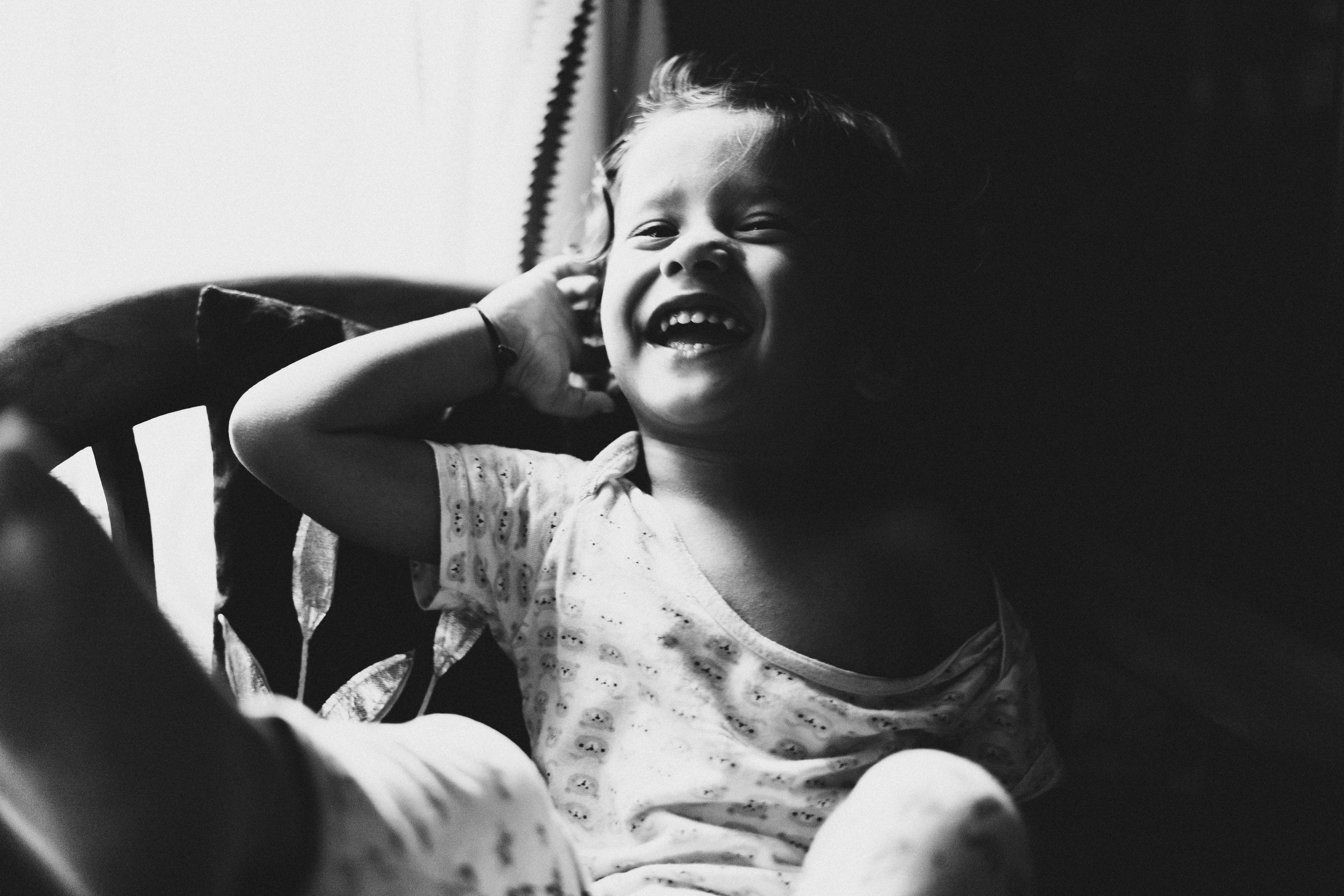
Once you start from that assumption, many of the questions we ask about children begin to look slightly different. Increasingly, I find myself less interested in deciding whether the child is the problem or the environment is the problem and more interested in the possibility of mismatch.
When I think about my own daughter, this framework often makes far more sense than the language of strengths and weaknesses. Her imagination has always been one of the most obvious things about her. Stories, creativity, role-play, designing things, making things, building worlds out of cardboard and scraps of fabric — these are not occasional interests. They seem to sit close to the centre of who she is. At the same time, many educational environments place considerable value on early literacy, numeracy, worksheet-based learning, and sustained attention to adult-directed tasks.
Some children naturally gravitate towards those things. Others do not. That does not automatically make either child deficient. It simply means they may meet the same environment differently.
If my daughter had entered school, I suspect there would have been numerous examples of this. Her limited interest in formal literacy and numeracy activities at six years old. Her drive to pursue her own interests rather than those suggested by adults. Her sensitivity to criticism and tendency to take things deeply to heart. Her preference for learning through imagination, stories, creativity, and play. None of these qualities strike me as problematic in themselves. Yet many could easily become framed as problems in an environment built around different assumptions.
I think about another child we know who happily reads science textbooks for fun and has little interest in fiction. I do not see him as deficient either. Yet I can easily imagine situations where his natural way of engaging with the world might create friction with expectations around him.
The older I get, the more suspicious I become of the idea that difficulty always tells us something about the child. Sometimes it may be telling us something about the relationship between the child and the environment.
I hear versions of this story repeatedly from home-educating families. A child whose attention was considered poor at school suddenly demonstrates remarkable concentration when given more autonomy and fewer competing demands. A child whose social behaviour was viewed as challenging becomes calm when they are no longer spending hours each day in large groups. Difficulties that once appeared central begin to fade when the conditions surrounding the child change.
Schools have their own versions of these stories too. A child who struggles to sit on the carpet may thrive when movement becomes part of learning. Social difficulties may reduce when more support is available. Restlessness may disappear when the pace of teaching changes.
Sometimes the child changes. Sometimes the environment changes. Often what changes is the relationship between the two.
The Challenge of Standardisation
The longer I spend thinking about children, the more I find myself questioning how many assumptions we treat as universal.
We often assume children should acquire complex skills according to broadly similar timelines. We assume they should function comfortably within large groups of same-aged peers for long periods of time. We assume a certain level of sociability, emotional regulation, flexibility, independence, and consistency.
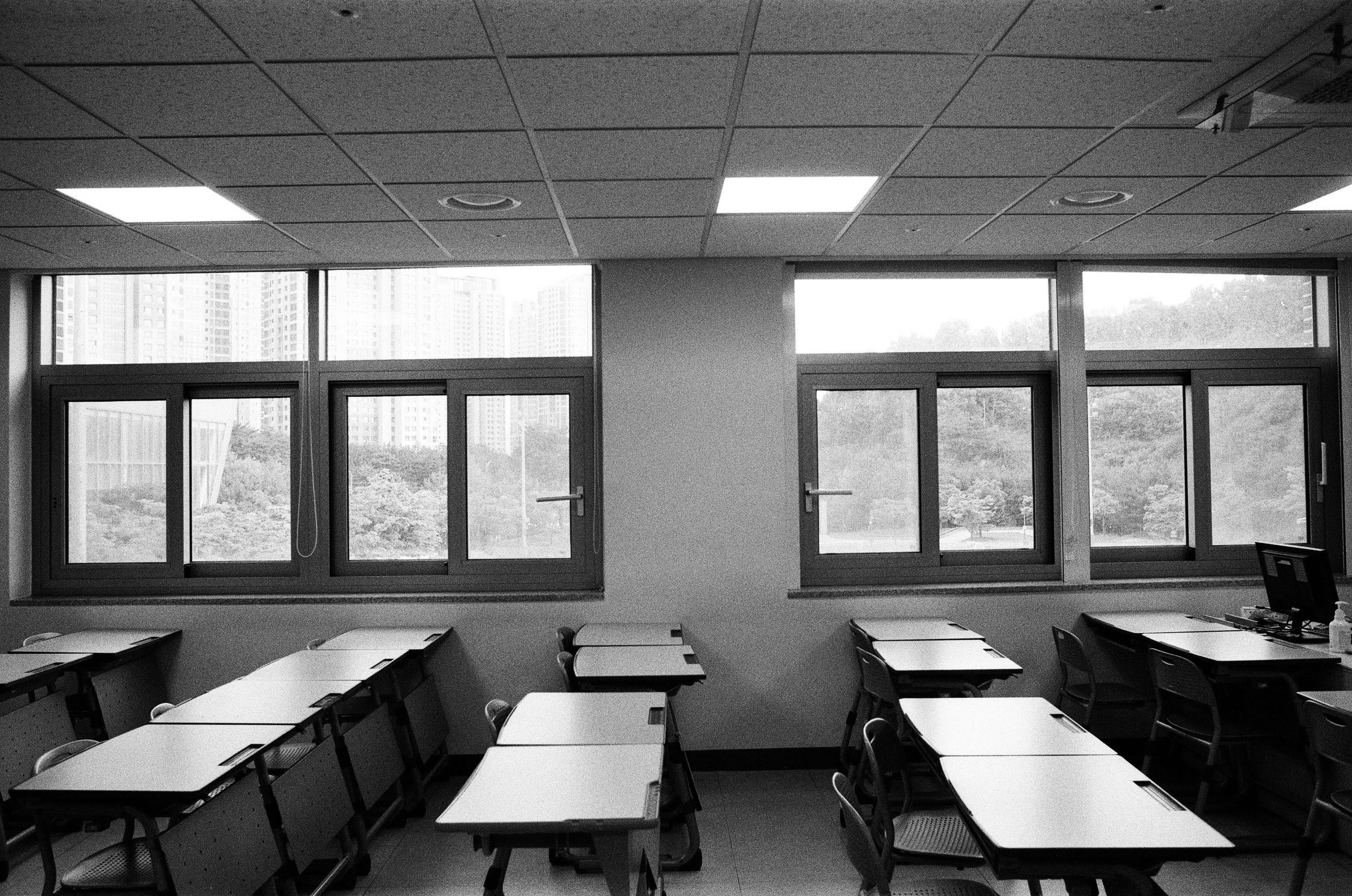
Yet real children rarely cooperate with these assumptions.
Some learn to read early. Others much later. Some are energised by large groups. Others find them draining. Some need substantial recovery time after busy days. Others seem able to move continuously from one experience to the next. Some are drawn towards practical learning. Others towards stories. Others towards movement. Others towards highly specialised interests. The variation is immense.
What my own children, and the many children I encountered professionally, have taught me is that diversity is not an exception sitting around the edges of childhood.
Diversity is childhood.
The challenge is that many systems are not built around this reality. This is not because teachers, schools, or professionals do not care. Large systems inevitably rely on standardisation. They require common expectations, common timelines, common measures of progress, and common assumptions about what children should be doing and when.
The difficulty arises when those assumptions begin to feel more real than the children themselves. Because no standardised description can fully capture a child, no category can contain the whole person, and no assessment can account for every influence acting upon them.
The whole child cannot be captured.
Widening the Frame
Ten years ago, I probably spent most of my time asking what was going on with the child.
Today, I still ask that question. But I ask many others alongside it.
What expectations are operating here? What demands are being placed on this child? What relationships are influencing them? What assumptions are shaping how they are being seen? What aspects of the environment are supporting them? What aspects are creating friction? What forms of conditioning are affecting how they see themselves? What qualities are being rewarded, and which are being overlooked?
The child is still important. Their individuality matters enormously. Their temperament, sensitivities, interests, developmental patterns, strengths, and vulnerabilities all matter. In many ways, I have become more interested in individuality over time, not less.
But increasingly I find myself less interested in deciding who a child is based on what I observe in a single setting and more interested in understanding what happens when this particular child meets this particular environment.
Perhaps that is the question I was really circling all along.
Not who is she? But what is happening here?
Because behaviour, confidence, learning, emotional expression, and wellbeing rarely emerge in isolation. They emerge through an ongoing interaction between a unique child and the world they are growing within.
We are often looking at the child because the child is what we can see. The harder task is widening the frame enough to notice what is shaping them too.
If this piece stirred something, I’d love to hear.
Have you ever found yourself seeing completely different sides of your child depending on where they are, who they are with, or what is being asked of them?
Or perhaps the article prompted a different question altogether:
What conclusions have you drawn about your child that might look different when viewed in the context of the environments they move through?
The reflections shared beneath these articles often help other parents recognise patterns they have been sensing but struggling to put into words.
Subscribe below to receive future essays exploring what we see, what we miss, and what becomes possible when we look again at children and childhood.
That is a very good article. It reflects something I have been thinking about for a long time: how much environment matters. While observing my daughter and discovering her temperament, I have come to realize that there is no single fixed character or personality. Different environments can bring out different traits in the same person and can shape who they become over time.
At the same time, this has also become a journey of self-discovery for me. As I try to understand my daughter better, I often find myself reflecting on my own personality, experiences, and the environments that have shaped who I am today.
Great piece. I have thinking about this a lot too. Everything you say I have observed with my daughter too.