


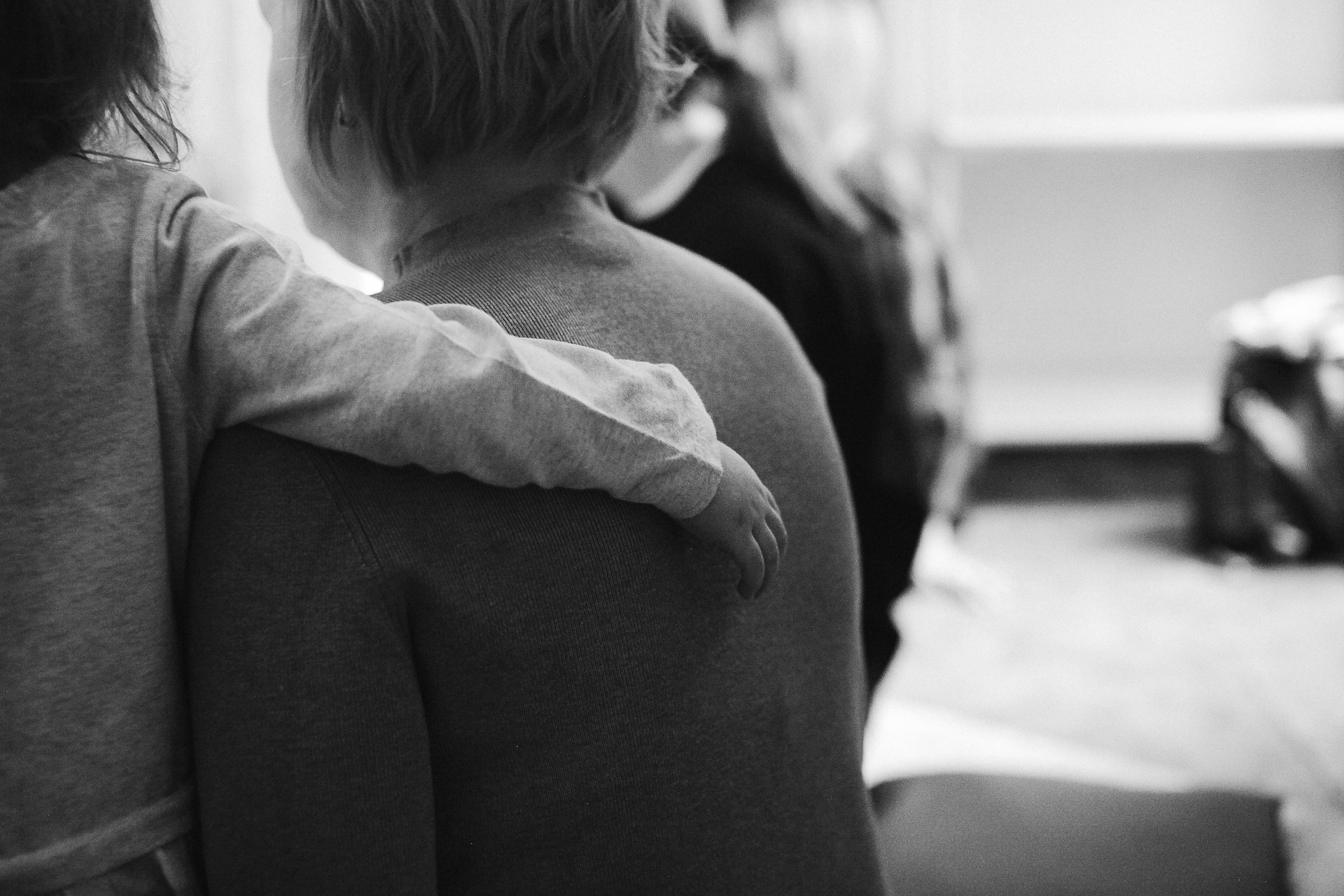
A few nights ago, between dreams, this came to me:
Labels are just surface-level distinctions. Once you get to know a person deeply, they fall away.
We rely on labels to make sense of the world. They help us organise, anticipate, decide what might be needed. They give us a place to begin. But they are not built for relationship — and the closer you get to a real human being, the more obvious that becomes.
In my work, I’ve seen this happen in real time. A child arrives with a long trail of descriptors behind them — inattentive, hard to reach, rigid, obsessional, defiant — sometimes formal diagnoses, sometimes informal labels, but all carrying expectations about how they will be, what they will struggle with, and what will help. At first, those words sit in the background. They shape how adults prepare, what they look for, and the tools they reach for.
But then something else begins to happen.
Over time — through being alongside, observing, trying, adjusting — the child starts to respond. Not to the label, but to the relationship. They might glance, smile, laugh, initiate, or engage in ways that weren’t previously visible. And in those moments, something simple but profound becomes clear.
They are no longer their label. They are simply a person, meeting another person.
Whatever was written on paper no longer describes what is actually happening between us.
I noticed something else, too. The more I set aside what I’d been told about a child — what should work, what they typically need — the more I could see what was actually there. Not their limitations, but their potential. Not a category, but something alive. My responses shifted without effort. I wasn’t reaching for strategies attached to a label; I was responding to what the child showed me, moment by moment. The interaction became more precise, more human, more effective in the ways that actually matter.
This is where labels stop holding.
They work at a distance. From far away, they help us group, orient, and find others walking similar paths. They give us language for shared experience and, sometimes, a sense of belonging. But they only hold at that level. As soon as you move closer — into real relationship — they begin to lose resolution.
They cannot carry nuance. They cannot hold contradiction, context, or emotional texture. They cannot account for the child who “doesn’t engage” becoming deeply interactive in the presence of someone who meets them differently — or for the way a person becomes entirely unlike your expectation once you step outside the frame you first placed them in.
And yet, we are taught to keep using them — to double down when they don’t quite fit. If one set of strategies doesn’t work, perhaps we need a more specific label, a more refined category, a clearer explanation.
I saw this often. Children moving from one classification to another, or gathering additional labels over time, often in the genuine hope that it would bring them closer to being understood, but in practice allowing the system to explain why the previous approaches hadn’t worked. The focus stayed on finding the right box, rather than seeing the child more clearly.
The cost of this is subtle, but significant. When we relate to labels, we stop noticing. We can miss the small signals — a glance, a shift, an attempt — that don’t match what we expect. We begin to respond to a category rather than a person, applying tools before we have fully paid attention.
There is another layer to this that I’ve come to see more clearly over time. It may help explain why so many parents reach the end of a diagnostic or assessment process and still feel uncertain about what to actually do.
Because by that point, the parent already knows their child intimately. They are in relationship with them every day — responding to their nuances, their shifts, their sensitivities, the specific context of their life. Their understanding is detailed, relational, and constantly updating.
But the support they are given cannot come from that level. It is necessarily broad. Generalised. Designed to apply across many children who share a label, rather than one child in the fullness of who they are. And so when a parent tries to use it, something doesn’t quite land. Not because they are doing it wrong, but because they are applying something shaped at a distance within a relationship that exists up close.
The strategy can only meet the surface. The parent is responding to the depth. And in that gap, it can feel as though nothing quite works.
I remember watching interactions where communication was being carefully “supported” through systems and visuals, while the child’s actual attempts to connect — through their body, their timing, their presence — went unseen. The method was correct, but the moment was missed. And it is only through those moments, responded to again and again, that real communication develops.
This is why labels can start to feel uncomfortable the closer you get — not because they are wrong, but because they are incomplete. Held too tightly, they begin to distort what is in front of us.
There is another way of seeing, but it asks more of us. It asks for time, attention, and a willingness to not already know — to meet someone without leaning too heavily on what we’ve been told, and to let understanding emerge rather than applying it.
When you do this, something shifts. Your pace slows. Your attention sharpens. You become more responsive, less prescriptive. The person in front of you has space to show you who they are, rather than who they are expected to be.

This kind of seeing doesn’t scale easily. Systems depend on labels because they need consistency and a way to manage many people at once. But humans don’t work like that. What a system requires and what a person needs are often not the same — and the tension between those two is where much of the struggle sits.
I’ve felt this from the other side, too. As someone labelled a “home educator” for example, I’ve been placed into categories that say more about other people’s assumptions than about what is actually true — weird, risky, irresponsible. Those labels flatten something that is, in reality, considered and intentional. And when someone takes the time to go beyond them — to understand the why and the how — something shifts. I feel seen.
There is relief in that. In being seen more accurately. In not being reduced.
Maybe that’s the simplest way to say it.
Labels help us find each other. But they are not where we meet.
And the question that stays with me is this:
What becomes visible when we stop relating to who we think someone is — and stay with who they are, right here, in front of us?
If this piece stirred something, I’d love to hear.
Where do you notice labels falling away in your relationship with your child?
What becomes visible when you stay with who they are, rather than what you’ve been told about them?
Your reflections often help others recognise what they’re already sensing.
Subscribe below to receive future essays exploring what we see, what we miss, and what becomes possible when we look again at children and childhood.
Great article. This has made me reflect back on many children I worked with in the past and how the school system is so rigid that I was prevented from just seeing the child in front of me. But this resonates most with my own experience with my daughter. When she was in school, a diagnosis/'label' felt so important. And it has been helpful in many ways. But now it isn't as necessary and what is most important is just seeing the child in front of me, her unique needs and meeting her where she is at.