

When Safety Is the Curriculum
Why regulation, not pressure, allows development to unfold.

The Progress That Didn’t Fit
There is a moment from my years as a Speech and Language Therapist that has never left me.
A little girl who, in our early sessions, would cower and retreat from me. She avoided my gaze and seemed locked inside her own world, unreachable. Her parents reported similar total withdrawal and shutdown whenever she was in a new place or met a new person. I remember wondering how I would ever “meet the targets” set for our block of work when she could barely tolerate my presence.

Weeks later, something shifted.
She began to take my hand and lead me around the room. She climbed onto my lap. She took my face in her hands and looked directly into my eyes, smiling, vocalising, inviting connection. The change was not subtle. It was profound. Her whole nervous system had softened.
I would leave sessions like that exhilarated and hopeful.
And then I would sit down to write my notes.
And none of it fit.
Within my professional remit, there was no box for “trust emerging.” No measurable outcome for “body no longer braced.” No target that could legitimately read, “Child now seeks connection with joy.” I could approximate it with something like “engages in shared play for X minutes” or “initiates interaction using non-verbal behaviour,” but that felt like a narrow reduction of what had actually occurred.
What I was witnessing was not skill acquisition.
It was safety.
And safety does not sit easily inside outcome-driven systems.
The Assumption Beneath the System
Modern educational and therapeutic systems are not malicious. They are structured around accountability. They require data, targets, measurable progress. Parents understandably want reassurance that something is “working.” Professionals are required to evidence change.
But embedded within this structure is a quiet assumption: that learning is driven primarily by instruction, and that progress should be demonstrable through observable, repeatable output. If a child is not progressing uniformly, the focus naturally turns toward adjusting the child — their skills, their behaviour, their coping strategies.
What if that assumption is incomplete?
What if development is state-dependent?
What if regulation is not a prerequisite for learning, but the foundation of it?
A nervous system that does not feel safe allocates energy to vigilance. To scanning. To bracing. To coping. There is less energy available for curiosity, language, risk-taking, experimentation. When the body settles, something remarkable happens: energy begins to move again. Engagement arises. Play returns. Communication becomes more possible.
Not always. And not for every child.
There were children I worked with who softened, who connected, who regulated more easily within our sessions — and still did not go on to develop speech. In some cases, much of our 30, 45 or 60 minutes together would be spent helping their nervous systems settle from a state of high alert. By the time they felt safer, our time was almost up.
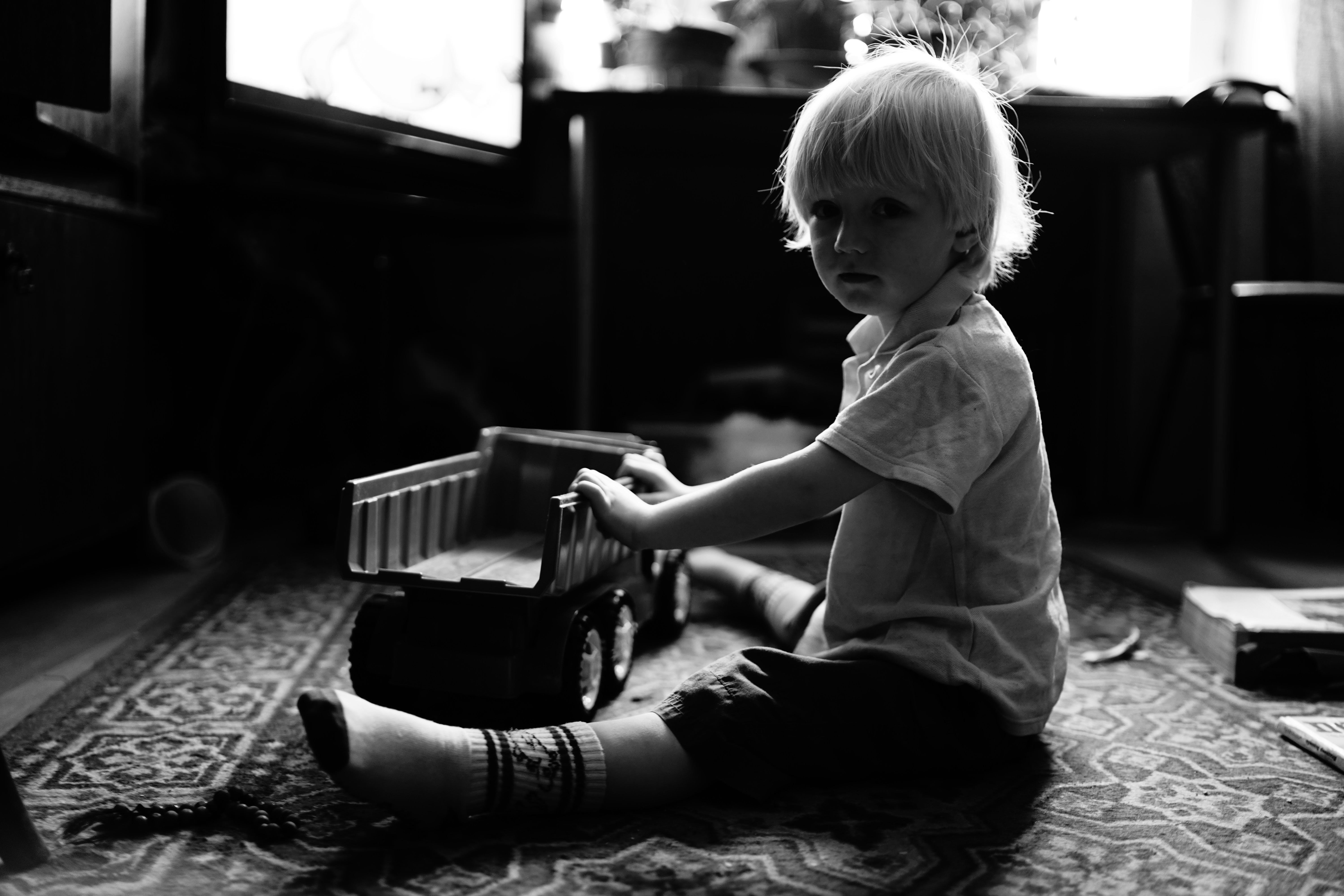
Even the best therapy service is typically once a week. If a child spends the rest of their days in environments that keep their nervous system braced or overwhelmed, it is unrealistic to expect higher-order communication to stabilise and build. It is difficult to construct language on top of a system that rarely experiences calm.
Again and again, I saw that the issue was not always ability. Often it was access. Access to a regulated state in which development could unfold.
I worked across a wide range of presentations — from children in highly specialised environments working on early developmental milestones, to those who were intellectually able and engaged in complex language work within mainstream schools. The nervous system patterns differed in visibility, but not always in essence. Some dysregulation was loud and unmistakable. Some was subtle, masked by cognitive competence and compliance. Both shaped access to learning.
I learned much of what I now understand about regulation from working closely with Occupational Therapists. Their profession holds more language and practical tools around sensory processing and nervous system states — but this knowledge is often siloed. It is treated as specialist, reserved for the most complex cases, rather than foundational to all child development. Regulation becomes an intervention, rather than a starting point.
When Management Logic Meets Living Systems
Systems built for standardisation struggle to honour emergence.
Management systems optimise for legibility, comparability, scalability. Living systems require continuity, responsiveness, time. When management logic is applied to children, natural variation can start to look like pathology. Fluctuation becomes inconsistency. Slow pacing becomes delay. Sensitivity becomes disorder.
In systems that demand uniform progress, variation is difficult to tolerate.
Some children don’t need less support. They need environments that make regulation possible.
The Myth of the “Resilient” Child
I have also come to question what we call “resilience.”
In many classrooms, the children who are quiet, compliant, and undemanding are interpreted as coping well. They are the “good” children. The low-maintenance ones. The ones who do not disrupt.
But good behaviour is often nervous system adaptation.
Compliance can be a strategy of survival.

I’ve lost count of the number of children described as “fine at school” who then unravel completely at home. I remember sitting observing in classrooms and noticing the tension in a child’s jaw, the flitting eyes scanning the room, the fiddling fingers or jiggling legs under the table. Signs that are easy to miss when the collective agenda is to move a large cohort through the material and through the day with limited time and resources.
Sometimes the signs are quieter still. A child who deflects a demand with humour. Who distracts the room just as focus is required. Who shifts the energy sideways when the work becomes cognitively or emotionally loaded. On paper, this can look like attention-seeking or avoidance. In the body, it can be a nervous system trying to regain control.
Some children externalise distress loudly and become visible quickly. Some internalise it and become almost invisible. Others learn to mask it in socially acceptable ways. Systems that equate low disruption with wellness — and assume disruptive behaviour is within the child’s conscious control — can miss a great deal of silent struggle.
Support Without Attunement
More support, too, is not always the answer.
A thoughtful comment on one of my recent notes came from a teacher adjusting to a classroom with a high number of adults. Help arrived quickly — often too quickly. Wait time disappeared, and students were rescued at the first wobble. The intention was generous. The effect was that thinking sometimes had no space to stretch.
Children do not need less help.
They need calibrated help.
Adults who know what to notice. When to wait. When to step in. When stepping in will add something — and when it will simply replace the child’s own process.

That kind of judgement is rarely a formal part of training. It requires attunement. It requires tolerating discomfort — our own and theirs. It requires resisting the pull to intervene in order to soothe our anxiety about slow progress.
Even specialist environments designed to be more supportive can struggle here. Smaller classes and higher adult ratios do not automatically create safety. Frequent staff changes, high turnover, constant transitions, and subtle relational inconsistency can keep some children in a state of vigilance. “Bodies in the room” do not necessarily equal safety. For some children, they can have the opposite effect.
It is not simply about the number of adults present. It is about the quality and continuity of connection.
Pacing, Attention, and the Risk of Misinterpretation
Parents feel the pressure of timelines acutely. I have felt it myself. My daughter began reading “late” by UK standards. There were moments I battled my own conditioning, worrying I was not doing enough, wondering whether something was wrong.
She has always had a lively, quick-moving mind. When tasks are externally imposed and not aligned with her interests, she can appear distractible, resistant, even evasive. Her attention scatters, her body moves, her energy shifts elsewhere. In a more rigid environment, I suspect this would have been quickly framed as an attentional or behavioural concern.
Yet when she is engaged in something that feels meaningful to her, her focus is deep and sustained. She reads now not because she was pushed into it, but because the readiness emerged. Nothing was wrong. She was unfolding in her own time.
If she had been measured strictly against a uniform benchmark — for reading, attention, or compliance — she may well have been labelled. Not because she lacked capacity, but because her wiring did not align neatly with a narrow developmental expectation.
It makes me think of all the children whose natural pacing, attentional rhythms, and resistance to misplaced demands are interpreted as deficits, rather than signals about the environments they are navigating.
Sometimes what we label as difficulty is simply a child’s design expressing itself outside of conditions that suit it.
When Safety Shapes the Structure
In recent years, trauma-informed practice has rightly gained attention. Many professionals want to do better. I remember sitting in training sessions thinking, yes — this is closer to what children need.
And yet, when daily structures remain rigid, staff turnover remains high, and measurable outcomes remain the central marker of success, it is difficult for that understanding to fully translate into practice. Safety cannot simply be layered on top of pressure. It has to shape the structure itself.
Across systems, support often becomes reactive — reserved for crisis points rather than offered proactively as a foundation. By the time help is available, distress has already escalated. When services are overwhelmed and intervention is only accessible at breaking point, we inadvertently reinforce the idea that regulation is remedial rather than universal.
Safety is not a soft extra.
It is not the warm-up before the “real work” begins.
It is the condition under which development organises itself.
When a child’s nervous system settles, learning does not need to be coerced. Curiosity returns. Engagement becomes self-directed. Skill and confidence build from the inside out rather than being pressed on from the outside in.
This does not mean structure is unnecessary. It does not mean children should be left without guidance. It means that structure without safety will always be brittle, and guidance without attunement can quickly become control.
Systems built for standardisation will always struggle to centre this truth. That does not make the individuals within them uncaring. It reveals the limits of the structure itself.
What This Means for Us
For those of us raising, teaching, or supporting children, the implications are both simple and challenging.
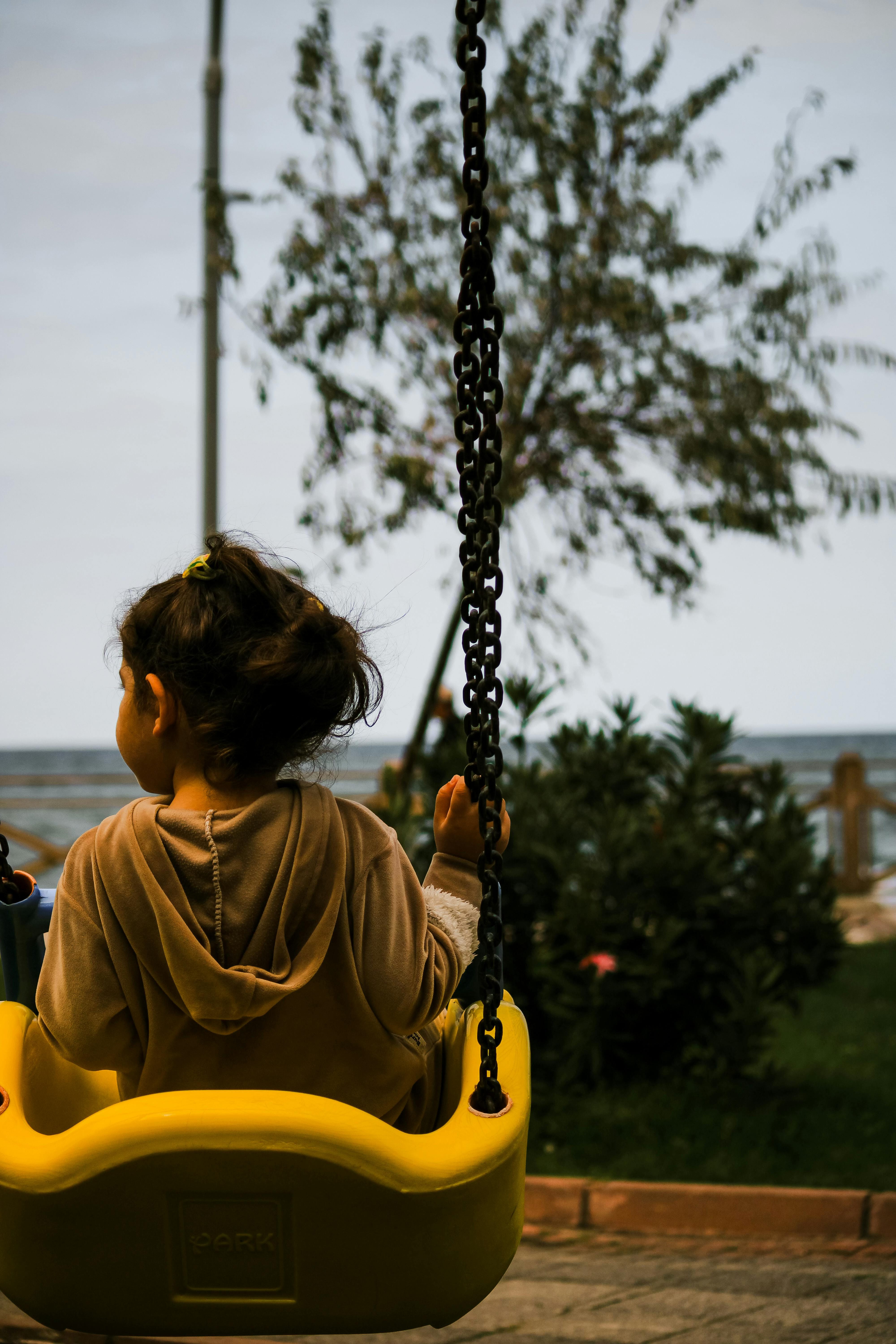
Where does your child exhale?
When do they initiate something without prompting?
Who helps their body soften?
What happens when demands are reduced — not eliminated, but reduced?
And perhaps most uncomfortable of all:
What if the delay you fear is actually pacing?
What if the distraction you worry about is misaligned demand?
What if the resistance you are trying to manage is a nervous system asking for different conditions?
We do not need to fix children as quickly as we have been taught to believe.
We need to examine the conditions we are asking them to grow within.
When safety becomes the curriculum, much of what we call intervention begins to look different.
And sometimes, the most profound progress is not the skill we can measure — but the moment a child’s body finally feels safe enough to begin.
💬 Join the Conversation
If something in this resonated — or challenged you — I’d genuinely value hearing your reflections.
What did you recognise in your own child?
Or in yourself?
Your perspective helps deepen this conversation for all of us.
🔄 Share This Piece
If this felt meaningful, you’re welcome to pass it on.
These conversations grow slowly — often through quiet sharing between parents, educators, and professionals who are rethinking what development really requires.
✨ A Gentle Invitation: Human Design Insight
Every child has a natural rhythm — a way their energy moves, focuses, and rests.
If you’re curious about understanding your child’s patterns more deeply, I offer a free mini Human Design insight by message — a simple starting point for seeing your child’s strengths and sensitivities through a different lens.
🌱 1:1 Sessions
For families who want to explore more fully, I offer 1:1 sessions where we look at your child’s unique blueprint in depth.
We explore regulation, learning, environment, and decision-making — not to fix your child, but to understand them more clearly and support them in ways that feel aligned and sustainable.
📚 You Might Also Enjoy
If this piece resonated, you may also find these helpful:


💌 Stay Connected
If you’d like more reflections on learning, regulation, and conscious parenting, you can subscribe to receive weekly insights and practical guidance.
This is really something, and I think I need an ongoing class on it. If you created one, I’d have to sign up.
I was this child:
“In many classrooms, the children who are quiet, compliant, and undemanding are interpreted as coping well. They are the “good” children. The low-maintenance ones. The ones who do not disrupt.”
My daughter is loud, intense, and determined. Something I’ve mistaken for inappropriate behavior at times, rather than a child who fully embodies herself. I’m not always sure how to balance both of our needs. But I do find myself pulling back on lessons to assess things like overstimulation, big feelings, and connection.
I hope you continue writing more on this topic. Many of us need it.
Thank you for writing this and sharing your insights. The section on pacing and misinterpretation really resonated with me. Recognising readiness as a thing and moving away from school-based expectations is something that’s been top of mind for me for a while now. When we accept rigid ideas about developmental timelines, and children don’t meet them, it’s so easy to default to more — more input, more support, more intervention. But I’ve learned with my own kids that readiness doesn’t respond to volume or adult-imposed urgency. A child who isn’t ready to read, or speak, or engage with a particular concept, doesn’t become ready faster because more adults are involved.
Speech and reading seem to trigger the most anxiety for parents and educators because they’re so visible. It makes it genuinely hard to just continue providing rich input and simply wait for a child’s natural pacing to arrive. Although I still wonder, at what point do you start thinking about disabilities that do need extra support of intervention? I still haven’t resolved that tension yet.