


The Moment Something Shifts
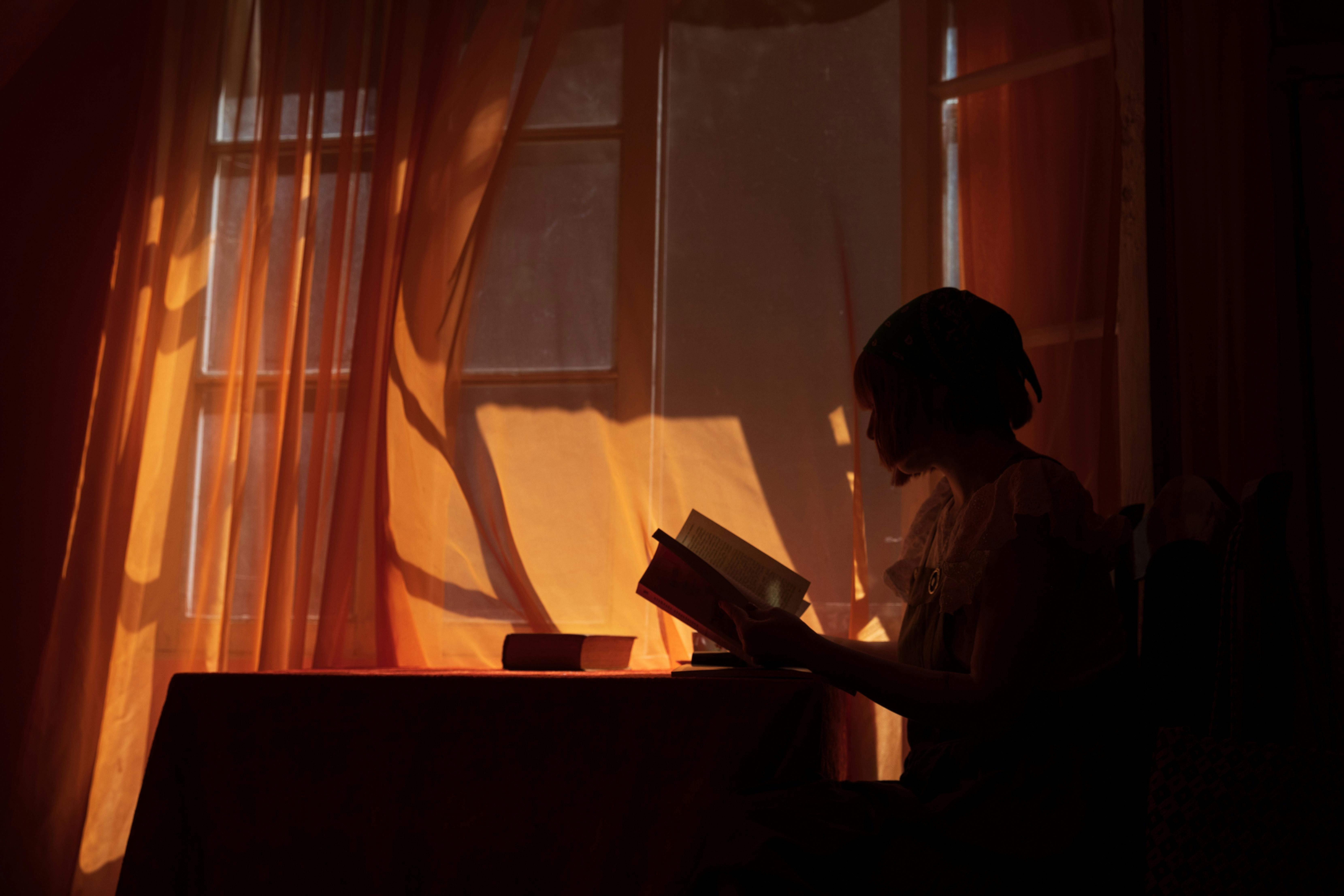
In the early pages of reading a book — before the plot has fully taken hold — things begin to form alongside the words. A place appears. A house, perhaps, or a street, or simply a sense of atmosphere that holds everything together. It happens without effort, somewhere just beneath awareness. I’m not actively trying to picture anything, and yet the images arrive — coherent, textured, surprisingly precise — supporting the story rather than interrupting it.
And then, sometimes, I notice them.
There’s a subtle shift in that moment. What was once in the background moves into focus. My attention narrows. I begin to look at the image more directly, to explore it, to make it clearer, to enter it more fully. But almost immediately, the quality changes. The ease disappears. The images lose their fluidity, their richness. I become aware that I am trying to generate them rather than receiving them, and the more I lean in, the more they falter — until they either dissolve completely or feel flat and constructed, like something assembled rather than something that arrived.
So I step back.
Not dramatically — just a small internal release. My attention returns to the flow of the story, and I let go of the images entirely. And then, without effort, they begin to form again. Not because I’ve done anything to bring them back, but because I’ve stopped interrupting whatever was organising them in the first place.
Something changes when attention becomes directive.
From Awareness to Control
There seems to be a very precise tipping point in this process. Simply noticing the images doesn’t disrupt anything — but awareness has a tendency to move. It sharpens, narrows, becomes more focused. Almost without deciding to, I shift from witnessing to observing, and from observing to subtly trying to do something with what I see.
What I’m really reaching for, in that moment, is a deeper experience. I want to hold the image more clearly, to explore it, to make it more vivid and tangible. But the irony is that the act of trying to deepen it is exactly what breaks it. The more I grasp, the more it slips.
What’s lost is not just speed, but coherence, naturalness, and a kind of underlying intelligence in how the image fits the unfolding story. In its place, something more deliberate appears — constructed, slightly rigid, disconnected from the wider flow.
It feels like replacing something organic with something managed.
What Organises Itself
Stepping back, then, is not passive — it’s precise. It means returning to a wider field of attention, where the story is central again and everything else is allowed to organise itself around it. It requires a kind of trust: that what was happening before I intervened was not incomplete, and did not need improving.
Perhaps part of the difficulty is that we have been taught to mistrust unfolding. Much of modern life is organised around management, optimisation, measurable progress, and intentional outcomes. We assume that more management produces better results. Sometimes it does. But there also seem to be forms of creativity, insight, play, and development that lose coherence when held too tightly.
Once you notice this, it becomes hard to ignore.
In creativity, for example. There are times when writing or making something feels almost effortless — an idea arrives, and the rest gathers around it with surprising coherence. The process feels alive, as though it is unfolding rather than being constructed. And then there are times where the same work becomes slower, more deliberate, more pieced together. Still valid, still productive — but different in quality.
I’ve noticed this in my own writing and in songwriting before that. When something comes through me — unexpectedly, without force — it often arrives with a completeness I couldn’t have planned. When I try to sit down and produce something intentionally, it can still be done, but it lacks that same sense of flow. It is as though chasing the idea makes it move further away, while leaving space allows it to take shape in its own time.
There are certain processes — curiosity, creativity, insight, even motivation itself — that seem to organise themselves more effectively when they are not held too tightly. Chase them too forcefully, and they seem to scatter. Leave space, and they begin assembling on their own.
Children, and the Subtlety of Attention
This is where the reflection begins to matter beyond reading or writing. Because I wonder if something similar happens in the presence of children.

We pay attention because we care. Because we want to support, guide, help. But attention is not neutral — it carries a lens, a frame, a sense of what we are looking for. And often, without realising it, that attention becomes directional.
We begin by noticing. Then observing. And then, almost imperceptibly, we start to steer. A comment, a question, a suggestion, an explanation. Each one small, reasonable, and of course well-intentioned.
Yet I find myself wondering what happens in that shift — when a child’s attention moves from their own internal process to something shaped, however lightly, by ours. When their play, their thinking, their exploration becomes something slightly more visible, more held, more influenced.
Does something change in the same way it does with the images in a story? Not dramatically. But subtly, perhaps. In pace, in coherence, in the depth of what might have unfolded if left uninterrupted.
Because there is a difference between watching through a lens and seeing with an open field of attention. One is already oriented toward interpretation, progress, or outcome. The other allows something to unfold before deciding what it is.
And perhaps that difference matters more than we realise.
Where Involvement Becomes Interference
I notice this most in small, ordinary moments. The impulse to add something — to comment, to explain, to guide a little further than is necessary. The assumption that more input will deepen the experience.
Sometimes it does. But sometimes, it feels as though I’ve stepped into something that didn’t need me. That there was a process already underway — of thought, of play, of integration — that might have continued, or even deepened, without my involvement.
So the practice becomes one of noticing. Catching the moment before I move in. Asking myself: is this support, or is this interruption?
Not as a rule, but as an awareness.
Because there are processes that do not require our management to unfold well. And sometimes, our attention — however well-intentioned — is the very thing that disrupts them.
An Ongoing Letting Go
This doesn’t lead me to step away from my children, but to soften how I step in. To interrupt less quickly. To explain a little less. To trust that not every question needs a full answer, and that sometimes the space after a question holds more potential than the answer itself.
It’s an ongoing process of letting go — not of responsibility, but of the reflex to manage. Of allowing rather than directing. Noticing without immediately correcting. Staying with the wider field rather than narrowing too quickly into detail.
Because when I return to that image of reading — of something forming naturally until I tried to hold it — I can’t help but wonder how often the same pattern plays out in other areas of life.
How often something is already unfolding. And how often, without meaning to, we interrupt it by trying to help it along.
If this piece stirred something, I’d love to hear.
Where do you notice yourself moving from attention into intervention?
What changes when you stay with what is unfolding a little longer, before stepping in to guide, explain, or shape it?
Your reflections often help others recognise experiences they have felt but not yet put into words.
Subscribe below to receive future essays exploring what we see, what we miss, and what becomes possible when we look again at children and childhood.
This was such a rich post that I have come back it several times. Full disclosure: it was just kind of observing and self-observing that has informed much of Josette and my work in Natural Learning Relationship. (More that on the website.)
Just the term "What Organizes Itself" opens us in so many ways. It undermines power-over dynamics. It allows us to breath Nature and ourselves as natural for Nature is obviously self organizing in minute and macro balances to allow life.
The term "self-organizes" is crucial. Prigogyne won the Noble prize in 1969 when he discovered that molecules self-organize when given a nurturing environment. I won't go through the radical changes this has brought to science. Suffice to say thats systems self organize to greater complexity when appropriately nurtured.
In other words, humans are open systems. We do not have to do anything except provide the proper nurturing environments for the developmental moment of children.
I so resonate with so much of your insight, and dare I say, wisdom. Your previous post centering on energy centres as way to decondition strikes me in two ways. First, acknowledgement of the primacy of deconditioning for well-being in the family and education. Then, more deeply, taking us through the specifics of well-being in each energy centre and the confusions and conditionings attendant when they are not known for the greatness they inhere.
And now this post taking us deeper in the dynamics of attention and control. I especially enjoy the way you describe self-observation as central to awareness of when control sneaks in. While clearly inferred that self-observation is available to everyone I would like to make it more explicit. I have participated in bringing self-observation forth for many over many years and often find folks them unfamiliar with this nature human capacity.
I repeat: natural human capacity. I live with this aphorism: capacities are innate; development depends upon relationship. My work centers on the consciousness of children. And so the critical question: what kinds of relationships with children bring forth the actualization of self-observation?
I have a viable response to that question. And the joy of participating with children self-observing. Of course, within their developmental capacities.
To the point of your posts, the question arises fo how to bring it forth in adults when they have not had the relationships which nurture self-observation? For the adults are the central relationships for the children. I have struggled with that for years with varied success. I see your posts as reminders for adults and wish you and all the readers every success to be able to implement that which you have shared.