


When adults think about misunderstanding, we often think about information.
We assume that if enough observations are gathered, enough meetings are held and enough assessments are completed, then eventually the misunderstanding will resolve. The right explanation will be found and the right support put in place. From the adult perspective, misunderstanding feels like a temporary problem that exists because something important has not yet been discovered.
But children are not waiting for adults to figure them out.
While adults are arranging assessments, writing reports and discussing concerns, children are making sense of their experiences. They notice which parts of themselves create concern and which seem to be welcomed. Long before they have the language to describe who they are, they are gathering evidence about themselves.

I was reminded of this recently by my youngest daughter.
A while ago, when she had only just turned two years old, she began responding with surprising emotion whenever the word “naughty” entered a conversation. “I’m not naughty!” she would insist, looking genuinely distressed by the possibility that this description might apply to her.
The word had not been directed at her. She may have encountered it in books, television programmes or conversations around her. Occasionally I had used it gently to describe a behaviour rather than a person. Yet somehow she had already grasped something that many adults spend years trying to untangle: the difference between doing something adults disapprove of and being the kind of person who is bad.
Each time she said it, we reassured her. “No, you’re not naughty. Sometimes people do things that aren’t kind or helpful, but that doesn’t make them a naughty person.”
At two years old, she was already trying to understand what sort of person she was.
Children do this constantly. Most of the time the stories they form are not created through dramatic events or obvious moments of rejection. They emerge through accumulation. Hundreds of ordinary interactions gradually begin to point in the same direction. A correction, a comparison, a worried conversation between adults, a repeated experience of finding something harder than everyone else seems to.
Over time these moments begin gathering around a central question. What does this mean about me?
When Concern Becomes Identity
One boy I worked with many years ago has lodged in my memory because he taught me how easily misunderstanding can become woven into a child’s sense of self.
By the time I met him, his paperwork was already thick with descriptions. Demand-avoidant. Oppositional. Disruptive. Resistant. The overall picture was of a child who rejected almost everything adults attempted to offer him. Whether it was learning activities, support, encouragement or intervention, he seemed determined not to engage. Within the small groups I supported, I could immediately see why those descriptions had emerged. He worked remarkably hard not to participate. His attention seemed magnetically drawn towards distractions. He was constantly trying to make peers laugh, pull focus away from activities and avoid meaningful engagement with whatever an adult was trying to do.
Yet as I spent more time with him, I became less interested in the behaviour itself and more in what purpose it served.
Elsewhere in his file sat years of evidence documenting difficulties. Difficulties with literacy, writing and language, alongside repeated references to him struggling to keep pace with expectations. Reading through it, I found myself wondering what story this child had been living with long before I met him.
Because children do not experience these processes from the perspective of professional intentions. Adults may see support, schools may see intervention, and clinicians may see assessment. But children often experience something much simpler.
They experience being someone adults seem worried about.
Perhaps the story begins with repeated experiences of finding something harder than everyone else appears to. A child takes longer to finish work, misunderstands instructions, struggles to organise their thoughts onto paper and watches classmates move through tasks that seem frustratingly out of reach. At first these are simply experiences. Frustrating perhaps, but not yet part of identity.
Then the experiences begin to accumulate.
A teacher corrects them more often than other children. Work comes home unfinished. They hear phrases like “not trying hard enough” or “capable of more.” They notice adults having conversations that seem to be about them. Someone is asked to spend more time helping them. They are given additional work to practise skills that do not come easily. They begin to realise they are receiving different treatment from their friends.
Adults see support. The child may experience it as confirmation that they are struggling in ways their peers are not.
Then come the assessments. A stranger asks questions and presents tasks that seem to revolve around the very things the child already feels unsure about. Meetings are arranged. Reports appear on kitchen tables. Parents have conversations behind closed doors that become increasingly tense and worried. The child catches fragments of language. “Difficulty with...” “Needs support for...” “Concerns about...”
Nobody intends these experiences to become part of a child’s identity, yet children are constantly making meaning from what happens around them.
Perhaps worry, embarrassment and frustration begin spilling out into behaviour. The child starts avoiding tasks. They become argumentative. They joke instead of working. They distract others. They stop trying altogether. Adults understandably focus on the behaviour because it is visible.
What often remains invisible is the emotional landscape beneath it. The shame of needing extra help, the exhaustion of spending each day in an environment that highlights your weaknesses, and the dread of situations that might reveal them yet again.
I often think about children who eventually reached the point where school itself became associated with failure. Not because they lacked ability or potential, but because so much of their experience involved being reminded of what they could not yet do. They would wake each morning knowing another day awaited in which they would be corrected, compared, assessed or supported. Even when the support was well-intentioned, it could become difficult to separate from the feeling that something was wrong.
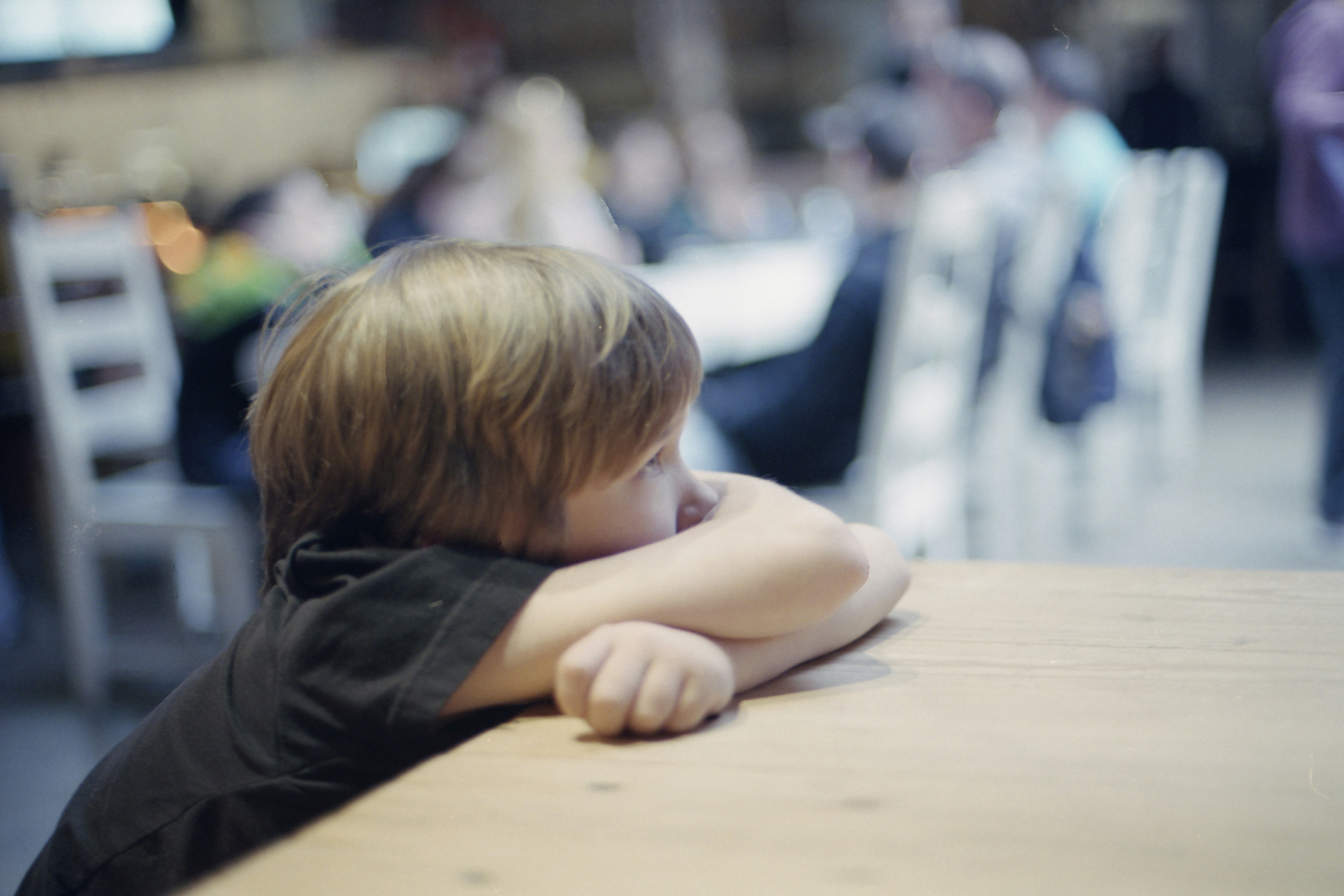
And then the behaviour begins making perfect sense.
Of course the child wants to avoid the work. Of course they would rather be the class clown than risk feeling inadequate. Of course they retreat into something like gaming, where competence feels accessible and progress is visible. Of course homework becomes a battleground when all they want is a few hours away from the place and the activities that make them feel bad about themselves.
And all the while, important parts of them may begin disappearing from view. Their humour, creativity and capacity to become deeply absorbed in the things they love — perhaps a fascination with building intricate constructions or creating elaborate worlds. These qualities have not vanished. They simply receive less and less attention as concern takes centre stage.
Over time, the original difficulty can become something much larger. A slower timeline becomes “I’m behind.” Receiving additional support becomes “I’m different.” Adults worrying about your learning becomes “There is something wrong with me.”
Eventually a child may stop seeing themselves as a capable person facing particular challenges and begin seeing themselves as the challenge itself.
When Needs Become Character Flaws
Other children arrive at similar conclusions not through obvious struggles with learning, but through difficulties that are easier to miss.
Throughout my career I saw countless children being corrected, reprimanded or criticised for behaviours that made perfect sense once their experience was properly understood. I met children who communicated well enough that nobody worried about their language development, yet found the constant stream of instructions, explanations and interactions that filled their school day far more demanding than adults recognised. I met children who were overwhelmed by sensory input long before anybody recognised that overwhelm was occurring. I met children whose distress was interpreted as defiance, whose shutdown was interpreted as disengagement, and whose attempts to protect themselves were interpreted as behavioural problems.
Often nobody intended harm. Teachers and schools were responding to what they could see while working within significant constraints. The difficulty was that what they could see was often the final stage of a much longer process.
A child who appears inattentive may have spent hours trying to make sense of language and interaction that is moving faster than they can process. A child who seems oppositional may already be overwhelmed. A child who appears disruptive may be attempting to communicate a need they do not yet have the language to express.
Yet when these experiences are repeatedly misunderstood, children frequently locate the problem within themselves rather than within the interaction between themselves and their environment: I am too sensitive. I am difficult. Something is wrong with me. Everybody else seems able to cope. Why can't I?
The same process often plays out socially. I lost count of the number of older children and teenagers I observed working extraordinarily hard to fit in. Many became experts at studying other people. They monitored reactions, copied language, mirrored interests and adjusted their behaviour in ways that appeared seamless from the outside. Some laughed along with jokes they did not fully understand. Some abandoned interests that attracted ridicule. Some spent enormous amounts of energy trying to ensure that nothing about them stood out in the wrong way.
Adults often saw adaptation; what I saw was exhaustion. Because belonging had become conditional upon performance.
The message they seemed to have absorbed was not simply that they were different. Difference itself is not necessarily painful. The message was that difference threatened belonging, and therefore needed to be managed.
In contrast, one of the things I have observed repeatedly in alternative learning spaces is what happens when that pressure softens. I think of home education groups where children arrive exactly as they are. A child might wear headphones throughout a session. Another might spend half the morning enthusiastically questioning adults about a specialist interest. Another might engage from the edge of the group until they feel comfortable joining in. Because there is no rigid agenda that everybody must move through at the same pace, differences are far less likely to become problems that require correction.
The child does not need to spend every moment adapting to the environment, because the environment adapts too. And that changes the story a child is able to tell about themselves.
What Changes When A Child Is Truly Seen

One of the most hopeful things I have witnessed is what happens when children encounter environments where they feel accurately understood, rather than managed or fixed.
I have seen this often enough that I no longer find it surprising. Children who have been described as resistant become curious when the pressure eases. Children who have avoided writing fill notebooks with stories once they are allowed to choose the subject. Children who once seemed withdrawn become animated when someone finally takes their interests seriously.
Adults often talk about these changes as improvement. I am not sure that is always the right word. The qualities emerging are rarely new. More often, they were there all along, obscured by environments that did not know how to see them. Sometimes the child has not fundamentally changed at all. What has changed is the lens through which they are being viewed.
I think about this often in relation to my own daughter. If she were placed into an environment that valued only one narrow expression of learning, aspects of her development might easily be interpreted through a deficit lens. Her interests, motivations and ways of engaging do not often align neatly with conventional expectations. Yet because I know her deeply, because I have the luxury of closely observing her over long periods of time, I can look beyond the behaviour itself and ask different questions.
Not: Why isn't she engaging in the expected way? But: How does engagement happen for her? That reframe sounds small, yet it changes what becomes visible.
Because once the question changes, the child’s differences stop being evidence of deficiency and become information about how that particular child learns, relates and engages with the world.
Children do not only learn from what adults teach them. They learn from how adults interpret them, from what is noticed, celebrated, corrected and repeatedly brought to their attention. Long before they have the words to describe themselves, they are gathering evidence about who they are and where they belong.
Which is why misunderstanding matters.
Not simply because it affects behaviour, but because it shapes identity.
The stories children come to believe about themselves are not created in isolation. They emerge through countless interactions with the adults, environments and systems around them. Often, they begin long before anyone realises they are being written.
If this piece stirred something, I’d love to hear.
Was there a child who came to mind as you read? Your own child, perhaps, or even yourself?
What stories are the children in our lives learning about themselves from the ways they are being seen, supported and spoken about?
The reflections shared beneath these articles often help other parents recognise patterns they have been sensing but struggling to put into words.
Subscribe below to receive future essays exploring what we see, what we miss, and what becomes possible when we look again at children and childhood.
"Eventually a child may stop seeing themselves as a capable person facing particular challenges and begin seeing themselves as the challenge itself."
That is exactly what I see. By the time many of these children reach me, the story is already so embedded. They are not avoiding the task. They are protecting themselves from another piece of evidence that confirms what they have already come to believe about who they are.
What you describe about alternative learning environments resonates deeply too. I have watched the same children who were labelled resistant become genuinely curious the moment the environment stopped requiring them to perform competence they did not yet feel.
The reframe you offer; not why isn't she engaging but how does engagement happen for her; is where everything shifts. It is such a small turn, and it changes everything that follows.
I write a lot about this from the school side of things, and it is always the relationship that creates enough safety for a child to risk being seen differently. Thank you for putting this into words so carefully.
So many passages of this essay stood out for me, but this is one that i'm still thinking about:
"Adults often talk about these changes as improvement. I am not sure that is always the right word. The qualities emerging are rarely new. More often, they were there all along, obscured by environments that did not know how to see them. Sometimes the child has not fundamentally changed at all. What has changed is the lens through which they are being viewed."
It can be so hard to look at our children (or the children in our care) through a neutral lens, one that isn't blurried by worries about how they are keeping up or fitting in. But as you point out, it's so, so important--- being truly seen can change a person's whole trajectory.
have you ever heard of the descriptive review process (Pat Carini)? It's a beautiful process that groups of educators can use to really see a child and then inform their work with that child.