


Field notes from everyday life-learning — small moments that shape children’s learning and growth.
Over recent weeks, my writing has circled around three ideas that, at first glance, seemed quite separate. I found myself exploring what children begin to believe when they are misunderstood, questioning how tightly we hold onto our opinions about children, and wondering whether two children ever truly inhabit the same world in the same way.
Only afterwards did I realise they had all been leading me towards the same place.
I thought I was writing about children. Increasingly, I think I have been writing about perception itself. About how we come to believe we understand another human being, and how much of that understanding is shaped by the assumptions, language and systems we bring long before the child has had a chance to reveal themselves.
As always, though, life has a way of continuing the conversation beyond the page.
This month, that conversation has unfolded in the ordinary rhythms of our home, and in a question I didn’t expect to become so important.
What counts as learning? Or perhaps more accurately... Why do we feel such a need to prove that learning has happened at all?
When Experience Isn’t Enough
Over the past few weeks, I’ve repeatedly found myself caught between simply living alongside my children and wondering how what they’re doing would ever “count” as learning. The thought often arrives without invitation. P will be completely absorbed in something she has chosen herself, and alongside appreciating what she’s doing, another voice begins asking different questions.
How would I record this? What would this be evidence of? How would anyone else know that learning was taking place here?
The interesting thing is that P isn’t asking those questions. She is simply immersed in the experience itself. The questions belong to me. Or perhaps more accurately, they belong to years of conditioning within a culture — and later a profession — that taught me learning should leave behind tangible evidence of its existence.
The more I have reflected on this, the more I’ve realised how deeply recording shapes our understanding of learning. School, understandably, depends upon it. Children learn to write not only because writing is valuable in itself, but because it becomes the vehicle through which so much other learning can later be demonstrated. Across almost every subject, learning eventually becomes something that must be written down, measured, assessed or otherwise made visible.
Somewhere along the way, evidence becomes intertwined with value. We begin to trust most readily the learning we can point to, record or evaluate. It is as though the experience itself is no longer quite enough. I find myself wondering what this tendency reveals — not only about education, but about the way we’ve come to live.
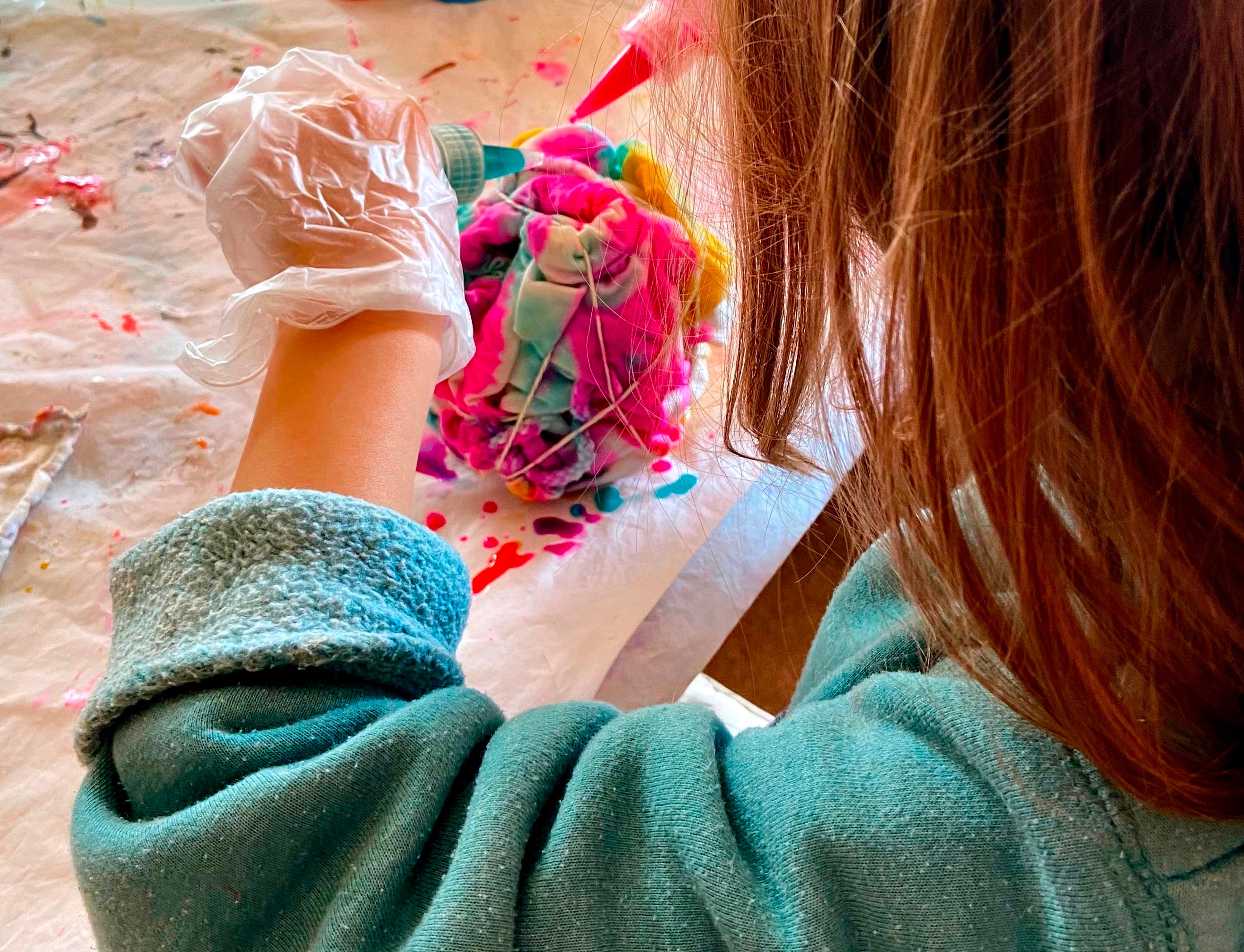
This month I discovered a fascinating app called Prism Learning, created by educators who had long wrestled with exactly this tension. With just a few clicks, you can upload photographs, videos or brief descriptions of everyday experiences, and its AI identifies the learning taking place within them.
I uploaded a photograph and short description from our recent trip to London. Within moments it highlighted geography, mathematics, literacy, navigation, spatial reasoning, critical thinking, confidence, curiosity and much more.
I was struck not just by the analysis itself, but by what it revealed about my own thinking. The learning had always been there. What was missing was my ability to recognise it. I was still unconsciously looking for the kinds of evidence I had been trained to notice — and, perhaps more importantly, to value above other forms.
It felt less like a clever piece of technology and more like a mirror. It left me wondering whether the problem runs deeper than I had realised. Perhaps we don’t simply overlook vast amounts of learning. Perhaps we’ve come to value the learning we can most easily point to, while overlooking the richness of everything else.
Increasingly, I suspect the relationship is the other way around… Learning is always happening. It is only sometimes recorded.
Living beyond measurable outcomes
Looking back over our month, I realise just how impossible much of childhood is to squeeze into predetermined boxes.
P has become fascinated by filming. She knew she wanted to make a music video, but at first imagined it as simply filming herself dancing. As the project unfolded, she began to understand the many decisions involved: choosing locations, rehearsing scenes, experimenting with lighting and camera angles, and discovering how editing transforms individual clips into a coherent story.
During the recent spell of sweltering weather, we spent long hours indoors with the curtains closed and the fan on, punctuated by paddling pool sessions. It was during those slow summer days that P learnt to play card games such as Go Fish and Old Maid for the first time, engaging with patterns, probability, strategy and number relationships without them ever being the point.
Another recent highlight was when a family within our local home education coop opened up their world of wool crafts. P explored the journey from fleece to finished yarn, using spinning wheels, knitting machines, felting techniques and helping other children with knitting and crochet.
She has also spent hours sorting and reorganising her belongings, deciding what genuinely mattered to her, categorising possessions, creating new systems and completing the cycle by donating unwanted items to charity.
She continues to build increasingly intricate furniture and miniature worlds from cardboard, fabric and hot glue. One recent project led me to ask AI to analyse it, curious about the mathematical thinking involved. Reading the response was strangely reassuring. The geometry, measurement, proportional reasoning, spatial thinking and problem-solving were there all along. They simply weren’t appearing as calculations written on a page, measurements recorded with a ruler or answers to set problems. They were woven into the making itself.


In turn, it left me wondering how often we mistake the language of mathematics for mathematics itself. If the symbols are simply one way of expressing mathematical thinking, what, then, is mathematics? The notation itself, or the patterns, relationships and reasoning it allows us to communicate?
Perhaps the biggest recent surprise, though, has been fashion and make-up. A few months ago I was viewing this passionate interest of P’s with considerable discomfort, influenced by many of the cultural messages surrounding young girls and appearance. Then one day she looked at me and said, completely matter-of-factly:
“But Mum... make-up is an art. It goes together with fashion perfectly. It expresses a whole style.”
She was right of course. She reminded me that I had been looking at her interest through my own assumptions rather than through her eyes. She wasn’t trying to look older or become someone else — she was creating. For her, make-up isn’t about appearance as much as expression. She has always been fascinated by faces — watching people closely, noticing subtle differences, taking in colours, shapes and expressions. The human face has become her latest canvas.
Once again, the learning is always there. It is my interpretation that needs to change.
Development rather than curriculum
This month has also helped me understand something I’ve struggled to articulate for quite a long time.
I often wonder why I find curriculum so difficult to get on board with, even before considering the fact that P herself has little interest in formal lessons. I think I’ve finally realised that it’s because I don’t naturally see children through the lens of curriculum. I see them developmentally.
Perhaps that comes from my years of training and working as a speech and language therapist. Development asks different questions. It looks for the edge of a child’s current capacities and wonders what might gently support the next stage of unfolding. It assumes growth emerges through a relationship between the child, the environment and the opportunities around them. Curriculum often begins somewhere else. It starts with an external framework and asks how to help children reach it.
One approach asks, “Where is this child, and what might support their unfolding?” The other asks, “Where should this child be by now?” The difference feels subtle on paper, yet enormous in practice.
Even the word support has begun to feel different to me. Increasingly, I find myself thinking in terms of facilitating children’s unfolding rather than moving them towards predetermined destinations.
Perhaps what I’ve really been searching for isn’t a curriculum at all, but a developmental compass — one that honours the uniqueness of each child while still helping us recognise where they are, how they are growing and what they might be ready for next.
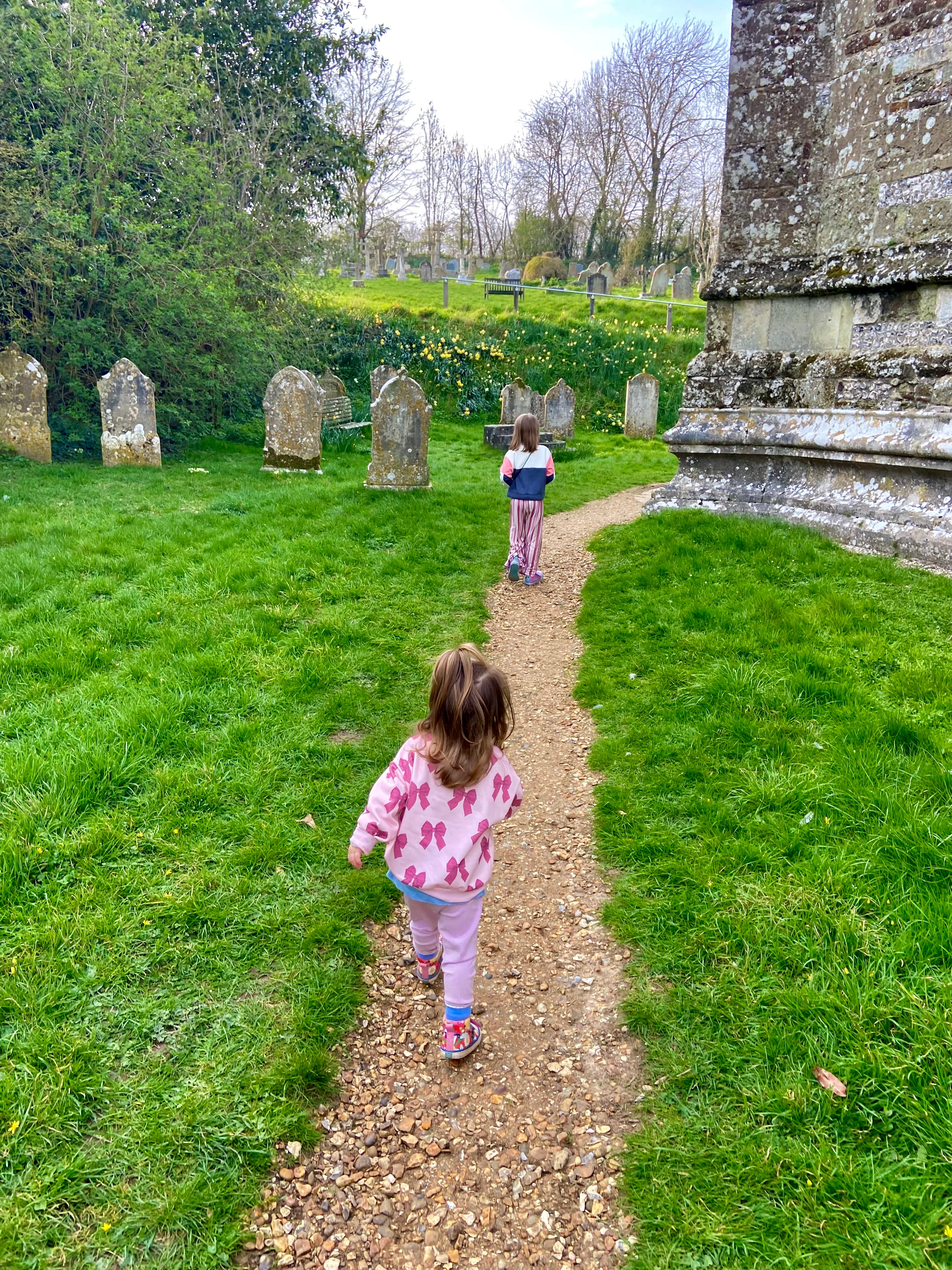
I’m beginning to suspect that many parents who choose alternative educational paths aren’t actually rejecting structure. They’re rejecting frameworks that begin with the system and expect the child to fit it, rather than beginning with the child and allowing everything else to grow from there.
Closing
Looking back now, I can see that these reflections sit alongside everything I’ve written this month — misunderstanding, opinions, sensitivity, perception. Each piece has invited me to loosen my grip on assumptions I hadn’t even realised I was carrying.
Perhaps this month’s invitation has simply been another version of the same lesson. To notice how easily we confuse evidence with reality. To remember that what can be recorded and measured is never the whole of what matters. To trust that childhood has always contained far more learning, creativity, development and becoming than any framework could ever hope to capture.
Those are this month’s field notes. Not conclusions, but another glimpse of what becomes visible when life is allowed to teach alongside books, theories and systems.
If there’s one thing I’m taking into next month, it’s this: learning doesn’t begin when we record it. It begins the moment a child starts living.
Until next time,
Gem 💎
Subscribe below to receive future essays exploring what we see, what we miss, and what becomes possible when we look again at children and childhood.
I love your reflections Gem, and what you do for your children.
It is so beautiful to watch them grow through your perspective.
And yes, it made me ponder more about the deeper meaning of math.
Lastly, you are giving your children a beautiful gift of learning.
This is a beautiful reminder that to look off the prescribed path and beyond the numbers. It's one of the best parts of homeschooling and one I truly embraced when my kids were younger. But as we have arrived in the high school years it has become difficult to stay true to our original homeschooling ideals. I've written quite a bit this past year about navigating high school and college admission expectations while maintaining our sense of self. I'm always grateful for another perspective on this and a gentle reminder!