


What does a more right-brained education look like?
It’s a question I often ponder — especially in a world where left-brain dominant systems are still the standard. But more and more children are coming through with “rightness.”
Leftness is active, structured, routine-based, focused, strategic, masculine.
Rightness is receptive, free, defocused, present-moment, spontaneous, philosophical, feminine.
My daughter is a fully right-brained learner — what’s known in Human Design as Quad Right. She loves long stories, so the other day I wanted to help her reflect and deepen her experience after finishing Ember Spark and the Unicorn’s Secret.
Instead of reaching for comprehension questions or trying to “teach” anything, I followed her natural way: I got out the watercolour pencils. We sat side by side, quietly drawing and painting, letting our imaginations follow the story’s themes. No pressure. No agenda. Just being in it together.
Later, I found the painting tucked under her pillow — quietly kept, like a treasure. Maybe it was inspiring her dreams. Maybe she just wanted it close. Either way, it told me the experience meant something to her. It stuck. Not because she was told to remember it, but because it spoke to something inside her.
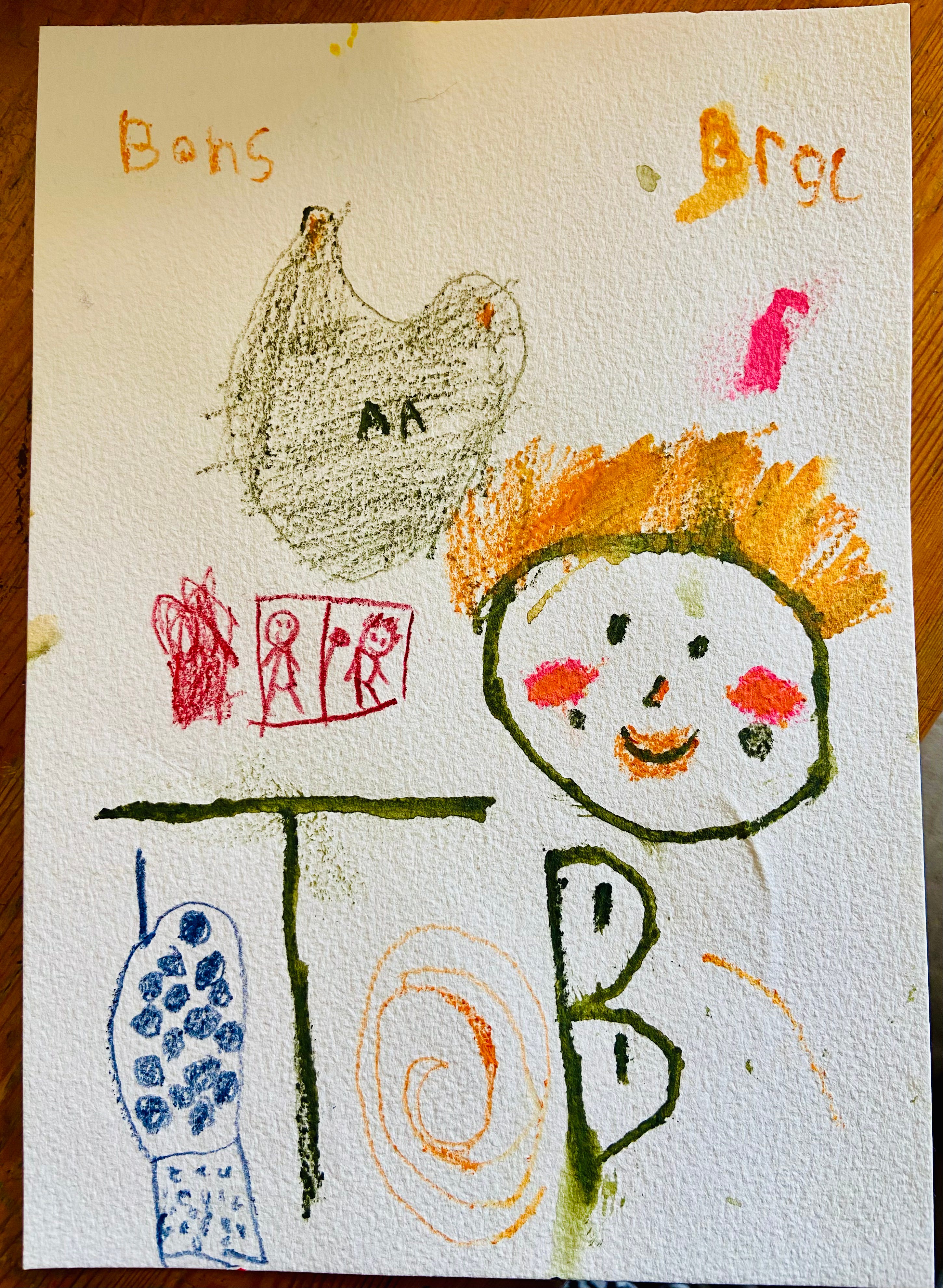
It worked.
Wait — how do I know it worked?
There was no test. No worksheet. No tangible “proof” of learning — the usual metrics of left-brain education. So how do I know something happened?
The truth is: I don’t. Not in the measurable sense.
But the right-brained way of learning doesn’t show up in obvious outcomes. It asks us to slow down. To trust. To watch a child’s life unfold and reveal their understanding through their being.
A few days later, we went on a farm visit, and I carried this same approach with me. I used gentle, imaginative questions to open up reflection:
I wonder how the farmer’s day goes?
What would your farm be like if you were the one running it?
She lit up — sharing her knowledge, expressing her values around animal welfare, describing a kind farm where animals are safe. She noticed tiny details that others missed: a bird flying through a hidden gap in the barn roof, a tucked-away nest, subtle animal movements. She was quiet but completely engaged.
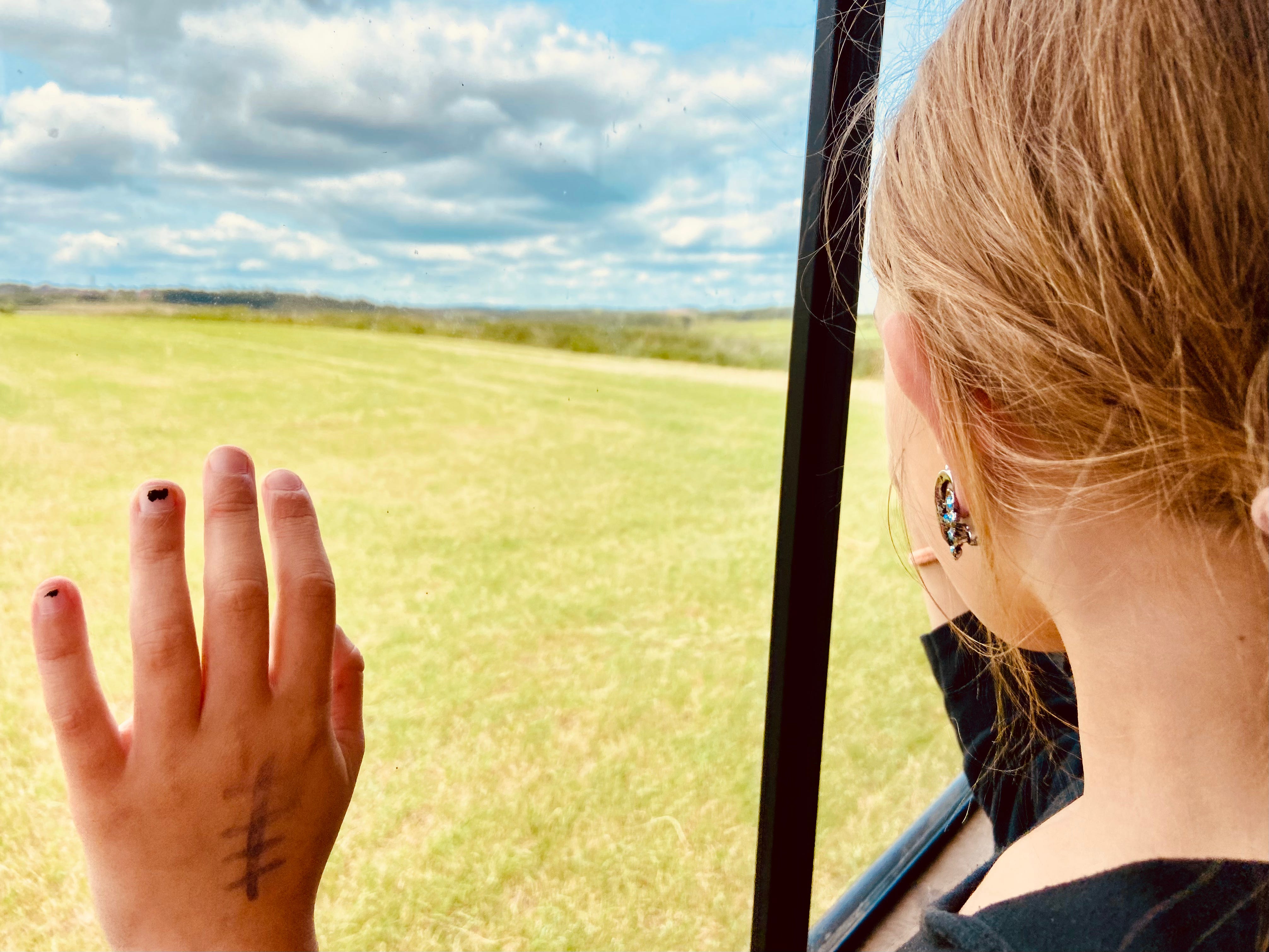
Her learning wasn’t loud.
It was deep.
Quiet.
Absorbed.
Intuitive.
I used to worry she seemed “away with the fairies.”
Now I see — that’s where the magic is. Her quiet observation, her internal world-building, her imaginative connection are her ways of learning.
This is what it means to trust a right-brained, receptive style.
It’s not about extracting answers — it’s about creating space for her natural awareness to unfold.
And I’m learning — again and again — to slow down and follow her lead.
If this resonated, you might pause and notice:
Where might your child already be showing you their understanding in ways that don’t look like “learning” — and are you able to trust what you see?
Subscribe below to receive future essays exploring what we see, what we miss, and what becomes possible when we look again at children and childhood.