


What does learning feel like?
Picture yourself attending a training course over a day or several days — and finding it hard going.
You’re in the same room, sitting at a desk, taking in information, processing it, perhaps taking part in activities in pairs or small groups. After a while you can feel your concentration starting to thin. Breaks are welcome respite. There may be the added strain of social greetings and small talk with new people.
What makes the difference for us? What helps us cope?
As adults, we find ourselves in these situations for a reason. We might have chosen to learn something, and this course is the best way we have found to do that. Or we are being paid to do so because it’s part of our job requirements. That motivation gives us something to hold on to when we’re tired, uncomfortable or struggling to concentrate.
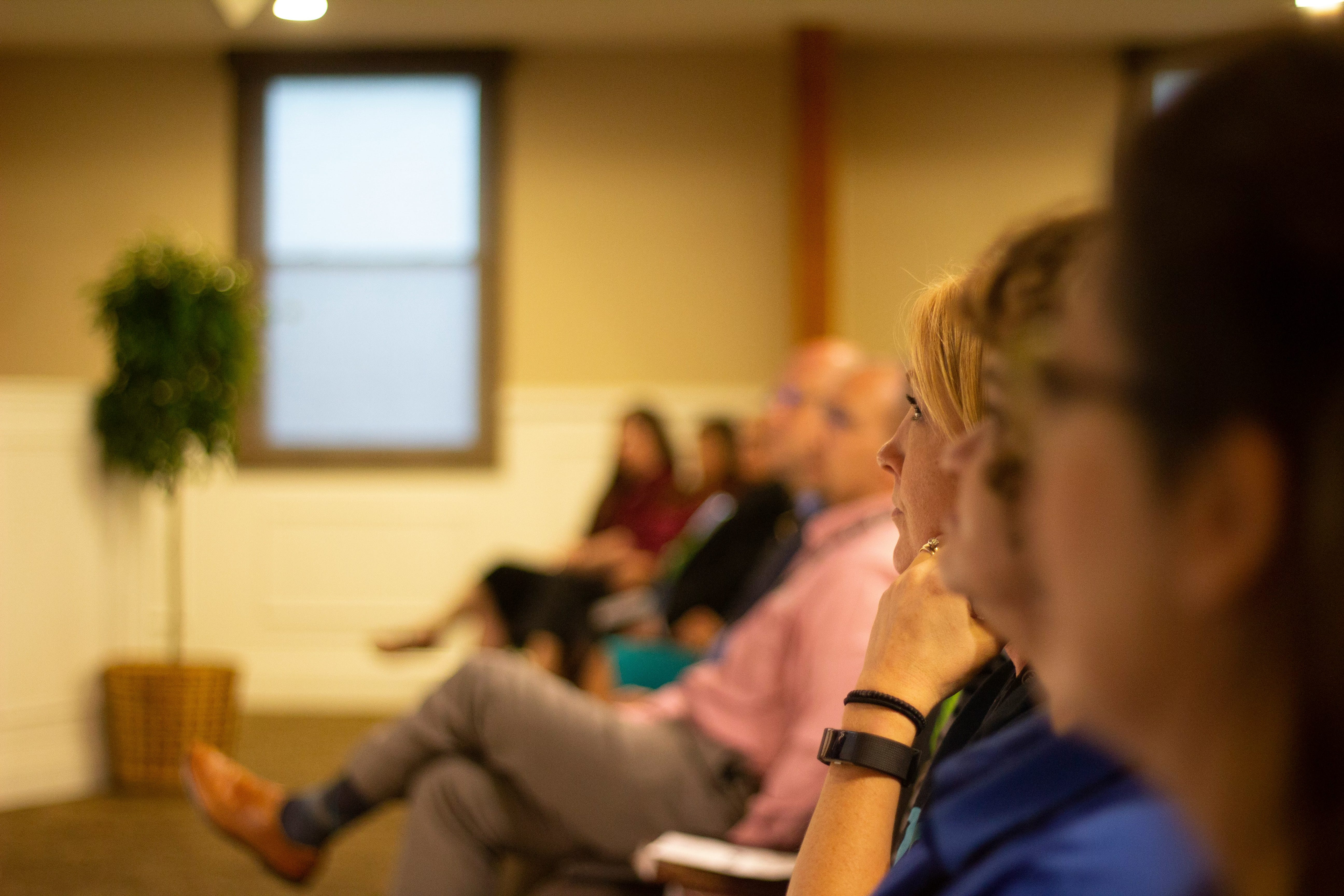
I remember one particularly information-heavy training course a few years back. I struggled with the intensity of it — the sheer volume of information being conveyed and the exhaustion I felt as my brain tried to process it all. Yet I pushed through because I was fascinated by the topic and had a personal investment in the course. I was excited to apply the innovative approach directly to my work with children straight away.
Another course I remember was a two-day mandatory one I had not chosen. I found it tough in a different way. I had no particular interest in the subject, and very little motivation to be there beyond the fact that I had to. Perhaps the people running it understood that, because they made it very practical, with lots of activities that got us up and moving rather than sitting in our chairs all day.
When it comes to adults, we seem to understand that the conditions under which learning happens matter. We think about motivation, attention and capacity. We think about how much information people are being asked to process, and how to break things up, vary the format and make the material relevant. And we can modify those conditions based on the specific feedback they give us.
We seem to understand that being able to learn something is not the same as being able to sustain a particular mode of learning for hours on end.
So what happens when we look at children?
We could argue that children are placed in these courses day after day, week after week, month after month, year after year.
Do they have intrinsic motivation? Of course. Most would agree that the innate drive to learn and grow provides it. But that is quite a broad way of looking at it. Can we really say there is internal motivation for the ‘all day, every day’ of it?
Intrinsic motivation comes from having a real stake in what we are learning. Having some choice over it. Wanting to learn the thing, and wanting to learn it in that particular way.
Could we say that children have any real choice in the largest part of their learning days, their learning years?
The usual extrinsic motivation offered up is the prospect of a ‘good future’ — a good career, a good life. But is that really a developmentally sensitive expectation? To ask children to sustain motivation because of some abstract, distant reward way off in the future, which of course is not actually a given?
For many children, the social side of school is an additional motivator. They go because they want to see their friends. But even this isn’t really on their terms. There is simply not much time for ‘hanging out with friends’ in the school day. Much of their time with other children is still structured around adult-organised learning activities. The opportunities to socialise exist within a structure they have little control over.
There are, of course, children who seem to thrive within almost everything school presents them with. But what I have seen across countless schools is that these children tend to be the exception rather than the rule.
And this is where we need to pause. Because there are two different questions here. One is whether children want to learn. The other is whether they are well matched to the particular conditions in which we have decided learning should happen.
Every child starts out wanting to learn. Their drive to explore, understand, imitate, practise and make sense of the world is incredibly powerful. But that does not necessarily mean they will be naturally suited to sitting still, concentrating on adult-selected material, processing a continuous stream of information and producing evidence of their learning in the particular ways we have decided count. And when this drive becomes harder to see, perhaps we should ask whether the desire to learn has disappeared, or whether we have simply made it harder to recognise.
Have we taken children’s innate desire to learn and used it to justify almost any conditions in which we expect them to learn?
Is this really learning?
Imagine that you have decided you want to learn something new. Maybe it’s a practical skill like sewing or woodworking, or a topic you want to delve into like ancient history or architecture.
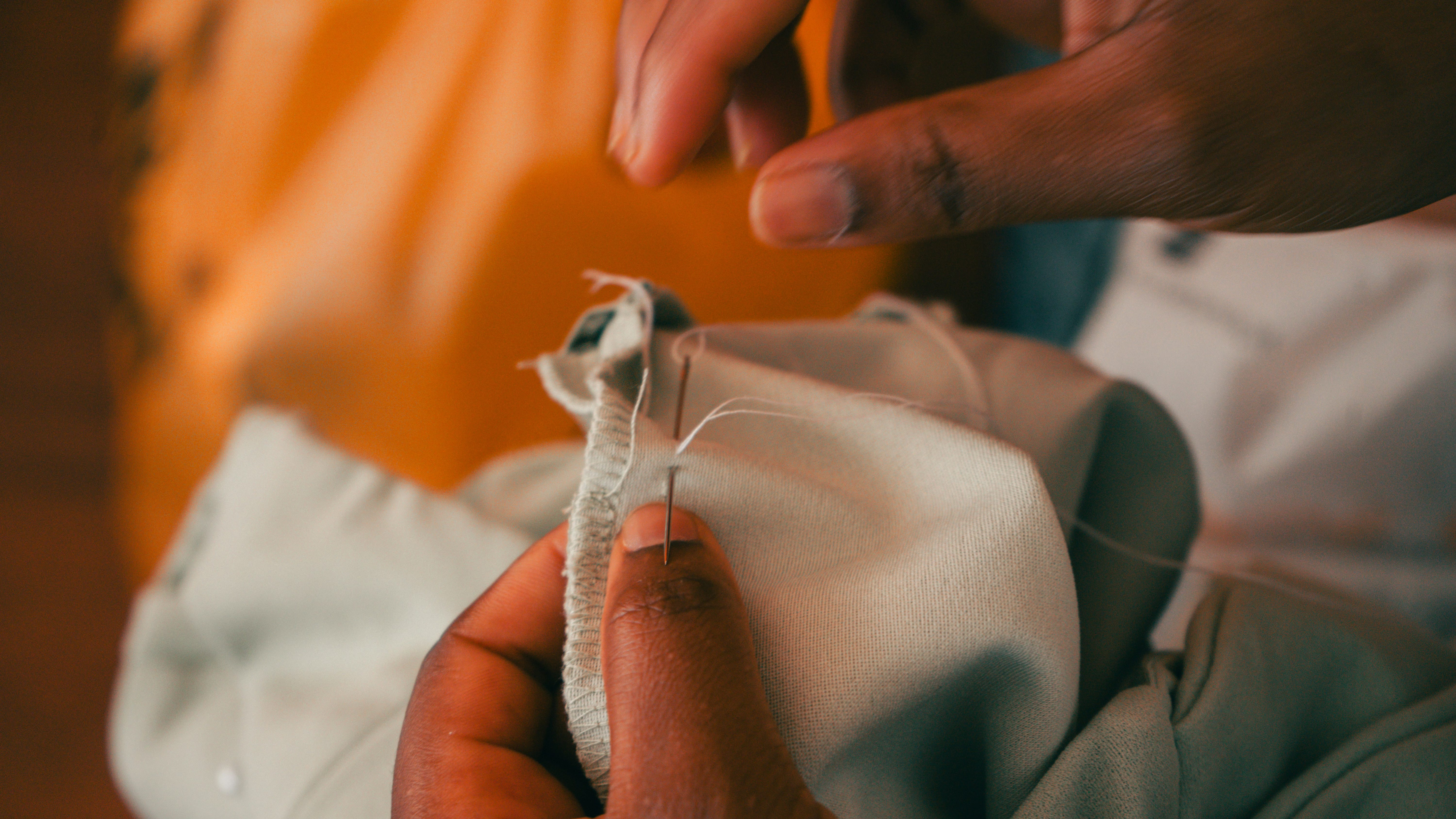
Even if you chose to study it full-time, the timetable would likely be broken up into manageable chunks. An intense lecture or two, with space around it for self-directed study and free time. Time to consolidate and integrate learning. Perhaps a placement or practical projects to apply the learning to the real world.
More commonly, though, new learning happens for adults as an intermittent pursuit that is self-chosen and interest-led. We dip in and out of it. Life happens around it. We follow a thread, get absorbed for a while, put it down, come back to it, follow it somewhere else.
One evening you might watch a sewing tutorial. Another, attend a local sewing group. You might read a book on sewing techniques over several weeks, watch the Sewing Bee on TV and have a real sewing project on the go.
Nobody would look at this and say you weren’t really learning because you hadn’t spent six consecutive hours learning about sewing that day, or consumed a couple of hours of modular study on it each week for several years.
Yet when it comes to children, we continue to offer up an intense schedule of topics that we have decided are important they learn, delivered through a classroom, teacher-led environment, day in, day out, over weeks and years, throughout a child’s entire childhood.
Of course, school lessons are not all six hours of uninterrupted sitting and listening. Good teachers vary activities, make material engaging and bring learning to life. There are practical activities, discussions, projects and opportunities to apply knowledge. But even the best teaching exists within a structure that constrains learning to a particular place, rhythm and format.
And perhaps this is the part we have stopped questioning. Have we become so accustomed to one particular form of learning that we have stopped noticing how narrow it actually is?
What happens when we can’t see the learning?
Children’s natural drive to learn does so much of the work for us that we can forget to ask what it is costing them. On the whole, they keep turning up. They keep trying. They keep learning, even when the conditions are frustrating, tiring, or simply not a good fit for them.
They also quickly accept that school lessons are where and how learning happens. They understand that this is what they are there for, and many will continue to engage with it. But there is a cost to sustaining that engagement within a structure that asks them to learn in largely the same way, day after day.
And when they finally disengage, we so easily read it as something coming from the child: poor effort, lack of motivation, not trying hard enough. We look at the response without always looking at what came before it — the possibility that their capacity has been exceeded or their natural rhythm overridden. We see a child who is no longer managing what we are asking of them, and instead of questioning the conditions, we question the child. There is no child version of a feedback form asking how that day of learning actually felt.
Perhaps what looks like a lack of motivation is sometimes a mismatch between the child and the conditions in which we are asking them to learn. Being able to cope with something is not the same as being well suited to it.
But there is an even more fundamental question. What if the problem isn’t simply the conditions in which we ask children to learn? What if we have also become confused about what learning actually is?
Learning is woven through life
I feel we have come to separate out this idea of learning from life itself so much that we now have a version of it operating as the accepted norm that feels quite removed from how learning actually happens.
There are myriad things that you have learnt simply through living. Not through a specific course, or even a specific intention you had. The learning path would be almost impossible to trace. It would be too multifaceted to track, more like a web of connections gradually forming and strengthening as life unfolds.
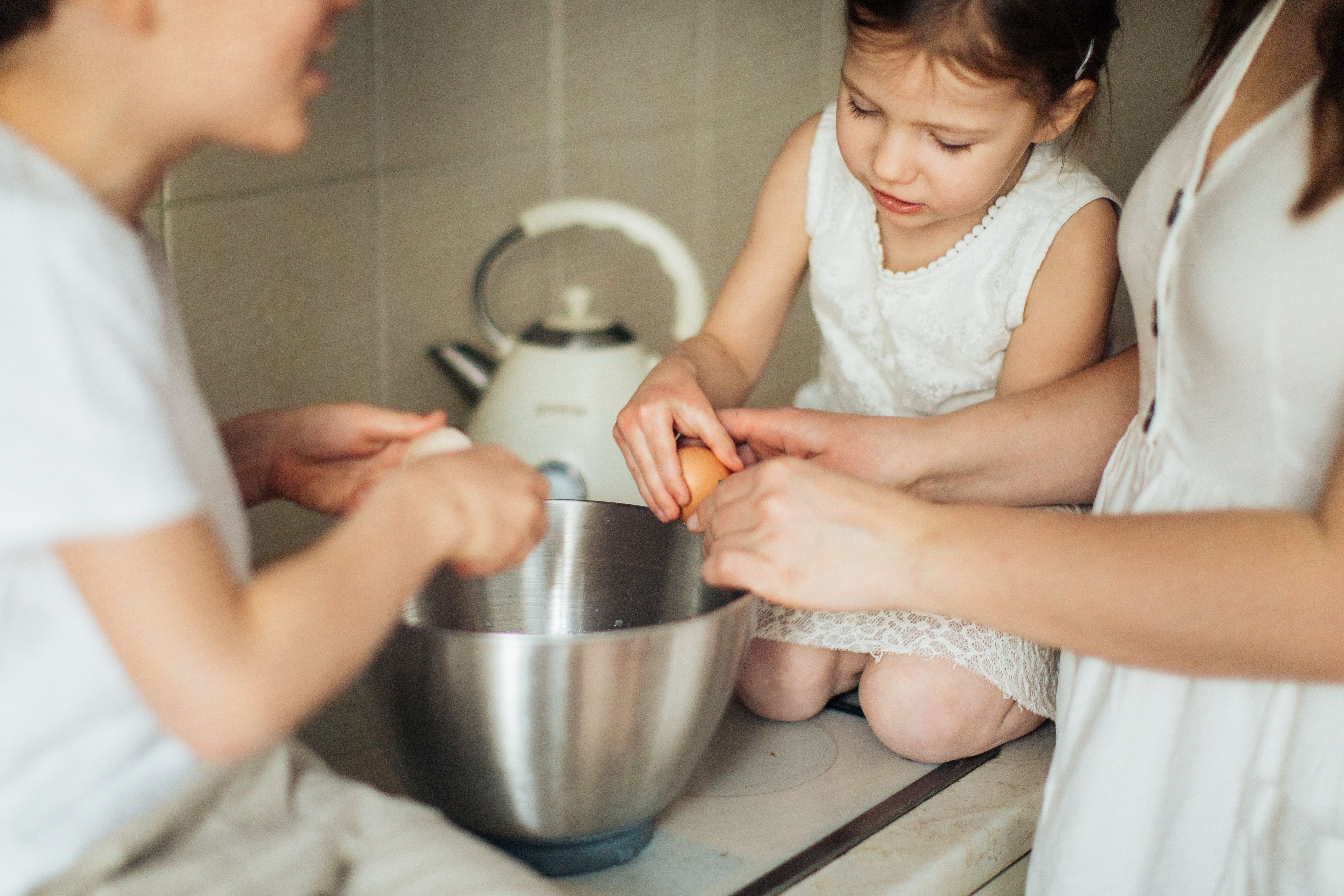
Take something as ordinary as cooking. Some people might want or feel they need to take a course. But many more have picked up knowledge and skills along the way that they would find hard to identify clearly, let alone measure.
If we tried to quantify how well a large population of people had ‘learnt to cook’, what would we measure? Their knowledge of nutrition? The number of recipes they know? Their ability to follow a recipe? Their ability to cook without one? The speed at which they work? The reviews of their family? The reviews of trained critics? Their use of expensive ingredients? Their ability to cook within a budget?
The list is endless, and it highlights how much judgement is involved in deciding how learning should be measured. Yet many people who might fall short on some of these measures have still definitely learnt to cook. They can feed themselves. They can feed other people. They can open the fridge, look at what they've got and somehow make something out of it. Somewhere along the way, they learnt.
Because learning rarely happens as a discrete event. There isn’t always a moment we can point to and say: there. That was when the learning happened. Often it accumulates in the background of life, through dozens or hundreds of experiences that we would never think to identify as lessons.
Another example is all the things we simply absorb without ever realising we’re learning them. I had this realisation recently when something my daughters were watching said the phrase “trash talking”. I suddenly thought: I know what that means, yet I don’t know how I know it. It’s the type of phrase you don’t tend to hear a lot, and one I can’t imagine was ever taught to me in a formal way — through a school lesson or vocabulary task. I probably picked it up through exposure to cartoons, films and other media. But does that make it any less of a valid thing to know? It makes me question how we came to be so certain that we know what children need to learn, when they need to learn it, and how we determine whether they’ve learnt it.
Yet this is how so much of what we know comes to us. Not through a lesson. Not because someone decided we were ready to learn it. It just arrives, through living.
Stories, conversations, encounters, experiences, challenges, relationships. So much of what we know comes from these things, without us ever stopping to identify them as learning. Is it really that easy to separate out this thing we call learning from all of these aspects of life?
What counts as learning?
The reality is that our modern culture has come to have a narrow frame for learning. Academic learning sits at the centre of what we mean by education, particularly the kinds of knowledge that can be organised into subjects, sequenced, taught, assessed and measured. Because these are the forms of learning that a system can most easily see and organise, they gradually carry more weight. But there is a difference between what learning is and what a system is able to recognise as learning.
I think we understand this on a deep, intuitive level. Children are born to play, to move, to explore, to watch, to imitate. We take it for granted that this is learning. It is obvious to see in young children, so we allow it, embrace it, support it. To do so comes naturally to us. But our minds become conditioned by cultural messaging, and over time that knowing can get crowded out. We begin to look for learning in the places we have been taught to expect it: in the lesson, the worksheet, the completed task, the correct answer, the sequence that can be memorised and recited, the thing that can be demonstrated and measured. We begin to expect learning to be continuous, directed and sustained. And I think this has happened on a collective level.
The child hasn’t necessarily stopped learning in these ways. We have simply begun to recognise some forms of learning as more legitimate than others.
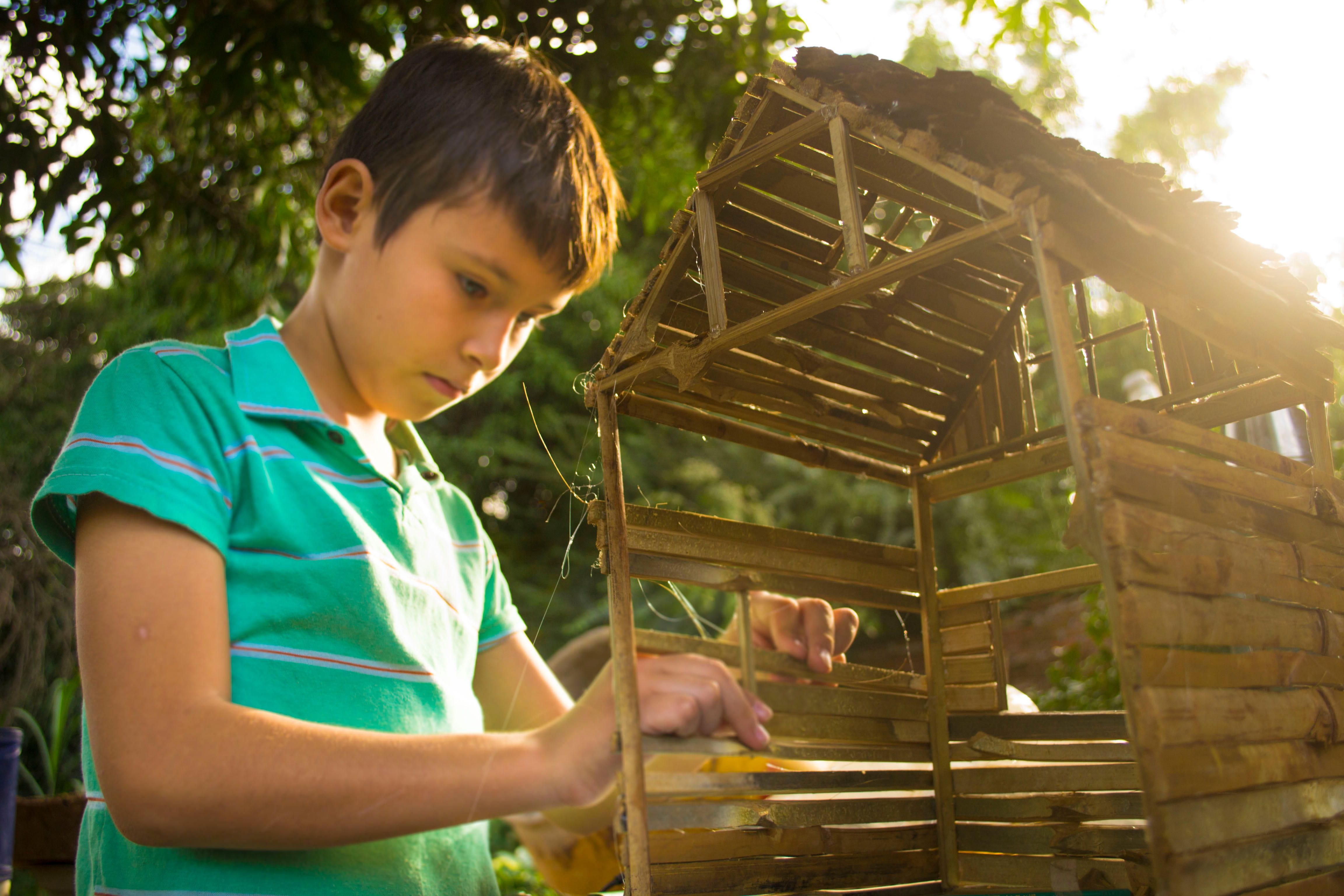
And the consequences reach beyond learning itself. What was once held up as central to childhood now becomes a problem. A barrier to ongoing learning. Something to be fixed.
Play needs to be minimised, justified. Movement becomes distraction. Following an interest can become avoidance. Rest can become a lack of motivation. The natural ebb and flow of attention becomes a failure to engage. Things that once told us something about a child become things we try to correct.
The most important shift is not in the child at all. It is in what we have decided counts.
How did we get here?
We are at a point in time where it can be hard to fathom how we got to such a place. But it makes more sense when you view it through a systems lens.
When we moved towards organising education into something packageable — something that could be delivered on a mass scale in repeatable ways — we needed a shared language of learning. Such systems need consistency. They need things that can be organised, compared and tracked. So naturally, they begin to privilege what can be seen and measured.
There is nothing inherently wrong with needing some of these things in a system trying to educate large numbers of children. But something happens when the requirements of the system begin to shape our understanding of learning itself.
What can be measured becomes what is valued. What can be seen becomes what is recognised. What can be delivered becomes what counts. And gradually, we can forget that these were simply the parts of learning that happened to fit the system best. We start mistaking what is easiest to see for what is most important.
The system doesn’t necessarily create a false version of learning from nothing. It selects certain parts of something much bigger because those are the parts it can organise. But over time, the selection can start to feel like the whole.
What has got lost in the process?
What might we be missing?
How have these systems shaped our understanding of the very nature of what it means to be a child, a human, and what we notice and value as “learning”?
What might we be missing when we only look for learning in the places we have been taught to expect it?
How much learning is happening that we simply don’t have the language, framework or measurement tools to see?
And how different might a day look if we trusted that learning wasn’t only happening in the moments we can see?
Perhaps the question isn’t only: What have they learnt today?
But also: What have they been noticing? What have they been absorbing? What connections have they been making? What have they been practising without us calling it practice? What have they been learning simply by being alive?
Because if learning is woven through life itself, our task is not always to make more of it happen. Sometimes it is to become better at noticing that it already is.
If this piece stirred something, I’d love to hear.
What have you come to recognise as learning that you might once have overlooked?
And has there ever been a moment when stepping back from what you expected to see changed what you noticed?
Subscribe below to receive future essays exploring what we see, what we miss, and what becomes possible when we look again at children and childhood.