


She notices the child who never joins in.
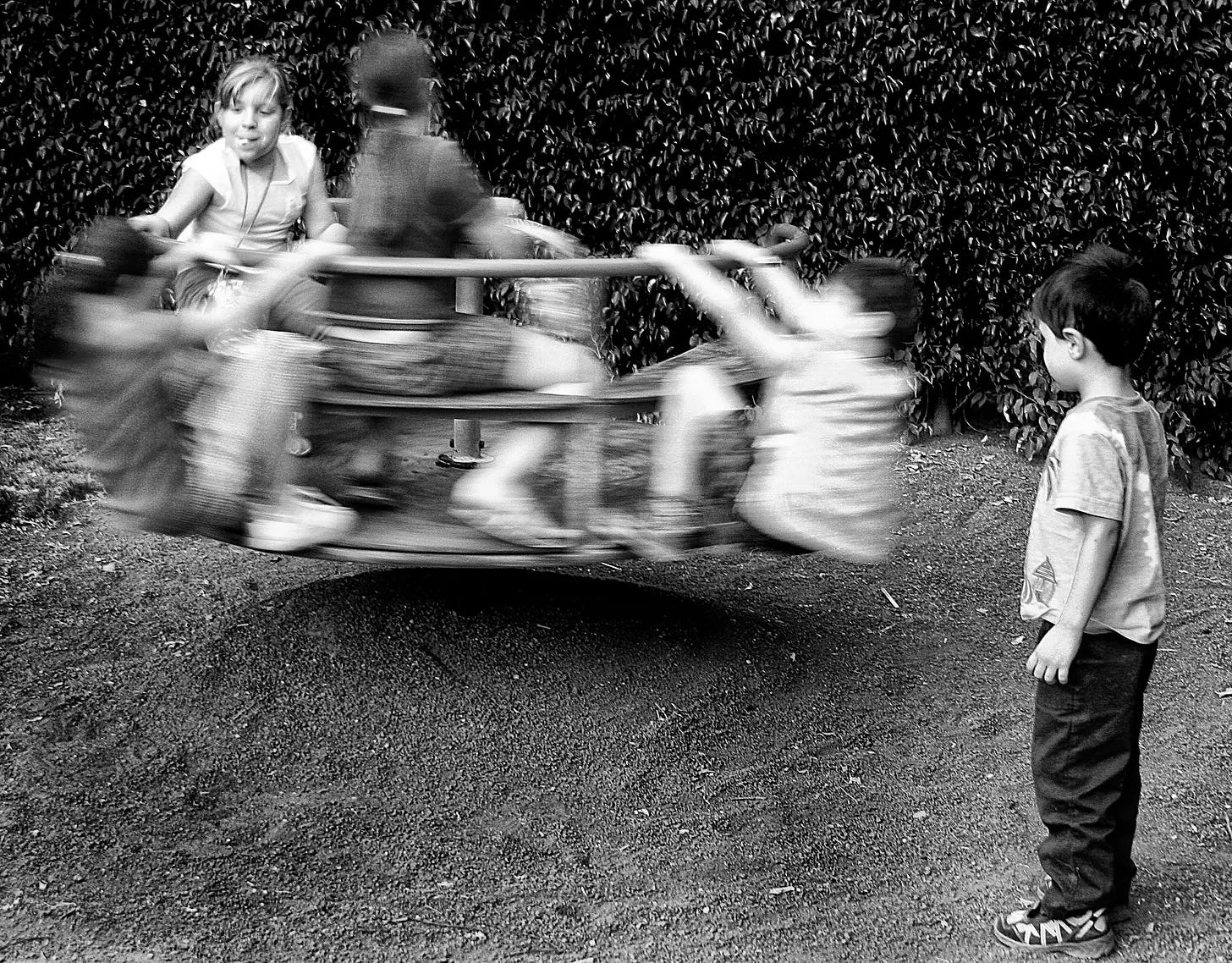
We’ll leave a birthday party or a learning group and, somewhere on the journey home, she’ll ask about the child who stood on the edge of everything. The one who watched more than they participated. The one who drifted between groups without quite finding somewhere to settle.
As we talk, she rarely wonders whether they were shy. Instead, she wonders whether they wanted to join in but couldn’t. Whether they felt nervous, didn’t know how, or were worried people wouldn’t want them there.
She knows that feeling.
Other times she notices things I hadn’t even registered. The tiny details of someone’s make-up, their jewellery, their different hairstyle, the colour of their nails. She spots when people look tired. She remembers the things they say. Watching football recently, she looked at the face of an intensely focused manager standing on the touchline and said quietly, “He looks scary.”
I looked again, and he didn’t look angry or frightening to me. He looked exactly as football managers often do — deeply concentrated, perhaps a little tense, completely absorbed in the game. Yet I found myself wondering what she had actually seen.
Throughout my work, I often met children whose social understanding was described as impaired because their interpretations differed from those of the adults around them. Yet I found that many of those same children seemed exquisitely attuned to subtle shifts in expression, tone and atmosphere. They weren’t failing to notice social information. They often seemed to be noticing different aspects of it.
My daughter doesn’t struggle to read people’s emotions. If anything, I think she receives them with extraordinary sensitivity. The question, then, is not whether her perception is objectively “right” or “wrong”. It’s whether I am willing to become curious about the experience she is trying to describe.
Can we gently offer our own interpretation while still honouring hers? Can we hold both possibilities at once?
Children have a remarkable way of making me question assumptions I didn’t even realise I was carrying. One of the deepest is the idea that we all experience the exact same world but react to it differently. Some people are supposedly more emotional, others more resilient. Some are more sensitive, others less so. But what if the differences begin before any of those things?
What if we are not all perceiving the world in the same way?
Another way of receiving the world
We often describe certain children as sensitive. Sometimes we mean it affectionately, but more often, the word carries an undertone of concern. It becomes something to explain, to excuse, to manage, and something they are expected to grow out of.
“He’s too sensitive.” “She needs to toughen up.” “They’re anxious.” “They’re overreacting.”
I have been reflecting recently on the assumptions beneath these kinds of descriptions. Because before we can decide whether a child is too sensitive, surely we first have to decide what the right amount of sensitivity is — and who gets to decide. The decision, it seems, rarely belongs to the child. It belongs to the culture around them.
I find it curious that in almost every other context, sensitivity is considered a strength. We want a thermometer that detects the smallest change in temperature. A microphone that captures the faintest sound. A scientific instrument that notices what a less sensitive one would miss. Yet when it comes to children, sensitivity somehow becomes a flaw rather than a capacity.
Perhaps that should make us pause. Perhaps the question isn’t whether a child is too sensitive, but what their sensitivity is allowing them to notice that we have overlooked.
My husband was the youngest of four children and the only boy. Growing up, he was often described as being too sensitive. His parents loved him deeply and gave him a stable home, but the phrase belonged to a generation that rarely questioned itself. Boys were expected to become stoic and emotions were something to gain control over. Sensitivity was often treated as something that needed sanding down before adulthood arrived.
The irony strikes me now, because many of the qualities we increasingly celebrate in fathers — gentleness, emotional openness, empathy, the ability to nurture and truly attune to children — depend upon precisely those capacities previous generations often encouraged boys to hide.
I sometimes wonder how many adults are still carrying identities they built simply to protect the parts of themselves that once felt unwelcome. The intense seeing, the intense thinking, the intense feeling. The parts they learnt didn’t belong.
As I began working with children, the same descriptions appeared again and again: Sensitive, anxious, emotional, sensory, complex, withdrawn.
And eventually my own daughter arrived, bringing with her another invitation to look more carefully. There are moments when I watch her moving through the same environment as me and realise we haven’t shared the same experience at all. We might leave having noticed completely different things.
I recall a moment not too long ago when she picked up and played with a toy while we were browsing. A shop assistant smiled and gently asked her not to play with it. There was no big telling off, no raised voice, and no immediate embarrassment that I could see. Yet she silently ran to me, folded herself into my body and dissolved into shaking tears that seemed to come from somewhere much deeper than the moment itself. She could barely speak for several minutes.
It would have been easy to conclude that she was overreacting. Some might even say that’s evidence that she could do with going to school — “toughen her up” a bit, get her more used to this kind of thing. But I no longer think that’s the most helpful or interesting place to land. The more I have lived alongside children like her, the more I find myself wondering what they are receiving that I have learned not to notice.
The very things many of us have been taught to sandpaper away.
I often try to imagine what the world feels like through their eyes. Sometimes, I wonder whether I am remembering something I once knew myself. What would it feel like to walk into a room and immediately notice the slight hesitation in somebody’s smile? To hear uncertainty in a person’s voice before they have found words for it themselves. To feel another child’s exclusion almost as though it were your own. To struggle to ignore the brightness of fluorescent lights because your nervous system never learnt they were background. To register dozens of tiny pieces of information simultaneously while everybody else seems able to focus on just one thing.
What if what we call sensitivity is not simply an excess of feeling, but another way of receiving the world? Maybe what differs is not simply how much children feel, but what they notice in the first place.
The invisible world children may be carrying
When we talk about sensitive children, we tend to focus on their emotions because those are the parts we can see: The tears, hesitation, worrying, withdrawal, anger, overwhelm. But emotions are usually the final chapter in a much longer story.
Imagine a child arriving at school. The morning had already begun with everyone rushing. The alarm was snoozed one too many times. Breakfast was gulped down. The car wouldn’t start immediately. There was frustration in the front seats and the familiar sense that everyone was already running behind. Instead of the slow conversation and lingering hug they had hoped for, there was a hurried goodbye at the school gate because Mum needed to get back to the car before she blocked the entrance and was late for work.
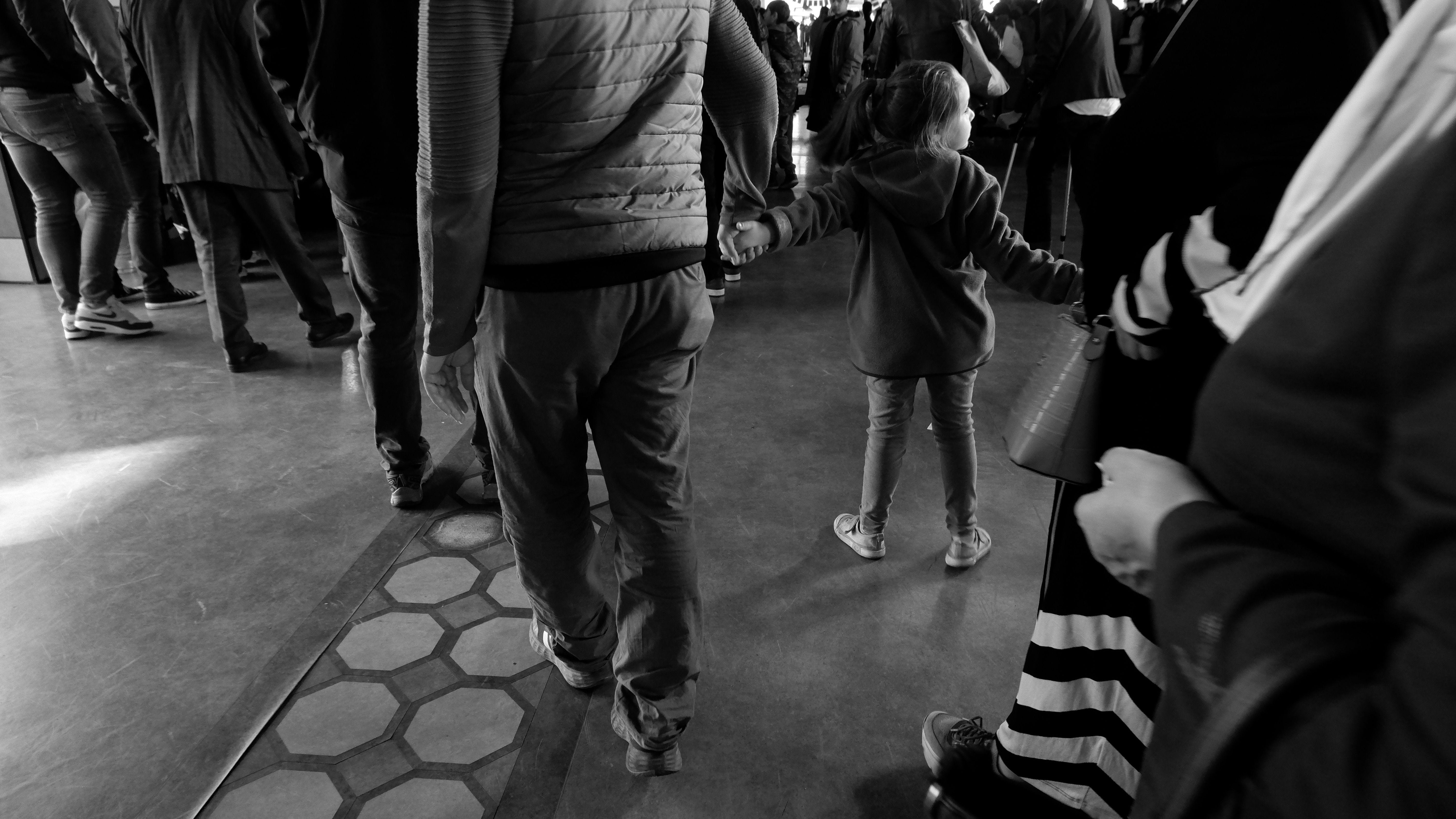
The child is already carrying something before they even step inside.
They have also been silently worrying about today because there is a maths quiz. Not because they dislike maths, but because they dread the possibility of being asked questions in front of the class. They don’t simply worry about getting an answer wrong — they imagine the faces that might look at them. They imagine the teacher sounding disappointed, and everybody else noticing.
By the time they enter the classroom, the teacher seems busier than usual. Her voice is clipped. She isn’t cross, but she is more hurried than normal. The child doesn’t know why. They simply register the change.
As the first lesson begins, the boy next to them repeatedly slaps his ruler against the table. Another child keeps sniffing. A chair scrapes backwards. Someone scribbles behind them. None of these things seem particularly significant on their own, yet once the child notices them, they can’t seem to stop noticing them. Their attention keeps being pulled away from the work in front of them.
Meanwhile, their friend begins whispering about something that happened yesterday. The child wants to listen because friendships matter deeply, but they also want to finish their work because they don’t want to get into trouble. They are trying to hold both things at once.
Adults usually enter environments with clear purposes. We are there to teach the lesson, finish the meeting, buy the groceries or get everyone out of the house on time. Those goals naturally shape what we pay attention to. Children often arrive attending to entirely different questions. They are discovering who feels safe, whether they belong, who wants to play, what they might explore, how they might have fun, who seems upset, what the rules are here, and what might happen if they get something wrong. Relationships, play and exploration are not distractions from what children are there to do. They are much of what childhood is for.
When the teacher begins reviewing the task, the child realises that they haven’t finished. Immediately, their imagination gets to work: Perhaps the teacher thinks they’re lazy. Maybe she’ll tell Mum. Mum will be disappointed. It seems like everyone else has managed perfectly well except them.
By break time, their nervous system has already been working hard. Then they open their lunchbox and discover Mum accidentally packed their brother’s instead of theirs. The sandwich has a filling they don’t like the texture of. The snacks they were looking forward to aren’t there. It seems like such a tiny thing, yet those familiar foods were going to be an anchor in a morning that already felt uncertain.
Outside, the playground is loud and children are running in every direction. Someone bumps into them, then a football whistles past. Teachers call across the playground. Voices overlap. Movement comes from every direction. The child suddenly feels as though everything is happening at once. Their eyes fill with tears and they run behind a tree because it is the only place that feels slightly quieter.
Later, another child asks where they’d been and “Why were you crying?” An adult wonders why they became so upset over “just” the lunchbox mix up. Someone else quietly nods that yes, they’re appearing anxious. Big feelings. Quite sensitive. Yet the lunchbox was never really the story — it was just the moment the invisible accumulation finally became visible.
It is hardly surprising, then, that two people can leave the same place carrying such different experiences.
Working as a speech and language therapist taught me something I have never forgotten — behaviour is almost always the end of a process rather than the beginning. By the time we see the outward response, a child has often spent minutes, hours, days, or even longer processing sensory information, emotional cues, uncertainty, expectations, relationships and internal experiences that remain completely invisible to everybody else.
We tend to assume behaviour explains the child. But more often, it is the child’s expression of — or attempt to explain — an experience that nobody else has yet seen. This is why I have become increasingly cautious about describing children as “overreacting.” Because how can we know whether a reaction is too big if we have only witnessed the final few seconds of a story that began long before we looked in? Especially when we consider a nervous system in its early stages, capacities not yet fully developed, and a demanding world.
Perhaps the more important question is not whether a child’s reaction is proportionate to the moment we observed, but whether we have understood everything that led to it.
Not all sensitivity looks sensitive
I’ve come to think that one of the reasons sensitivity is so often misunderstood is that we have developed a surprisingly narrow picture of what it looks like. When we imagine a sensitive child, many of us picture someone quiet, timid or tearful. A child who clings to a parent, worries easily or hangs back from unfamiliar situations. Some children certainly look like this — but many don’t.
One of the things parenting has taught me — more than any textbook or training course ever could — is that sensitivity can wear countless disguises.
Sometimes it looks like perfectionism because criticism lands sharp and deep. Sometimes it looks like defensiveness because uncertainty feels unbearable. Sometimes it looks like controlling behaviour because predictability creates safety when things are intense. Sometimes it looks like impulsivity because there is so much being noticed, imagined and felt that the impulse to act arrives before there has been time to organise or reflect. Sometimes it looks like constantly trying to rescue other people because their distress feels impossible to ignore. Sometimes it looks like anger because the nervous system reached capacity long before anybody realised. Sometimes it even looks like confidence.
I’ve come to realise this most clearly through my own daughter. There are moments when she can appear unexpectedly brash, dismissive, or defensive. If I only watched those moments in isolation, I could easily conclude that she was bold, confident, perhaps even a little bossy. Yet because I know her so intimately, I also see the uncertainty that often sits underneath.
Sometimes she mimics social behaviours she has observed because she is trying to work out how to fit into situations that are by nature less predictable. Other times she jumps into other people’s disagreements before anybody has asked her to because she has already absorbed everyone else’s emotions and feels compelled to make things better. Sometimes she keeps going with an action that’s attracting negative attention and ends up working herself up into a huge emotional release.
Once you begin asking what a behaviour might be protecting, almost every child starts making more sense. We see the adaptation, but rarely what made it necessary. Behaviour begins to look very different when we stop asking, “What kind of child behaves like this?” and begin asking, “What kind of experience might give rise to this behaviour?”
Sensitivity no longer looks like a personality trait to me, but one possible way of experiencing the world. And if children experience the world differently, perhaps our task is not to teach them all to experience it in the same way, but to become curious about the experience each child is trying to show us.
What if we can never fully know?
Stepping away from the pace of mainstream work and education has changed more than the environments I choose for my family — it has changed the way I think about understanding itself. For a long time, I think I assumed that if I observed carefully enough, learnt enough and gathered enough information, I could eventually understand a child. Now I’m no longer sure understanding works like that.
I’ve come to appreciate that I can never truly know another person’s experience. I can observe behaviour, listen carefully, notice patterns, ask thoughtful questions. I can become deeply curious. But I can never step inside a child’s perception and experience the world exactly as they do.
If that is true, then perhaps the role of parenting, teaching and therapy is not to strive to become certain about another person’s experience, but to create the conditions in which they can gradually reveal it to us. Systems built on that assumption would ask different questions. They would spend less time deciding what children are and more time discovering who they are.
If each child experiences the same environment differently, then understanding cannot begin with our interpretation. It has to begin with theirs.
That doesn’t mean accepting every interpretation uncritically, or abandoning our own. It means recognising that our understanding can only ever deepen through relationship, curiosity and dialogue — not through assuming that another person’s experience is the same as our own.
Far from feeling frustrating, I have found this stance strangely liberating. It has softened something in me, made me slower to conclude, and more willing to wonder. I’m less certain that I know what another person’s behaviour means, and more interested in the world they might be inhabiting.
Is it possible that understanding another person has actually never been about arriving at certainty? What if it’s about remaining open to the possibility that their experience is richer, stranger and more different from our own than we can ever fully know?
For me, this realisation hasn’t made me feel further away from children. Quite the opposite — it has made me listen more carefully, watch more patiently, approach with a more open field of attention, and ask better questions. I feel it’s an optimistic and respectful place to linger, a space where children’s unique potential and their natural unfolding are more easily seen and held.
It has reminded me that another person’s inner experience is not something I can ever possess. It is something I am invited into, a little at a time, through relationship.
The environment is never just the environment
Over time I have come to realise that we often talk about environments as though they are objective. We say a classroom is busy, a shopping centre is noisy, a party is exciting, a sports match is lively — as though these places exist independently of the people experiencing them. But I’m no longer sure that’s true.
Two children can stand in exactly the same place, yet leave carrying entirely different experiences.
I remember taking my daughter to Legoland after months of excited anticipation. It was her first experience of a theme park and she had finally decided she was ready for the rides. She began the day full of enthusiasm. The first ride looked gentle enough — children younger than her were climbing aboard happily and laughing as it disappeared around the track. We assumed it would build her confidence. Instead, she found the experience far more intense than she had imagined. Afterwards she barely wanted to speak about it. Even now, she still shudders if it comes up in conversation.
As we walked further into the park, she became quieter and quieter. She wasn’t having a tantrum or refusing to join in. She simply seemed to withdraw into herself. The crowds became denser. Music played continuously from different directions. Bright colours competed for attention everywhere we looked. Loudspeakers made announcements. Children screamed with excitement. Heat radiated from the concrete. There was constant movement, constant decision-making, constant uncertainty about where we were going next.
She stayed close to us. Even the gentlest rides suddenly now seemed daunting to her. Questions that would normally have been easy to answer — “Shall we go this way?” “Would you like to try this one?” — became almost impossible for her to respond to.
Then, for a little while, everything changed. We found a quiet boat ride. The pace slowed, the noise softened, and there was nothing to decide, nothing demanding her attention. I could almost see her nervous system settling again.
A few days later we spent time within one of our home education groups. On paper it might have looked equally overwhelming — children everywhere, conversations happening all around, constant movement, and plenty of sensory stimulation. Yet she moved through that space with ease. Drifting between children, inventing games, creating things, laughing, talking, engaging.
For a long time I would have struggled to explain why one environment overwhelmed her while another allowed her to flourish, but now I think I understand a little more. The number of people wasn’t the defining difference, nor was the amount of stimulation. It was the quality of the environment: One environment constantly demanded, the other invited. One required her to keep adapting herself, the other adapted naturally to the children within it. One asked her to keep pace with its rhythm, the other allowed her to discover her own.
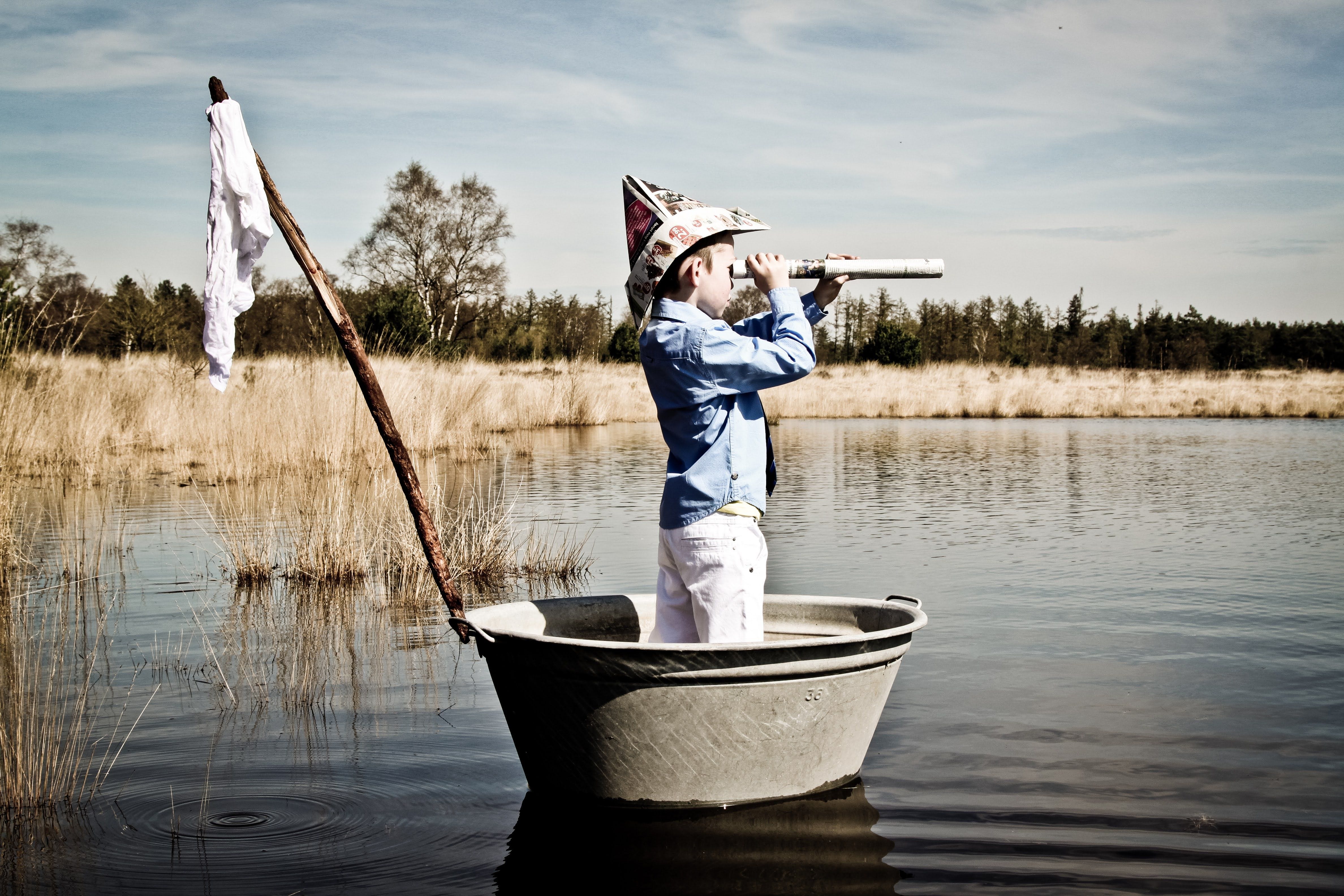
Those differences seem increasingly important to me because we often try to support children by adding things to environments rather than questioning the environments themselves. We create sensory rooms, break-out spaces, movement breaks, extra processing time. All of these can be enormously valuable. But I sometimes wonder whether they also reveal something.
Maybe the child isn’t simply asking for somewhere quieter to recover, but telling us that the environment itself has become too much to carry.
This doesn’t mean every environment should become quiet, slow, or free from the challenges children need to grow. But challenge and chronic overload are not the same thing. And I think many children know the distinction long before we do — they just might not be able to tell us.
Perhaps our task is not to create one perfect environment that suits every child. Maybe that has never been possible. Perhaps it is to become much more curious about the relationship between a child and the environment they are being asked to inhabit.
Because environments don’t simply shape behaviour. They shape perception, capacity, identity and belonging. And, over time, the stories children begin to tell themselves about who they are.
The children who are changing the questions
When I first began thinking about sensitivity, I thought I was trying to understand certain children. But I’m no longer sure that’s true.
I think those children have been helping me understand childhood itself.
Over recent months I have found myself writing repeatedly about behaviour, beliefs and the stories children begin to tell themselves when they are misunderstood. Each piece has been an attempt to look a little further beneath the surface — not simply to ask what we are seeing, but how we have come to see children in the ways that we do. This feels like another step along that path.
The more I have reflected on the children we call “sensitive”, the less convinced I have become that sensitivity is the thing requiring our attention. What interests me now is perception.
What if two children can sit side by side in the same classroom, listening to the same teacher and completing the same task, yet be living through entirely different experiences? One may notice little beyond the lesson itself. The other may be carrying the teacher’s hurried tone, the disagreement at home before school, the flickering light above their head, the child sitting alone at breaktime, the anticipation of being called upon, the smell drifting in from the hall, and the subtle shift in mood when a classmate becomes frustrated.
From the outside they appear to have shared the same morning. Inside, they have lived completely different ones.
Perhaps this is why understanding children can never begin and end with behaviour. Behaviour is simply the place where an invisible experience finally becomes visible.
I often think about the little boy who was told he was too sensitive. I wonder what might have happened if, instead of encouraging him to become less sensitive, someone had simply wondered what he was noticing. I wonder how many adults are still carrying quiet stories about themselves that began in childhood. Stories that say they are too emotional. Too intense. Too much. Stories that taught them certain parts of themselves needed hiding in order to belong.
And I wonder how different adulthood might feel if fewer of us were spending decades trying to understand the protective identities we built simply to make our way through childhood. How many gifts might unfurl into the world if more of us were able to keep noticing what childhood first taught us to notice, before we learnt to look away?
Perhaps the greatest gift these children offer us is not a lesson in sensitivity, but a lesson in humility.
They remind us that another person’s experience can never be fully seen from the outside. It has to be approached with curiosity. With relationship. With the willingness to let ourselves be surprised.
The deepest form of respect we can offer another person may be to resist assuming we already know their experience.
Because I have come to think that understanding another person is never really about arriving at certainty. Instead, it begins when we become willing to loosen our grip on our own interpretations and make room for theirs. To recognise that what we see is never the whole story. That another person’s inner world will always remain, at least in part, beyond our reach. And that our task is not to close that distance, but to meet it with openness, curiosity and care.
Perhaps that is what these children have been inviting us to notice all along.
If this piece stirred something, I’d love to hear what stayed with you.
Has it changed the way you think about a child, or perhaps about your own experience of childhood? Where has certainty given way to curiosity?
Subscribe below to receive future essays exploring what we see, what we miss, and what becomes possible when we look again at children and childhood.
Gem, I enjoyed this piece, thank you. Especially the line about environments that demand versus environments that invite. That distinction is doing so much work. It's not really about noise or crowd size at all, is it? It's about whether a space asks a child to keep adapting to it, or adapts to them.
You mentioned your husband being told he was too sensitive as a boy, and I think about that constantly with my own two. The instinct to toughen up a sensitive boy is still so culturally automatic. I try hard to resist it, but I'd be lying if I said the old script never whispers.
I agree with what you described - I've stopped chasing the perfect environment, because I don't think it exists. What I can control is whether my child feels safe enough to tell me it isn't working; and then trust that signal enough to actually change course, rather than pushing through because we already committed to the plan. Some environments just aren't going to become inviting no matter how long we wait. Knowing when to leave is its own skill, and maybe an underrated one.
And when the children grow up this applies to adults too.