


I’ve come to the conclusion that the number one vehicle for my daughter’s education is conversation.
Now she is eight, we seem to chat all day long. Her observations and questions constantly take us down interesting rabbit holes, and every day, the things she says reveal the deep connections she is making.
A few days ago, on a particularly long drive with just the two of us, we started by talking about a local pub we passed and ended up talking about prison visits. The thread of her questions went something like this…
Will we go to that pub again after our bad meal there?
Why couldn’t they cook the meals properly?
Is it a crime to take money from people if they are not happy with what they get?
How much money's worth of stuff would someone have to steal to go to prison?
Why do people commit crimes?
How long do people stay in prison for?
Can you visit people in prison?
This is often how it goes. It starts somewhere, and you have no idea where you will end up. It reminds me how interconnected everything in life is.
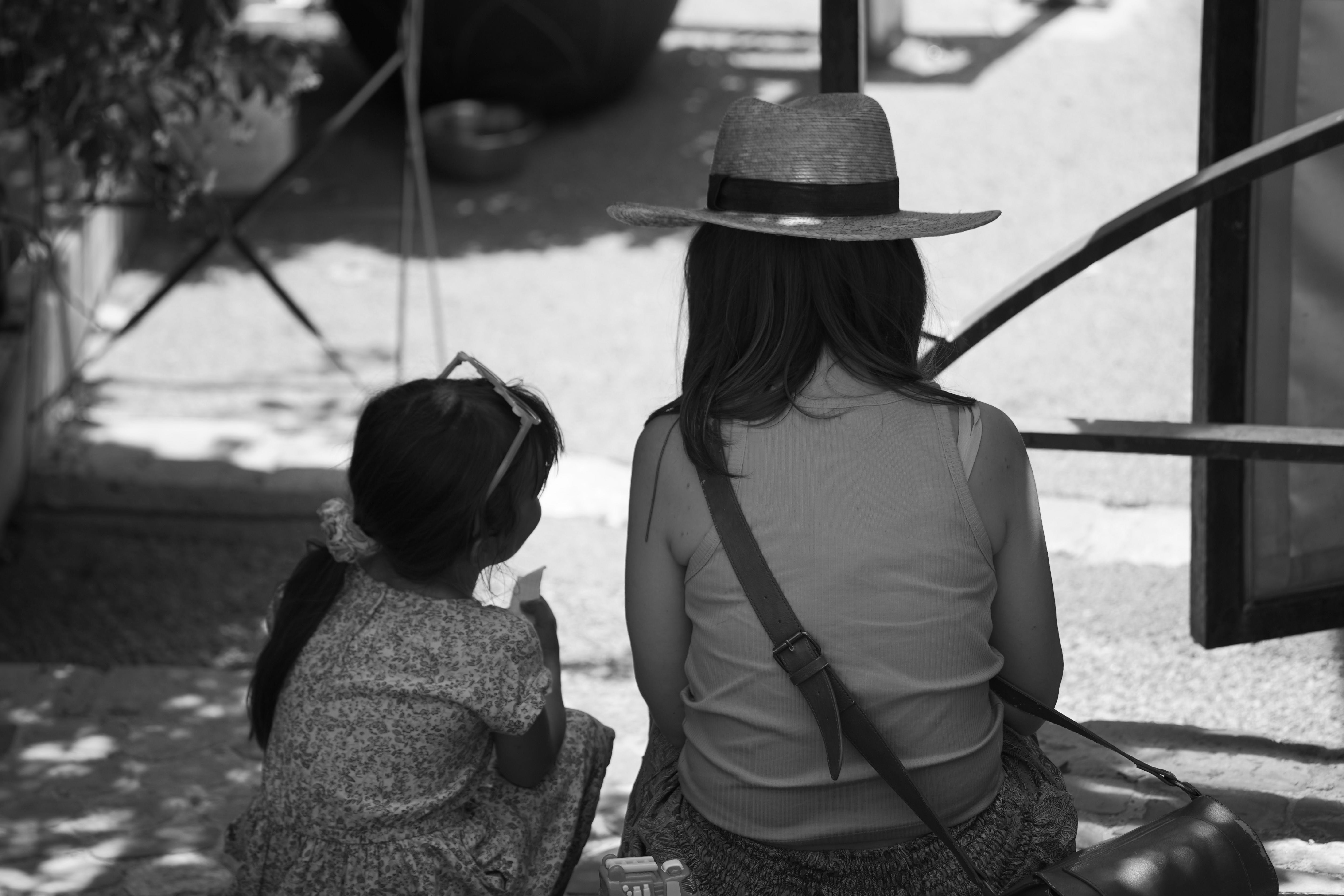
Children’s thinking seems to move naturally from one thread to another, rather than remaining within one subject before neatly moving on to the next. I find it fascinating to be alongside this kind of thinking. It’s exploratory, uninhibited, ever-curious and seemingly unlimited in its scope.
Maybe it's something we lose as adults. After all, so much of our understanding has become established through the knowledge and experience we've acquired, and perhaps we're less inclined to approach things with that same sense of open-ended curiosity.
I'm fascinated by the way her thinking unfolds as we talk. I can sense how, as we touch on something, she scratches at the surface of an idea. What I say next might prompt another question, and then another layer gets scratched away.
But it’s certainly not linear. She’s not digging a row of neat little holes, each going straight down into the ground. Something she hears might spark an entirely new thread. I lose count of the number of times I hear “Oh Mum, that reminds me…” or “What does [insert word I used in my response] mean?” or “OK, this is a bit random but…”
I visualise a complex web of connections sparking in her mind as our conversation unfolds.
I try to balance giving her information and answers to her questions with making space for her to share her own ideas and hypotheses. I’m also mindful not to be too definitive, using phrases like “Many people think that…” or “It’s a common understanding…” because I want her thinking to remain open. I don’t want to present my own understanding, or that of others, as unquestionable truth. I want her to have the space to consider different perspectives, form her own interpretations and, importantly, change her mind as she encounters new information.
Frequently, the things she asks about expose gaps, or a lack of clarity or depth, in my own knowledge. So I admit when I don’t know, adopting a questioning approach alongside her and letting her know that we can learn about it together.
There is a difference between simply giving a child an answer and helping them develop an understanding. When my daughter asks why people commit crimes, for example, I could give her a list of reasons. But a conversation allows us to explore what crime means, what motivates people, how circumstances influence behaviour and whether there might be different ways of understanding the same situation. The conversation doesn’t simply provide information; it allows her to build a more complex understanding through successive layers of thought.
Conversation is not simply about giving children the opportunity to talk, or asking them to recount what happened while they were away from us. What we want them to talk about, and when we want them to, can be a mismatch with what they actually feel like talking about. I think real conversation with children is about having someone who is willing to engage with their ideas, follow their curiosity and explore the things that are on their mind.
I try never to belittle my daughter or make her feel any sense of shame or embarrassment about the things she asks or wants to talk about. I want her to know that there is no such thing as an inappropriate question, that I will take her questions seriously and that I can be a safe harbour for her worldly explorations.
I hope the open and supportive relationship we are cultivating through these conversations will support her when she faces bigger, more private challenges as she grows into a young woman. I hope it will help her stay in touch with what she thinks, what she wants and, crucially, what she doesn’t want to be or do. To become her own person, with clear boundaries, rather than feeling she has to compromise herself to please others.
When children experience their thoughts being taken seriously, they learn that they can express something different, disagree and ask difficult questions while still being accepted. This gives them a sense of security in expressing themselves, even when their thoughts or opinions differ from those around them.
For a child to experience an adult being genuinely interested in what they think and have to say is powerful, and perhaps rarer than we realise. When I think back to a particular teacher from my own school days who seemed to really see and value me, I wonder whether it was this quality that made him so special. He didn’t simply ask questions to test my knowledge; he seemed genuinely interested in what I thought, and in drawing out the depths and connections in my thinking through the responses he gave.
And of course, simply accepting everything a child says or offers up doesn't really make for an educational conversation. It’s a sensitive balance: being open enough to listen and take their questions seriously, while also imparting information, agreeing and disagreeing, being willing to be challenged and allowing different interpretations and opinions to coexist within the space we hold.
But what might it mean for children’s development if they experience much less space for this kind of natural exploration?
I wonder how much space there is for independent thought to emerge when a child spends most of their day being fed information, given answers and guided through a predetermined process.
I find myself coming back to the intensity of the way much of the modern world operates, and wondering how many opportunities children really have for unhurried conversations with trusted, familiar adults. Children may be intellectually stimulated and engaged throughout the day, but that doesn’t necessarily mean they have much opportunity to develop their own lines of enquiry. With parents busy working long hours, homework to complete and scheduled activities to get to throughout the week, I wonder how much space remains. Of course, many families will consciously make space for this kind of conversation, recognising its value, but I imagine that might be difficult to sustain when everyone is busy, tired and pulled in different directions.
I’m also interested in what happens when children become accustomed to looking to adults for the correct answer, rather than exploring possibilities for themselves. There is a difference between being taught what to think about and having the space to develop how to think for yourself.
Are we giving children enough opportunities to develop their own questions, rather than simply answering ours?
Children need time, space, trust, shared experiences, less stress and regular access to adults who are available and interested. They also benefit from being around adults who are comfortable not always knowing the answer, and who are willing to see the “gaps” in children’s thinking not as problems, but as creative spaces. Adults who recognise the importance of meandering conversations alongside more structured forms of learning. Adults who create opportunities for children to take the lead with their ideas, and who are willing to be led into unknown territory themselves.
Parents don’t need to become teachers or manufacture educational conversations. Much of this happens naturally when we spend time alongside children, take an interest in what occupies their minds and allow ourselves to follow their curiosity.
It is my wish that all children experience the adults in their lives not only as people who guide and teach them, but also as thinking companions.
I wonder what might change if we gave greater value to the conversations that emerge from everyday life?
Education isn't just something we deliver to children. It's something that happens between us.
If this piece stirred something, I’d love to hear.
Have you ever found that following a child’s seemingly random questions or ideas has taken you somewhere unexpected? What have you discovered along the way?
Subscribe below to receive future essays exploring what we see, what we miss, and what becomes possible when we look again at children and childhood.
For me, the ability to engage in conversation throughout the day, whenever anyone wants to, is the number one reason home education is better than school.
"I don’t want to present my own understanding, or that of others, as unquestionable truth. I want her to have the space to consider different perspectives, form her own interpretations and, importantly, change her mind as she encounters new information."
I do this too. What a beautiful reflection on the conversations we have as home educators :)