


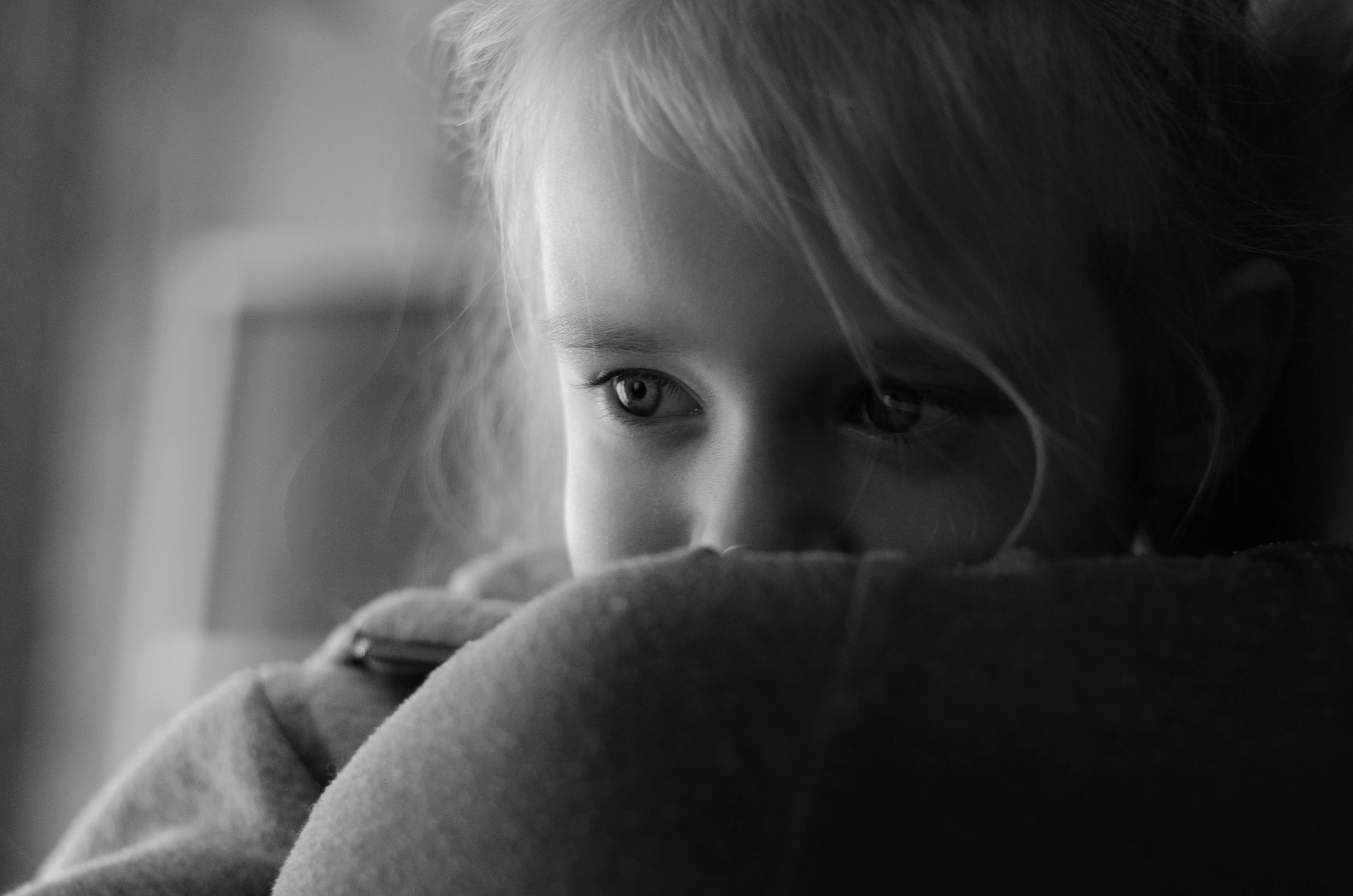
Sometimes when parents collect their child at the end of the day, they ask the familiar question: How was she? And the answer often comes back in a single sentence — She had a good day. It’s meant to be reassuring. Ordinary. Nothing to worry about.
But I sometimes find myself wondering how much life fits inside that sentence, and how much is actually lived and never seen.
What might a day feel like from the inside of a small nervous system? Not the version we piece together afterwards, but the one that is actually lived, moment by moment.
Some of what follows is imagined. Much of it is drawn from real moments I’ve seen, sometimes within a single morning.
I wake up with a bump when I fall out of bed.
It hurts. It surprises me.
Everything feels hot and shaky.
I shout so someone will come.
Mum comes in and picks me up, rubs my head, says something soft.
I feel better when she holds me.
Later I try to hang my monkey from the dog lead.
I get told not to play with the hanging dog lead.
I bang my ear on the corner of the table.
It stings.
My sock feels wrong inside my slipper but I don’t know how to fix it.
I pull at Mum’s legs because I want her to come with me, but she is tapping on her phone and doesn’t move.
I ask for my “puter”.
She brings something, but it isn’t the one I meant.
A tight feeling builds in my tummy, but I don’t know how to explain it.
I see my princess dress and want to put it on.
Mum says I have to get dressed first.
I really want to put my vest on all by myself.
Mum helps a little.
So I cry and say I want to start again.
She sighs, then lets me try.
When it finally works, I feel proud.
Something inside me settles.
My words feel jumbled today.
Mum puts music on.
I get one song.
Then my sister comes down and says it’s her turn.
Everything feels cross and buzzy.
Mum finally finds my “puter” so I can sing.
I sing loudly.
A bird lands on the window.
Mum and my sister start talking about it with long words and long sentences.
Then they look on the computer and find pictures of baby birds.
I try to join in, to shout about the bird too.
Mum tells me to be quieter.
My plate gets moved from the sofa onto the table.
“Hey.”
I wanted it to stay where it was.
Later Mum and my sister argue.
Their voices get loud.
Something in me goes tight and hot.
I feel scared and start crying.
Mum sees, pulls me onto her lap, and strokes my back until my breathing slows again.
Later there are more children.
More voices.
More things happening all at once.
There is a tiny stone in my shoe.
I can feel it when I walk, but I don’t know why it hurts.
I see the box of animals and feel a burst of excitement — I love the monkey.
I go to find it.
A boy already has it.
I try to take it back.
He holds it tight.
The teacher’s voice is loud. Her face looks angry.
My chest feels heavy.
I feel sad.
I love that monkey.
At snack time the apple isn’t cut up the way Mum does it.
The pieces feel too big.
I try to say something, but my words don’t come out properly.
I cry.
Nothing changes.
So I eat the apple.
My tummy still doesn’t feel quite right.
Some new adults come into the room and stand watching.
I don’t know who they are.
Something inside me feels unsure.
A girl knocks over a tray of paints.
It crashes loudly.
My whole body jumps.
My heart beats fast.
A boy pushes past me as we run to the slide.
I fall.
My hands and knees sting.
The ground feels rough under my palms.
I look around.
No one saw.
So I stand up again.
Outside, the slide is cold when I climb up.
I go down the slide fast.
The wind rushes past my face.
I laugh.
Children are shouting, running everywhere.
Someone bumps into the ladder behind me.
My tummy wobbles for a moment.
I go to the sand tray.
The sand feels good between my fingers.
It pours slowly through my hands.
I start filling the cup with sand.
Then someone says it’s tidy-up time.
The sand is packed away.
I was still playing.
Now everything feels heavy.
My eyes feel sleepy.
My legs feel slow.
I want my Mum to cuddle me.
Back inside, I play with the toy tea cups.
A girl takes them from my hands.
I shout.
No one gives them back.
The adults look busy.
So I find something else to play with.
None of these moments were big enough to report. Nothing dramatic happened — no accidents, no incidents, no problems. Just what we would call a normal day. And another comes tomorrow.
A small nervous system lives every one of these moments. Every surprise, every frustration, every moment of excitement and confusion — every tiny shock of noise, hunger, disappointment, pride, tiredness, relief.
Many of them pass through the day without anyone ever fully seeing them. Not because the adults don’t care, but because attention is always shared, and time is always limited.
When moments like these are noticed, named, or held, they can move through a child’s system and settle. When they pass unwitnessed, they are simply carried.
“How was she today?”
“She had a good day.”
What stays with me isn’t any one setting, or any one way of caring for children. It’s this: how much a child experiences in a single day — and how little of it we can ever fully see.
This is, of course, part of how children grow and make sense of the world.
But it is also something we don’t often pause to consider.
Even in the presence of a loving, attentive adult, not everything can be caught. And as the number of children, demands, and transitions increases, so too does the amount that passes unseen.
An adult can come home from a full day and talk about it. They can name what was hard, make sense of what happened, and ask for what they need afterwards.
Many children cannot.
Not because nothing happened, but because they don’t yet have the words, or the space, or the support to bring those experiences into the open. So much of their day is lived in the body — felt, adapted to, and carried on.
And this is, in part, a question of capacity.
A child’s capacity to process, express, and integrate what they experience is still developing. It fluctuates across the day, shaped by tiredness, hunger, noise, emotion, and the presence — or absence — of someone attuned to them.
Which means that what looks, from the outside, like a “good day” may still have been a full one. A stretching one. A day that asked a lot of their system.
Not because anyone has done anything wrong — but because this is where they are.
And perhaps it asks something of us.
Not to see everything, but to recognise that we don’t.
Not perfection.
But a little more curiosity about what might sit underneath a “good day”.
What might your child be carrying from today that hasn’t been seen?
If this piece stirred something, I’d love to hear.
What do you notice when you pause and really consider your child’s day — beyond what gets said at the end of it?
Are there moments where you sense something was felt… but never quite expressed?
And what do you think children need from us to help them process their experiences — and grow up with more settled, supported nervous systems?
Your reflections often help other parents see more clearly too — and realise they’re not the only ones sensing something beneath the surface.
Subscribe below to receive future essays exploring what we see, what we miss, and what becomes possible when we look again at children and childhood.
Further reading


It’s impossible for us to capture every single moment of our child’s day, yet it’s wonderful to get a glimpse of what they experienced. For us, asking simple, open-ended questions works well: “Who or what did you play with today? Did you make anything? Were you outside?” These little conversations often reveal more than we expect.
At the end of the day, during our evening prayer, we share three moments that went well. It’s our small ritual – it helps us notice even the little positives, even if parts of the day didn’t go perfectly. For us, it works, but it’s not a “one-size-fits-all” method – just our personal experience.