


What if your child’s learning struggles aren’t a problem — but a sign they’re growing?
Most of us assume struggle = failure. Parents panic, professionals pathologise, and children themselves can internalise a sense of “I’m not good enough.”
But there’s another way to see it. Here’s what I have learned from my daughter’s home education journey so far — and why struggle can actually be where growth is happening.
Learning Through Struggle
My daughter’s early journey with writing looked like struggle on the surface. She was reluctant to put pen to paper until her sixth year, apart from drawing. Letter-tracing books quickly lost her interest, and when I encouraged practice it seemed like total brain-and-body exhaustion.
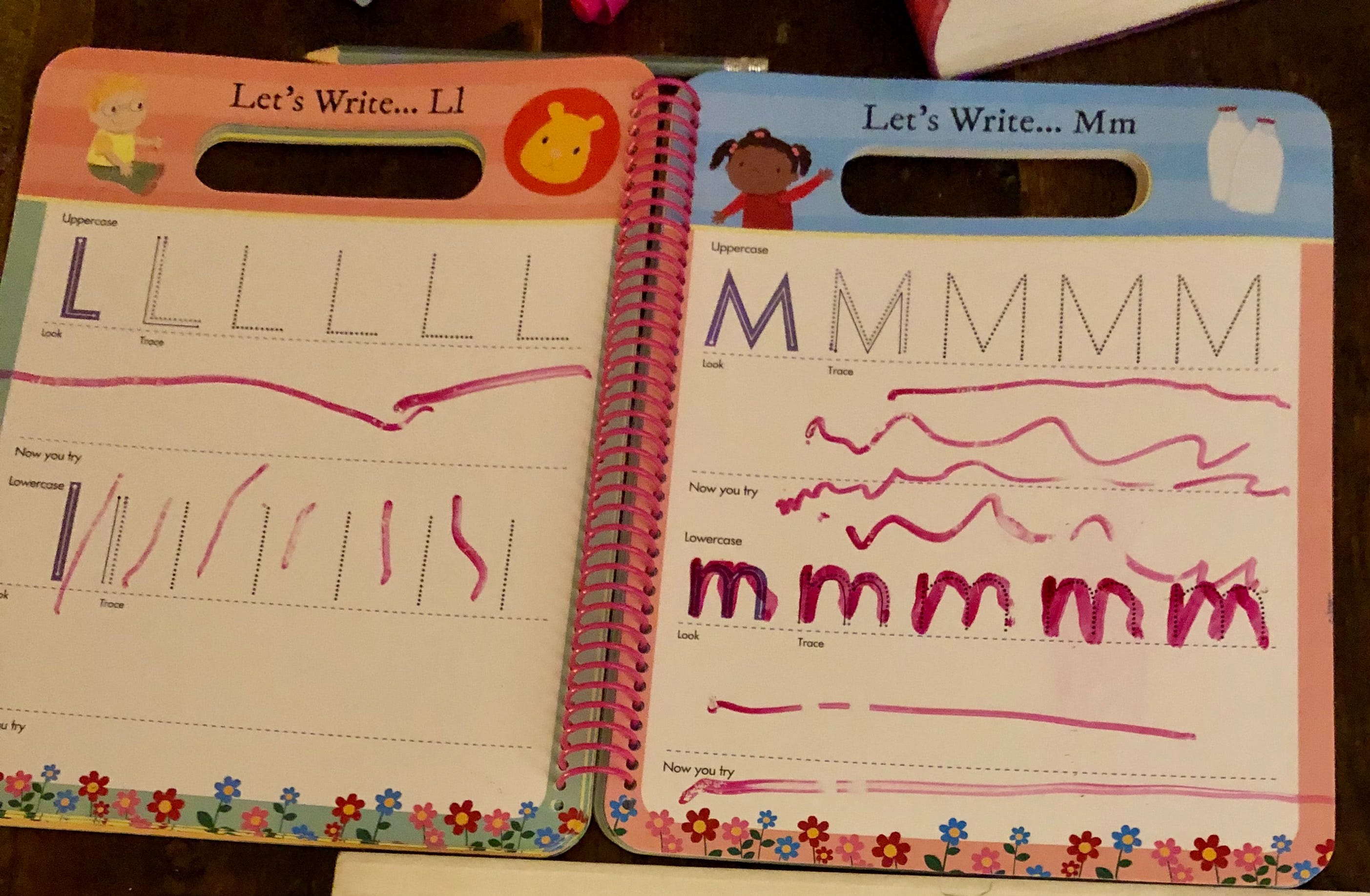
When she finally started writing letters and numbers, she preferred copying and often reversed them. She would easily ‘give up’ and throw the pencil down in frustration at times. I worried… Did she have a significant problem? Was her self-esteem ok? She would certainly have been flagged as “struggling” if she were in school, according to expected timelines, and that played on my mind.
But home education allowed us to ease off the pressure. I gave myself a talking to… chose not to panic, not to force, not to “intervene” in a school-like way.
During this period, she also had recurrent glue ear, causing intermittent hearing loss. Some days she could barely hear what we said to her without us speaking loudly and at close-range into her better ear. Later, a holistic chiropractor gently worked on misalignments and weaknesses in her system over a couple of years.
Now, aged 7.5, she can write all letters and basic numbers, with only the occasional backward symbol, and is beginning to write words and short sentences with growing confidence. She still quickly tires from the cognitive and physical “load” of it, so we keep practice sessions to just a few minutes.
Looking back, it’s clear that what appeared to be struggle was actually where the growth was happening. Each frustrating writing session, each backward letter, each moment of hesitation was her brain and body learning, stretching, and wiring new skills.

Over time, I’ve noticed that she has developed resilience, patience, and empathy. She actively notices when others are struggling — offering them help, encouragement and reassurance. Already, she can hold space for different ways of learning.
She learned from challenge — not despite it, but through it.
Why Struggle Can Be a Signpost
Babies fall dozens of times before walking confidently. When learning to drive, most of us stall the car repeatedly.
Children falter when learning new skills — physical, cognitive, or social. So why do we panic when they falter in literacy or numeracy?
What the research says:
Natural variation in reading development is huge. Genes, environment, and cognitive differences all play a role. In fact, as I explored in my previous article “Is it time to rethink the term SEN?”, the benchmarks we often use to define “on track” are arbitrary and don’t reflect the rich diversity of how children actually grow.
Studies of home-educated children by Dr. Alan Thomas and others, show that literacy can develop early, late, or in very informal ways — often without structured teaching. Motivation, autonomy, and developmental readiness are far more predictive of success than age alone.
Struggle is productive when framed correctly: short-term frustration, repeated practice, and persistence build mastery, resilience, and confidence.
Sensitive or non-linear learners may show exaggerated struggles due to “spiky” skill profiles. These children need extra patience, trust and tailored approaches, but this doesn’t mean they won’t get there. Red flags are stagnation or unusual regression/loss of previously mastered skills.
Environment matters: rich, supportive, low-pressure learning experiences help children integrate new skills deeply. Unlike the school setting, home education can provide flexibility, observation, and real-life application that embeds knowledge more thoroughly.
3 Ways to Spot Growth Hidden in Struggle
1. Repetition Isn’t Regression
Going over the same book, word, or skill often signals consolidation, not failure.
Parent tip: Let your child revisit the same materials. If you are a home educator, you are perfectly placed to do this because you have extra time and space. Your child may look “stuck,” but their brain is solidifying learning under the surface.
2. Frustration Is Fuel
Resistance and tantrums can indicate that the brain is on the edge of wiring something new.
Parent tip: Short, focused bursts of challenge are ideal. If frustration is brief and manageable, it’s a sign your child is stretching their abilities — not suffering emotionally.
3. Slowness = Integration
Taking longer isn’t falling behind; it’s embedding knowledge more deeply.
Parent tip: Everyday interactions — conversations, practical tasks, play — support learning even when formal practice is brief. Deep, layered learning can happen outside structured lessons.
A Note to Parents
If learning feels slow or stuck, it doesn’t mean you’re failing — or your child is failing. Often, it means you’re on the edge of a breakthrough.

Offer a rich, supportive environment with natural, motivating opportunities for exploration and practice. Observe, guide lightly, and trust your child’s innate drive to learn.
Moments that look like struggle often shape resilience, confidence, and mastery.
If this resonates, I’d love to hear what you’re noticing in your own child.
Where have you seen struggle that might actually be growth in disguise?
And what feels hardest to trust right now?
These are often the places where something important is unfolding — even if it doesn’t yet look like progress.
Subscribe below to receive future essays exploring what we see, what we miss, and what becomes possible when we look again at children and childhood.
Hi Gem,
Thanks for sharing your experience, observations, and research. And will done on holding space for your daughter. I loved your practical tips and will keep them in mind when I enter the homeschool years (my son is only one).
Reading your article, I kept thinking about my first year of parenting. At times I thought I was failing, but looking back I see I was developing resilience, patience, and empathy — much like your daughter.
It’s true that struggles signal growth; and they can also shape its strength. Like young trees that sway in the wind: at first they may seem to be struggling, but that movement encourages deeper roots and sturdier trunks, so they become stronger than trees never tested. I suspect your daughter didn’t just develop resilience, patience, and empathy—she developed them more deeply because of the challenges you described. What do you think?