


Welcome back to Home Ed Hacks!
Here’s this month’s round-up of little things we’ve been exploring, noticing, or gently shifting — not as “activities,” but as ways of living and learning together that have opened something up for us.
Paying attention to these moments has been a quiet reminder that learning doesn’t need to be engineered to be meaningful.
As always, these are simple, doable ideas. No prep. No performance. Just small changes that have made learning feel more natural and connected.
Gem 💎
1. Learning Through Poetry at Lunchtime
Have you heard of Poetry Teatime? I first came across Julie Bogart’s idea years ago, when my eldest was still a toddler, and quietly bookmarked it for “someday.” Well — that day has arrived, and we’re loving it.
We’re not doing a formal weekly teatime just yet. Instead, a couple of times a week, we bring poetry books to the table at lunchtime. I read aloud; my daughter sometimes reads a simpler poem if she feels like it. I exaggerate the rhythm, the drama, occasionally the silliness — partly for the toddler, but honestly because poetry invites it. They both sit there rapt, and sometimes P reacts with unabashed joy at the sudden humour or unexpected ending. She has decided poetry is awesome!
The other day, after one of these lunches, P announced she wanted to write her own poems. She’s now started a special notebook just for them. I’ve shared one of her creations below.
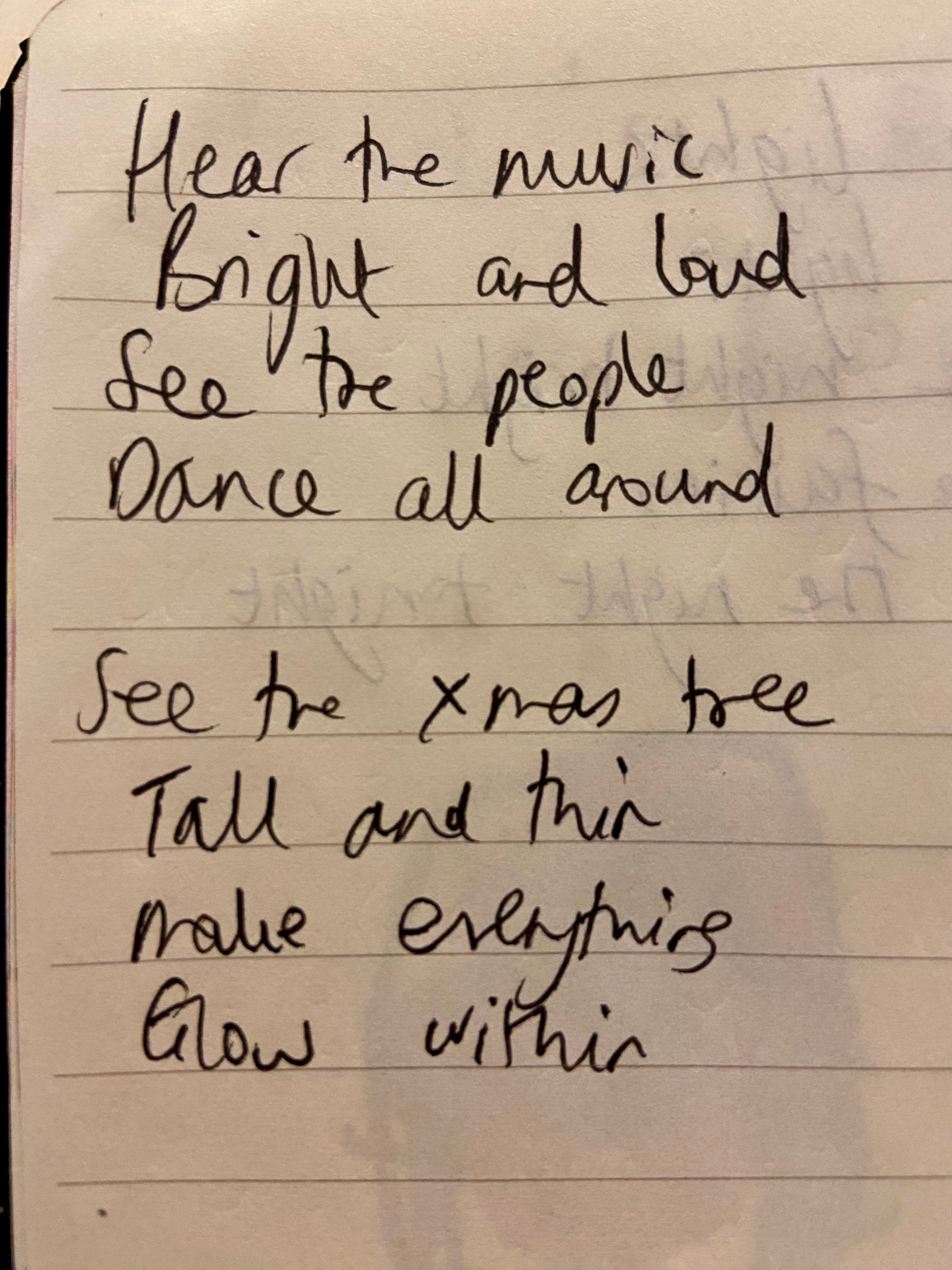
If you have poetry books languishing on shelves, or you borrow them from the library only to find your children don’t naturally reach for them, this approach might be for you.
For us, this has helped us soften literacy even further — it’s not something we have to ‘get through,’ but something that belongs to everyday life.
Poetry supports language development, imagination, emotional expression, rhythm, memory, and creative thinking — all without requiring analysis or “work.” It meets children where they are, and that’s exactly why it’s so powerful.
2. Holding the Spirit of Christmas Lightly
Since becoming parents — and being swept into the heightened intensity of Christmas — my husband and I have had ongoing conversations about how we want to approach it. In particular, the man in the red suit.
This won’t resonate with everyone, and that’s fine. But some recent conversations with my daughter made me feel it might be helpful to share our thinking.
What we’ve noticed culturally is an almost obsessive overproduction of the Father Christmas story. The magic itself isn’t the issue — we love magic. It’s the intensity and rigidity of the narrative, which can leave parents tangled in escalating stories and children devastated or angry when the logic eventually collapses.
Our approach has been looser.
We don’t centre FC in the build-up to Christmas, nor do we deny the story. He appears occasionally, lightly, as one magical thread among many. When my daughter asks, “Will there be lots of presents in our stockings?” we might say in good humour, “Well, we’ll have to see won’t we — some kind of magic usually visits that night, doesn’t it?” and then widen the lens to talk about closing the year, generosity, ritual, and togetherness.

Recently, she shared her own ideas — that FC and his helpers might be shape-shifters, appearing and disappearing as needed, magic simply happening. I joined her in wondering, rather than defining.
This way, the season stays mysterious and imaginative — without requiring us to hold a brittle story together against an increasingly thoughtful child who’s already noticing the logistical challenges of chimneys, sleighs, and time zones.
What this gives us, more than anything, is spaciousness — room for wonder without pressure, and honesty without disillusionment.
3. Using Regulation Tools for “Hard” Learning
This reflection may resonate particularly if you’re parenting a sensitive, non-linear, or highly receptive — often right-brained — child.
I’ve written before about honouring children’s natural learning styles — particularly those who thrive in flow rather than sustained focus. And while I stand firmly by that, I’m also realistic. Our children are growing up with one foot in the old world and one in the new.
So while we’ve followed a largely child-led, play-based approach for P’s first seven years — which I believe protected and supported her early development — we’re now gently introducing small pockets of structure.
The key word here is gently.
What’s made the biggest difference recently is allowing her body to self-regulate while her mind does something hard. For number work in particular (currently her biggest challenge), regulation tools are essential.
Right now, that looks like chewing on a baby teething toy. Previously it was squeezing a stress ball while reading. At bedtime, when she’s tired, if her body wants to fidget or bite her fingers, we always find a safe alternative. She also freely accesses a gym ball for whole body regulation whenever she needs it.

Research consistently shows that self-regulation supports attention, emotional resilience, and learning capacity. When the body is supported, the brain can engage.
At home, these tools are simply available when needed — no shame, no permissions, no paperwork, no waiting months for approval. And that alone removes a huge layer of friction from learning.
4. Finding Our Rhythm with Home Ed Groups
Alongside this online space, our real-life home education community is a big part of our lives — perhaps, at times, too big. I recently realised we needed more time at home for deep dives, creativity, and everyday life skills, so we’ve gently simplified.
This is roughly what our rhythm looks like now:
Monday: Home-based learning or outings with close HE friends
Tuesday: Project-based learning group for P; D with granny
Wednesday: Parent-led HE co-op (fortnightly) + trampolining class
Thursday: Both girls with granny (cooking, handcrafts, online learning); Taekwondo
Friday: Local group meet-up or a home day; street dance class
Weekend: Swimming and family time
Our parent-led co-op has been a particularly nourishing addition. Sessions are theme-based, mixed-age, opt-in, and lightly facilitated. There’s no coercion. Older children naturally step into mentoring roles when it fits. Over time, we’ve watched collaboration and engagement emerge without being forced.
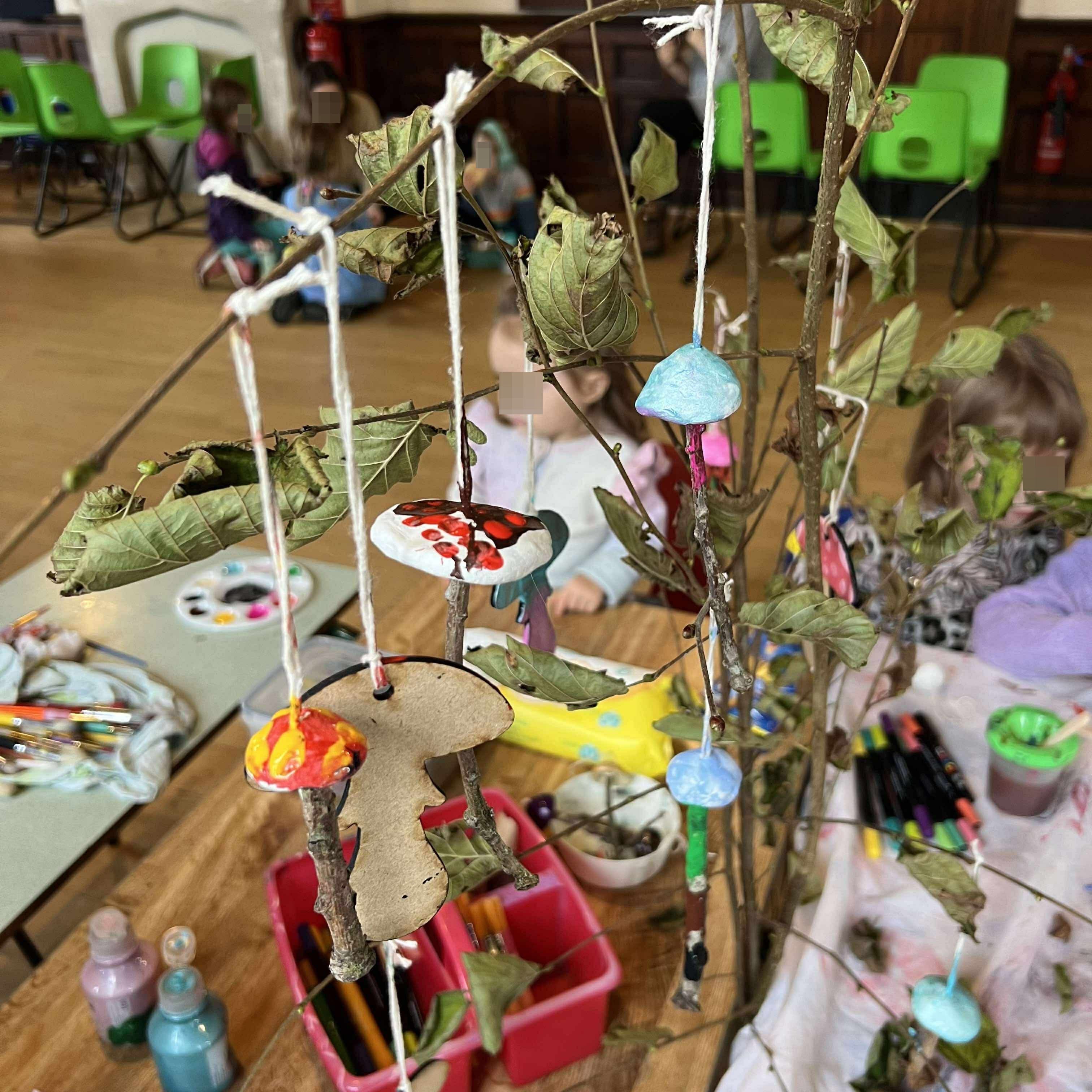
Not everyone has access to something like this nearby. What’s surprised me is how much can grow when a few aligned families simply gather with a shared ethos, a place to meet, and a willingness to learn together. What’s grown from ours has been far richer than I imagined.
I’ve also noticed how much simpler — and somehow deeper — things became once we allowed ourselves to shape community around our actual needs.
5. Welcoming Responsibility Through Chores
A small but significant shift happened recently: my daughter tidied her room entirely on her own one evening — initially as a bedtime delay tactic, but accidentally proving something important in the process.
Since then, she’s started asking to help around the house.
Research suggests that age-appropriate responsibilities support children’s sense of competence, belonging, and self-worth — especially when they arise from intrinsic motivation rather than obligation.
So we followed her lead.
Together, we listed the household chores and identified seven she could reasonably do or learn to do. Each day, she chooses one and marks it with a coloured sticker for the week.
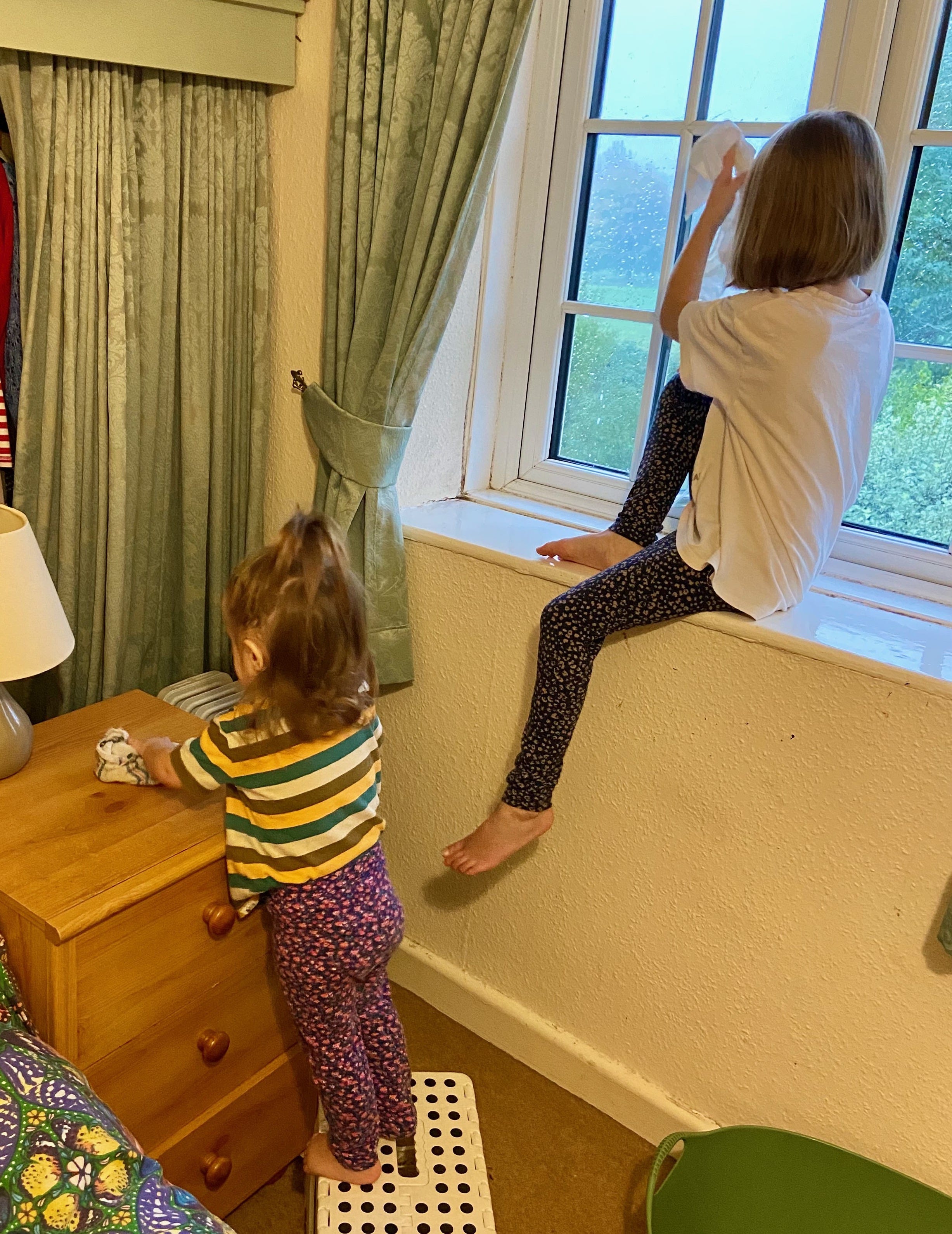
So far, she’s been a dusting fairy, has found washing up ‘relaxing’, and has learned to clean the bathroom sink (the shower was a step too far — we discovered that together). She was deeply proud of the results.
I am loving this system because it came from her. That’s where true engagement always lives. And yes — I’m also quietly appreciating the extra pair of hands, while naming how her contribution helps our family function as a team.
Closing
These are this month’s field notes — small moments that shape how we continue walking the natural learning path.
Again and again, they remind me that learning, like childhood itself, deepens when we stop pushing and start paying attention.
If something here resonated with you, I’d love to hear: what small shift or moment has opened something up in your home lately?
Until next time,
Gem 💎
Subscribe below to receive future essays exploring what we see, what we miss, and what becomes possible when we look again at children and childhood.
Thanks, Gem, this is wonderful. I love the idea of Poetry Teatime. Poetry seems to go down quite well in our house. Unless it's mine, in which case my children aren't the biggest fans. Tough crowd.
Oh my goodness, Gem. Your work is so inspiring! My little one is still in his first year but this gives me so many ideas of how I might relate to him as he develops more communication skills. Thank you for sharing your wisdom 🙏🏼 Given the time of the year, we’ve been thinking a lot about how we would like to approach the FC topic. We also really want to emphasize the magic, family time, and attention to seasonality. We recently got a handmade cloth advent calendar that we have put notes with activities and little treats in. For us, it felt like a good way to make the month feel special, without building up the 25th too much. I’m wondering though: I know a lot of people in our lives (family especially) will be emphasizing FC in their interactions with our son, and likely won’t understand our approach. Any suggestions for communication to them? Thanks again for your brilliant work 🙏🏼