


Welcome back to Home Ed Hacks!
We took a pause over the New Year, but we’re back with this month’s round-up of little things we’ve been exploring, noticing, or gently shifting — not as “activities,” but as ways of living and learning together that have opened something up for us.
Paying attention to these moments continues to be a quiet reminder that learning doesn’t need to be engineered to be meaningful.
As always, these are simple, doable ideas and reflections that may be helpful. No prep. No performance. You don’t even have to be a home-educating family. Just some small changes that have made learning feel more natural and connected for us.
Gem 💎
1. Following a Special Interest: Pokémon as a Learning Ecosystem
My daughter has recently dived head-first into the world of Pokémon, after a couple of friends suggested she give it a try. What began with watching the cartoon series has quickly expanded into card collecting and trading, role-play games with friends, and exploring books, comics, magazines, and an encyclopaedia she loves poring over.
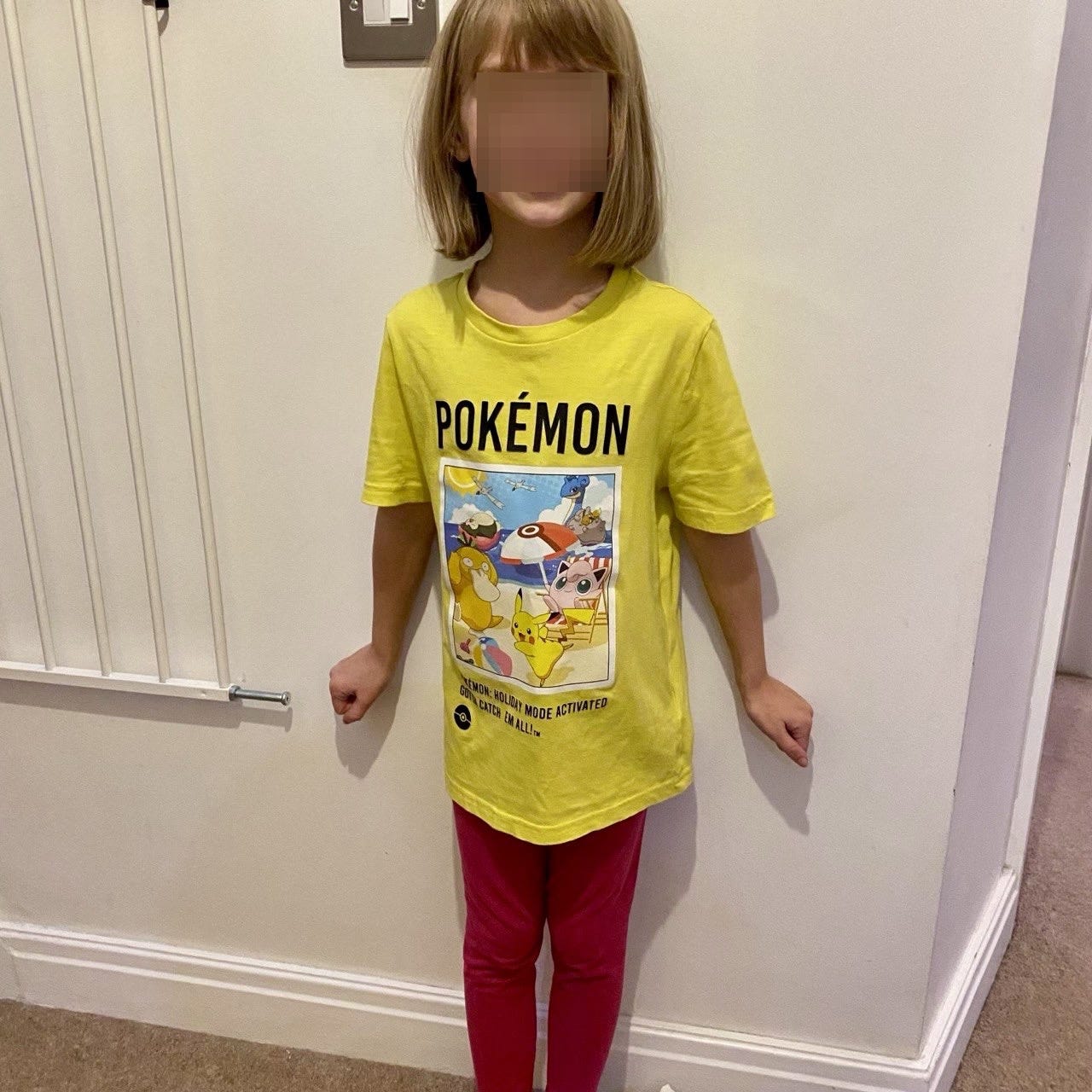
Having previously been somewhat mystified about what all the fuss was about, I’ve been quietly impressed by the depth and breadth of the Pokémon world and what it offers. Rather than seeing this as a distraction, I now feel genuinely happy about this latest special interest — however long it may last.
Engagement with Pokémon offers rich, layered learning opportunities that go far beyond entertainment. Children practise reading and vocabulary as they decode the complex names, abilities, and descriptions of different Pokémon in a context that truly matters to them. Trading cards and negotiating rules build social skills, memory, and perspective-taking. Even informal play introduces strategic thinking and problem-solving foundations that can later support more complex and structured games. When children are developmentally ready, the formal trading card game requires quick mathematical calculations and tactical thinking.
Pokémon’s storylines also open space for conversations about friendship, resilience, values, and personal strengths. Looking ahead, location-based games such as Pokémon Go can support physical movement, spatial awareness, and real-world exploration.
When we follow a child’s enthusiasm, we often find that learning quietly comes along for the ride.
2. Emotional Regulation: Stepping In Before the Spiral
There have been some big feelings moving through our family lately.
Not in a dramatic or crisis-filled way, but in the very ordinary way that happens when tiredness, transitions, sibling dynamics, and strong-willed children meet a parent carrying their own nervous system history. I noticed myself slipping into patterns I didn’t like: asking calmly, asking again, and then tipping into sharpness or shouting once things had already gone too far.
What mattered most wasn’t just my daughter’s behaviour, but my willingness to look honestly at my own responses — especially the ways my body reacts under pressure, shaped by experiences long before I became a parent. Seeing this was uncomfortable, but it became the doorway to change.
The most practical insight I’ve taken from this period is the importance of containment before nervous system overload. For some children (and parents), verbal reminders stop working once bodies are already activated. Waiting, explaining, or repeating requests can actually push everyone closer to the edge.
What helps instead is stepping in earlier and more concretely: moving physically closer, using gentle touch, making one clear request, and — if needed — calmly helping a child’s body to stop rather than relying on words alone. This isn’t about being harsh or controlling; it’s about offering external regulation before things spiral.
Through a Human Design lens, this has helped me understand how my emotionally defined system can amplify intensity under pressure, while my daughter, who is emotionally undefined, is more prone to acting first and processing later. When I intervene earlier, with less charge and more structure, both of our nervous systems recover more quickly — and the big feelings pass without turning into shame, power struggles, or long repairs.
3. Health as the Foundation: Seeing the Whole Child
One of the quiet turning points in our home life since the New Year hasn’t been a curriculum shift, but a health one.
After years of seemingly unrelated issues — glue ear (causing hearing loss) and chronic mucus, severe leg and ankle pain that often woke her at night, very low appetite alongside sensory sensitivities and restricted eating — we recently saw a herbalist and naturopath who did something no one else had managed. She took a detailed case history and then assessed P using iridology, a traditional observational practice that looks at patterns in the iris to understand systemic tendencies and stress points in the body.
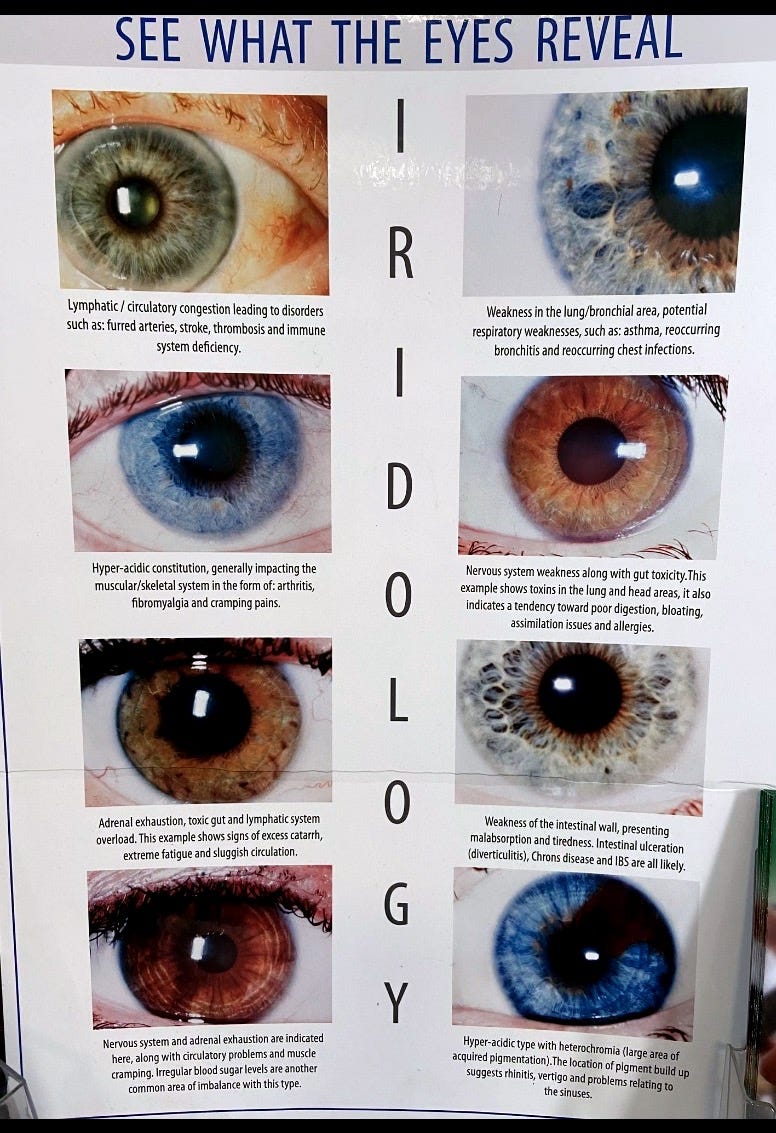
What mattered most to me was not the method itself but the coherence it offered. For the first time, someone reflected back a single picture rather than a list of disconnected symptoms. She explained that signs suggested low stomach acid and central dysbiosis with excess candida — patterns that, within naturopathic frameworks, are often associated with lymphatic congestion, mucus production, and musculoskeletal pain.
Suddenly, things I had sensed but never been able to articulate made sense. When P woke in the night with intense leg pain, she was often almost completely deaf. The practitioner described a system that was ‘clogged’, with the lymph trying to drain both upwards through the sinuses and downwards through the lower body. Hearing this was deeply validating. It matched my lived observations of my child in a way no isolated diagnosis ever had.
P was given a personalised herbal tonic to gently support digestion, lymphatic flow, and microbial balance, alongside flower remedies to support emotional patterns the practitioner observed — particularly worry and internalised anxiety, which P herself confirmed. I won’t list the herbs here, not because they weren’t important, but because what feels most relevant in this context is the experience of her being seen and treated as a whole.
Within days, her excess mucus cleared and has largely stayed clear. Her hearing has been consistently excellent for the first time in years, and her leg pain has reduced significantly in both frequency and intensity. Just as importantly, her appetite has returned. She is eating with more ease, has put on a little healthy weight, and now looks nourished rather than thin and drawn — a change that has brought enormous relief after a long period of worrying about under-nutrition and the cumulative effects of chronic ill health.
We did move through a couple of weeks of heightened emotion (as mentioned above), which felt less like deterioration and more like release. More recently, those waves have softened. She seems calmer, more reflective, and less anxious in her body.
This experience has been a powerful reminder that learning and behaviour do not exist in isolation from health and well-being — and that sometimes the most important intervention is simply widening the lens.
4. Gently Encouraging Writing (Without Pressure)
P’s writing is progressing, but she can still find it effortful and easily overwhelming. She is also very sensitive to correction, which can make feedback around letter formation, orientation, and spelling tricky. I’m leaning into the wisdom of veteran unschoolers and holding trust that these skills will come in her own time, while also thinking carefully about how to invite writing without turning it into something she resists.
I’ve been experimenting with separating writing for enjoyment from writing for skill-building. When the goal is motivation and confidence, I stay completely hands-off and offer no correction at all. At other times, I gently and briefly give guidance on specific skills. There is far more time spent on the former than the latter, and this balance has made a noticeable difference.
Here are a few approaches that have been working well:
Letter-writing with real recipients. She has begun exchanging letters with two friends and her grandad, who sometimes sends illustrated information sheets connected to their conversations (a recent favourite was a chart of animal lifespans — including the immortal jellyfish!). With one friend, we’ve agreed not to interfere at all with what they send. We support reading comprehension at the other end if needed. The satisfaction of posting a letter — and receiving one back — is hard to beat.
Silly sentences and playful prompts. For example: “The dragon opened the fridge and gasped because…” or “Write three ridiculous ice-cream flavours for our ‘Crazy Cones’ shop.” Playfulness lowers the stakes and gets words flowing.
Back-and-forth scavenger hunts. I write a simple list (e.g. something orange, something beginning with P, something heavy). She then writes one for me — sometimes just single words or short phrases.
Oral storytelling with labels. She tells stories aloud, draws the characters, and labels features or speech bubbles with words or phrases (e.g. “razor-sharp teeth” or “tall as a house”).
Drawing special interests and writing names. Recently, she coloured her favourite Pokémon characters and spontaneously wrote their names on each picture.
Journalling in a calm, inviting space. One day, all it took was an invitation to sit in her window seat and watch the rain. A blank journal lived there, and she filled a whole page without prompting.
Joined-up writing through tracing. Despite having resisted traditional handwriting exercises, she was excited to try cursive when she learned it was the ‘next step’. Tracing joined-up letters has helped her letter sizing and flow naturally, and she loves feeling grown-up and capable.
5. Storytelling, Play, and Deep Learning
Two recent experiences have reminded me just how powerful storytelling and play can be for children’s learning and development.
At our local home-ed co-op, the children used picture prompts to co-create a story framework. They then moved into a space filled with costume accessories — hats, scarves, capes, masks, trinkets — alongside a craft area where they made pop-out dragons. Watching them naturally weave props, characters, and plot together through play was a joy.
There was no formal teaching of concepts like sequencing, narrative structure, or collaboration — and yet all of those skills were deeply present. The children were doing what they do best: playing, imagining, negotiating, and creating meaning together.
At home, P has continued this thread by staging small plays for us using the costume bag as inspiration. She has performed classic fairy tales as both narrator and characters, demonstrating rich vocabulary, complex sentence structures, and confident storytelling. We also turned one of her original oral stories into a short play, making simple props and performing it together.
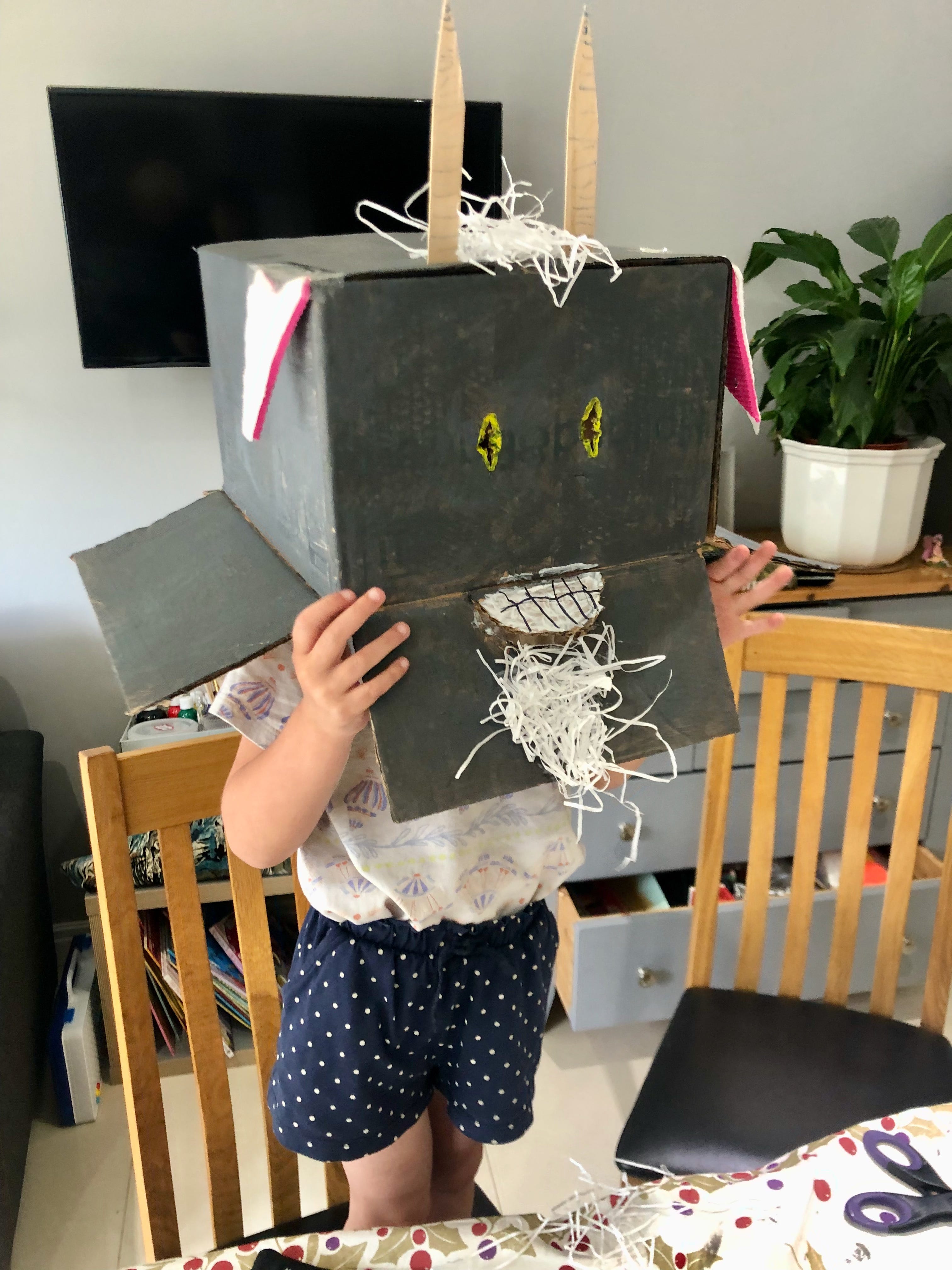
This opened the door to age-appropriate learning about audience awareness, remembering lines, timing, and expressive movement — all embedded in joy and connection.
Closing
That’s our Home Ed Hacks for this month — small, gentle shifts that have supported learning, connection, and confidence.
These moments continue to remind me that learning, like childhood itself, deepens when we stop pushing and start paying attention.
Until next time,
Gem 💎
Subscribe below to receive future essays exploring what we see, what we miss, and what becomes possible when we look again at children and childhood.


These are so wonderful, Gem. I am especially inspired by the storytelling ideas. Though my little one is still a bit young for these, I am really excited to devise ways for him to express his creativity on his own terms. Through the MotherLore project, I’ve also been hoping to collect stores appropriate for children that we can work with, and that will also help him connect with our ancestry. It sounds like P is doing amazing though! I also really love the idea of sending letters. Learning in an applied way like this can be so rewarding.
Gem, what I love about your writing is the steadiness of it. There’s no urgency, no proving — just deep noticing. Your Pokémon example beautifully demonstrates how depth appears when we stop labeling interests as distractions. One insight your piece sparked for me is that “natural learning” might actually require enormous restraint from adults. Not laziness — but the discipline to not over-direct. In a culture obsessed with acceleration, choosing to trust a child’s pace may be one of the most radical educational acts available.