


Field notes from everyday life-learning — small moments that shape children’s learning and growth.
In last month’s field notes, I reflected on the cultural obsession with recording and measuring learning, and what we might lose or be missing because of this. I ended the piece by saying:
“If there’s one thing I’m taking into next month, it’s this: learning doesn’t begin when we record it. It begins the moment a child starts living.”
Since then, I have spent time contemplating the natural rhythms that characterise developmental unfolding — how this process is not as smooth as we might have been led to believe by the way our overriding systems are organised.
This felt like a natural next step as I thought about the deeper issues behind the drive for data, and why we might always struggle to capture development in the ways our systems want us to. Children and developmental unfolding are actually a lot more complex, messy, and hard to pin down when we look more closely.
This was a useful exploration, and I was grateful to Ba’s Substack for pointing me to his work with Natural Learning Relationships and how his ‘fields of knowing’ phases give language and description to some of this phenomenon of developmental hesitations. I have just received Ba’s book in the post and am looking forward to digging into it and reflecting on what it illuminates.
It has also led me into a much bigger question, one that I suspect is going to occupy me for quite some time:
What are children actually working on at different stages of development?
What are children actually working on?
I have begun what is undoubtedly going to be a detailed research project, exploring the disparity I have become aware of between what the child might be naturally seeking to organise and what our cultures and systems seem to hold up as the priorities for different phases of childhood.
Children on the whole experience an increased push for academics in middle childhood, for example. But what do different developmental psychology, educational traditions and relational approaches say about this phase?
What if the things we are asking children to work on are not necessarily the things their development is asking them to work on?
I want to explore how much misalignment there is between our ways of doing things and children’s natural drives. This is a mismatch I feel like I have observed and felt for many years, and it is part of why I chose a different path for my own children.
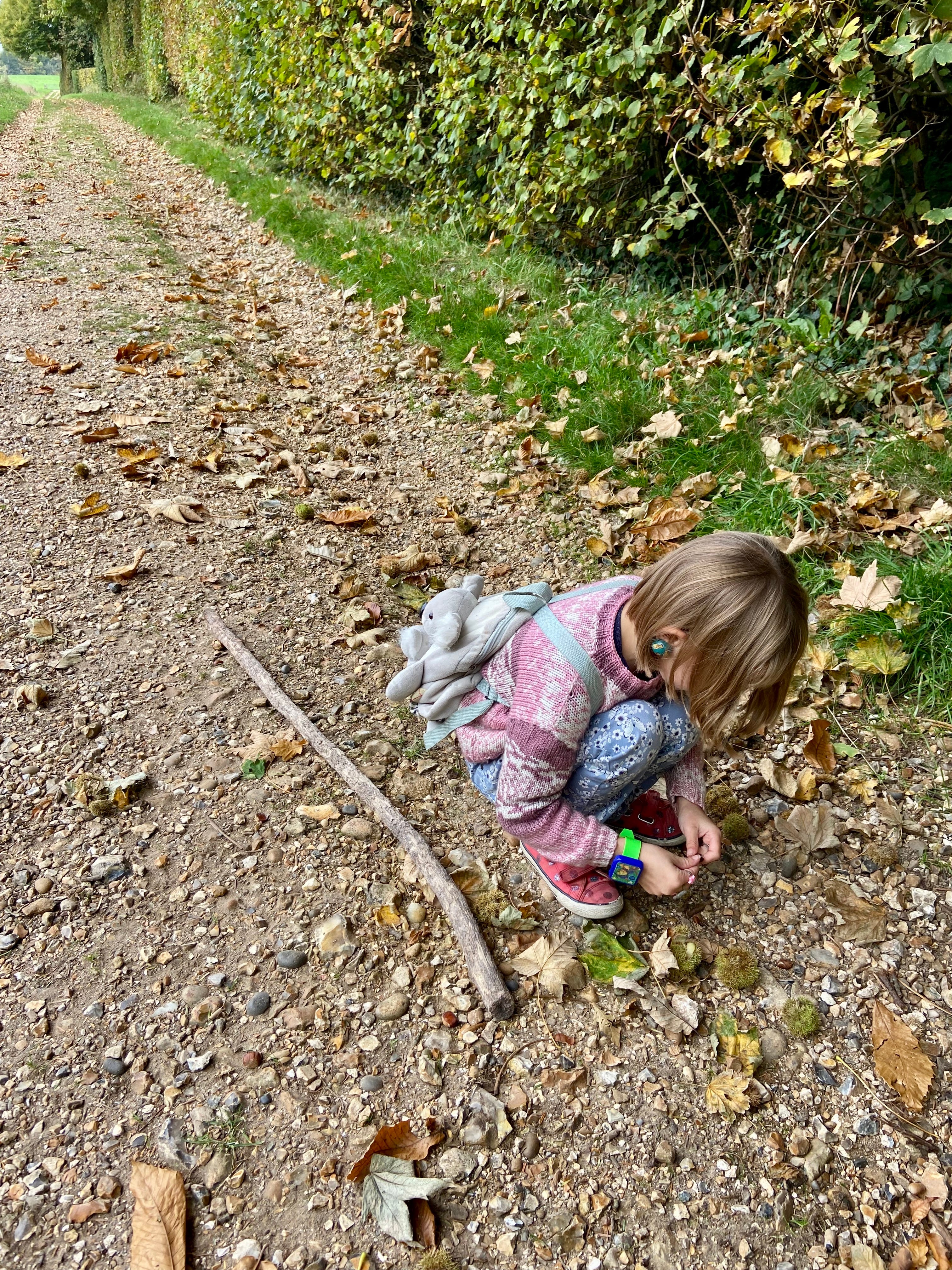
Yet those of us who do take this alternative path can sometimes feel unmoored, because there is not necessarily something more naturally attuned that we can fall back on to guide what we might do and how we might support our children optimally.
It is one thing to step away from the conventional expectations. It is another to understand what we might move towards.
I plan to explore Natural Learning Relationships along with other key thinkers such as Erikson, Vygotsky, Waldorf and Montessori to help me explore the question of what are children actually working on? And then, later, what would it mean to organise home life around that, rather than simply increasing academic expectations?
If we are going to arrive at something resembling a developmental compass, I think we need to understand both the broad developmental phase a child is moving through and the particular child who is moving through it.
The child within the developmental phase
This is where another thread that has always driven me comes back in: individualisation.
I feel that both aspects are imperative to consider if we are going to arrive at a truly helpful developmental compass — what the child is naturally seeking or organising due to their overall age and phase, but also who is this unique child?
What are their natural talents and gifts? What lights them up? How does their energy work? What is their learning style? What sensitivities and vulnerabilities do they have? What types of environments and dynamics in relationships will be optimal for their growth?
I am going to continue to explore these questions using the Gene Keys and Human Design profiling — first to look at my own children and later perhaps I will be able to widen the net.
The more I think about development, the less useful I find the idea that there could be a single developmental trajectory that tells us what all children should be doing, learning or becoming at a particular age.
But equally, I don’t think the answer is that there is no developmental patterning at all.
Somewhere between these two extremes feels much more interesting to me: understanding what children may naturally be organising at different phases of development, while remaining deeply attentive to the individual child and the particular way that their development is unfolding.
And perhaps this is where the question of learning starts to become particularly interesting, because the more I look, the more I wonder whether some of what we call resistance is actually information about a mismatch.
Resistance, flow and the conditions for learning
Something else I wrote about last time was the shift that took place when I realised I needed to embrace my daughter’s love of make-up rather than resist it.
This has led me down a whole rabbit hole of thinking about how we might really use children’s passions and interests to encourage so much broader learning, including the academics we so highly value, and around the concepts of friction versus flow.
If I adopt a more traditional teaching approach and plan lessons for my daughter, complete with set tasks, worksheets etc., I meet a lot of resistance. Depending on her capacity and the topic and approach I have chosen, I may get a little buy-in and maybe ten minutes of the work being attempted.
If I have pitched the work too high and she feels it is too hard for her, resistance will increase. If I pick a topic that she loves, there may be less friction. There are multiple different variables that will influence how easily engagement and learning flows.
The ultimate in ‘free flow’ would be an activity she has self-chosen and where the learning is inherent to it. For example, if she wanted to make a dress and naturally realised she needed to measure how much material she needed, and set about doing it.
A version that’s less flowing but still likely to be quite low on resistance is me asking her what topic she wants to explore for a focused learning time, and then planning an activity that I think will be meaningful to her and meets her where she is ability-wise — for example, not too much paperwork and lots of hands-on.
I find this concept of resistance versus flow fascinating, especially because, in Human Design, resistance is talked about as the number one signal that we, or something, is out of alignment.
I wonder how much of what we present children with is out of alignment with where they are and who they are. These are my two central driving research questions at the moment.
We had a wonderful discussion in the comment section of one of my recent pieces about how joy seems to be the key ingredient for allowing that unbridled flow of engagement and learning. This gives weight to the notion of leaning more into and using children’s natural interests and passions as the main vehicle for learning.
However, I have reflected that it is unrealistic for everything we do in life to be filled with joy at all times, and children would not be being set up for the world very well if they never met challenges that felt a bit less enjoyable at times.
I think it is about healthy friction at the edge of our abilities that stretches our capacities in a ‘just right for us’ way, rather than endless tasks that really engender resistance within us but that we have to learn to push down, ignore and get on with.
Perhaps the question, then, is not how we remove all friction from learning, but how we learn to distinguish between the friction that helps a child grow and the friction we are unnecessarily creating. We have to notice when our support seems to be adding unnecessary friction rather than allowing learning to flow, and we have to know them well enough to respond rather than simply follow a formula.
Rethinking what we mean by learning
Another thread that has continued from last month is the question I raised when I asked:
“If the symbols are simply one way of expressing mathematical thinking, what, then, is mathematics? The notation itself, or the patterns, relationships and reasoning it allows us to communicate?”
I had some intriguing insights shared in the comments which, together with my further ponderings, led me to the book Mathematical Mindsets by Jo Boaler. I have only just started to read it, but already it is throwing up some very interesting potential paradigm shifts.
For example, I learnt that one outspoken critic of traditional Maths teaching, Conrad Wolfram, describes four stages in working on mathematics:
Posing a question.
Going from the real world to a mathematical model.
Performing a calculation.
Going from the model back to the real world, to see if the original question was answered.
He points out that 80% of school maths is spent on stage 3 — performing a calculation by hand — when we should have students work on stages 1, 2 and 4 for much more of their time.
“It used to be that employers needed people to calculate; they no longer need this. What they need is people to think and reason.” — Jo Boaler
These insights were extremely validating for where I am currently at with my daughter, who does not find the calculation part of maths at all easy at this stage, and I am acutely aware of her already fragile sense of self-esteem around her abilities in Maths.
It also made me think about how easily we can mistake one particular expression of a capacity for the capacity itself. If a child struggles to perform a calculation, what are we actually learning about their mathematical thinking? Perhaps sometimes we are measuring the ease with which they can perform one particular part of mathematics, rather than the breadth of their ability to think mathematically.
I am excited to learn more about how I can shift us into more of a mathematical thinking approach, as I know this will not only suit her creative mind but provide more meaning for her to make the connections between the numbers, the real world and the things she is interested in. I will continue to document my exploration and the things we try at home in this regard.
Where this is taking me
Looking back over these different threads, I can see that they are beginning to converge.
I started with a question about our obsession with recording learning. That led me into the rhythms of developmental unfolding, and from there into the question of what children might actually be working on at different stages of childhood.
That question then opens up another: how much of what we currently ask children to do is actually aligned with those developmental drives, and how much reflects the priorities of the systems and cultures around them?
And then there is the individual child, because even if we develop a better understanding of broad developmental phases, we still have to ask: who is this child?
What are they naturally drawn towards? What are they capable of right now? What stretches them in a useful way? What creates unnecessary friction? What allows their learning to flow?
These are the questions I seem to keep circling back to.
Perhaps what I am ultimately looking for is not another framework for telling us what children should be learning, but a better way of noticing what they are already working on — developmentally, individually and in relationship with the world around them — and then asking how we might organise our support around that.
I don’t have the answers to these questions yet. In fact, I suspect some of them will lead to many more questions. But this is where my enquiry is taking me at the moment, and I’m looking forward to seeing what I find as I keep following the threads.
Those are this month’s field notes. Not conclusions, but another glimpse of what becomes visible when we slow down enough to notice the rhythms, patterns and possibilities unfolding beneath the things we have been taught to look for.
If there’s one thing I’m taking into next month, it’s this: perhaps the question isn’t simply what should children be learning, but what are they already working on — and what might become possible if we learned to support that rather than work against it?
Until next time,
Gem 💎
Subscribe below to receive future essays exploring what we see, what we miss, and what becomes possible when we look again at children and childhood.
Hi Gem, you write: “If there’s one thing I’m taking into next month, it’s this: learning doesn’t begin when we record it. It begins the moment a child starts living.”
This is true and is also a reflection of development.
Many, too many, children cannot read, write or master simple arithmetic because these functions have not fully developed, often despite good intelligence.
May your curiosity and exploration bring bountiful results. I hope that many are inspired to engage the questions and issues you so carefully and thoughtfully bring forward. I do learn so much from your careful observations, and so importantly self-observations that you share. For me, I hand found that self-reflection on my own biases, expectations, and frankly, psychol-emotional infections from cultural conditionings, often forcefully imposed, through subtle and no so subtle power-over means, is necessary to clearly see children and assess environmental appropriateness. The more honest and courageous I am in these personal self-reflections, the more I release residue inhibiting aspects of my childhood. This opens me to participate profoundly with the children in their field of knowing. When I do so in a nurturing way, I grow exponentially into ever deeper fields. This has been the biggest surprise for me--that I deepen self knowledge through nurturing a child's field of knowing. I guess I should have suspected it, given interconnectedness, but not in this life changing way. It gives lie to those who believe family is a "cost center" or a drain, or in any way inhibits.