


Field notes from everyday life-learning — small moments that shape children’s learning and growth.
The ideas that follow us into everyday life
As always, the ideas I have been writing about over the past couple of months have continued to follow me into everyday life.
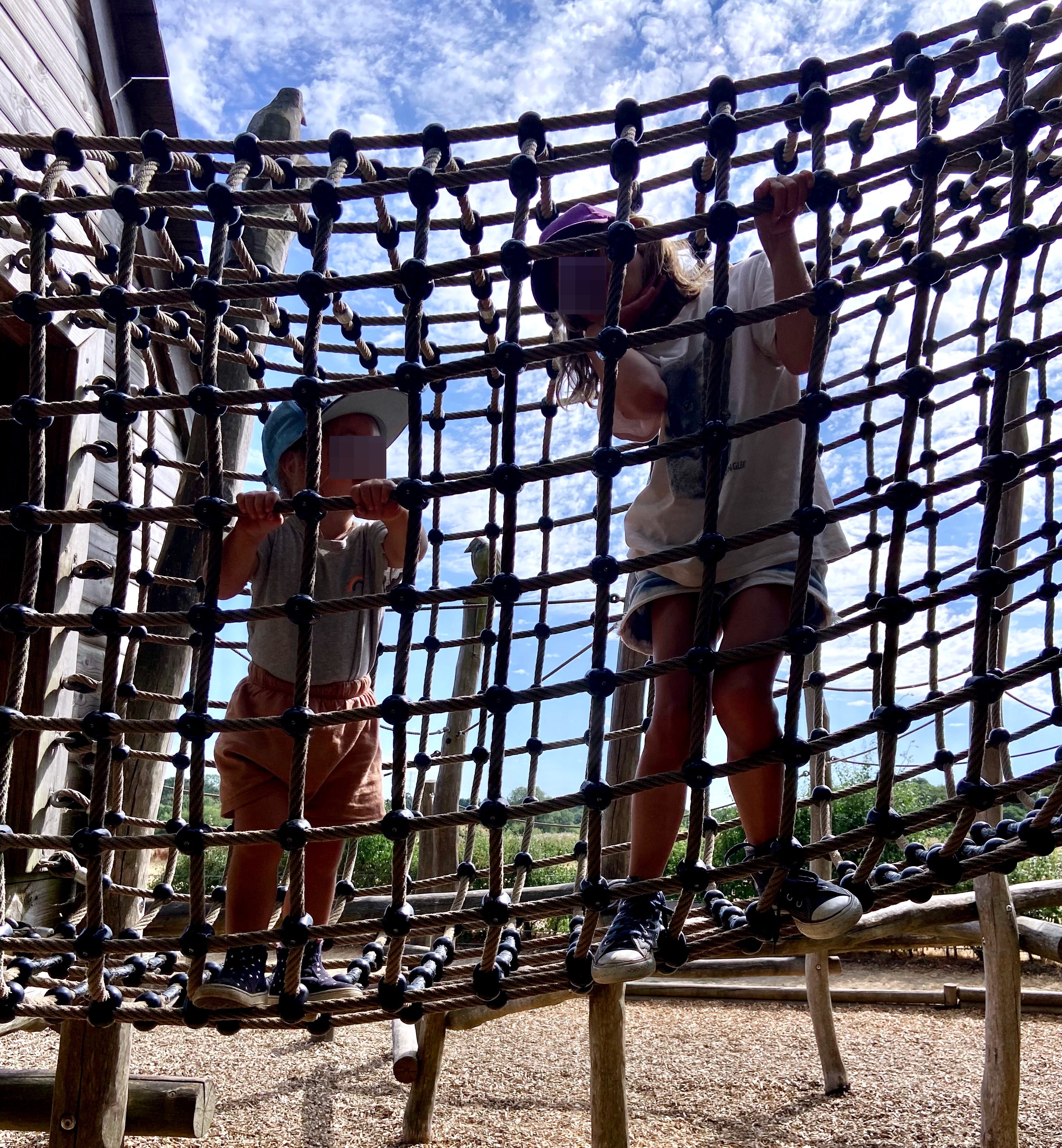
I have been thinking about the invisible audience in parenting, what we think a child is, and what counts as learning. Rather than these being abstract questions that I explore in my writing and then leave behind, I have found myself noticing them in my own family life and in the experiences I share with others.
Here are a few things that have stood out to me recently.
What we know, and how we come to know it
My husband, our eight-year-old and I have recently been enjoying playing a general knowledge quiz together in the evenings. I picked it up from a charity shop, and it has questions across a range of topics, from the natural world and science to history, maths and English. It is also great practice for my daughter’s reading skills as she asks us the questions.
The results have been interesting. My husband and I both had a state school education, with me going on to university for a science degree and later a Master’s in Education. Yet there are still some questions neither of us knows, even at the first level!
One question my husband knew but I didn’t was “What is a zeppelin?”— I could only think of a rock band, whereas he, with his interest in vehicles and war history, knew it was a German airship.
Our daughter has surprised us, too. One question she answered correctly was “What is meant by the saying look before you leap?” Her answer was, “Think carefully before doing something.” We couldn’t think of a time when we had used the saying ourselves. Perhaps she had come across it in a book or film and absorbed its meaning somewhere along the way. Or perhaps it is an intuitive conclusion when you think deeply about the words.
Often, she doesn’t know where or how she learnt something, but she knows it all the same. It has been such a fun, low-pressure way of exploring knowledge, and a reminder that what we know comes from far more than what we were deliberately taught and managed to retain.
This connects with my recent essay, What Counts as Learning? So much of what we know accumulates through everyday experiences, conversations, interests and observations, without us necessarily recognising it as learning. As parents, we can become so preoccupied with what our children should be learning that we forget to notice what they already know, or to be curious about how they came to know it.
Reflection: What does your child know that you don’t remember teaching them? What might they be absorbing through their everyday interests and experiences?
Finding a rhythm between what we believe and what we need
Regular readers will know that I have long struggled with getting my daughter to engage in anything that looks like more formal, structured academic work. I really resonate with unschooling and believe wholeheartedly in a more natural, life-learning approach to education. Yet I have come to realise that I am not entirely comfortable with an approach that is completely child-led or self-directed.
It is one thing to read about unschoolers whose grown children eventually learnt reading, spelling and calculation through their own motivation. It is another to be in the thick of home-educating a younger child and trust that these things will emerge in time. I do believe in teaching; I just don’t believe that the intense, rigid and pressured approach most children experience is the only way to do it.
Since my daughter turned seven, I have tried various ways of introducing more structured learning. I tried project-led activities that began enthusiastically, but when I started weaving in specific academic goals, my daughter would begin groaning and refusing. I worried that I was spoiling her natural interest in the topic by trying to make it serve a particular educational purpose. I also tried five-minute bursts of more traditional activities, such as handwriting sheets and maths workbooks, but these often led to the same resistance.
Even when the task was short, she would put it off until eventually I had to insist that it happened now, sometimes interrupting something she was absorbed in. It just didn’t feel right. What was really in it for her?
Then one morning I woke up with the song “3 Is the Magic Number” in my head. It occurred to me that three times a week might be a good balance: enough regularity to support her reading, writing and arithmetic, whilst leaving plenty of space in the rest of the week for her own interests, play, and activities outside the home.
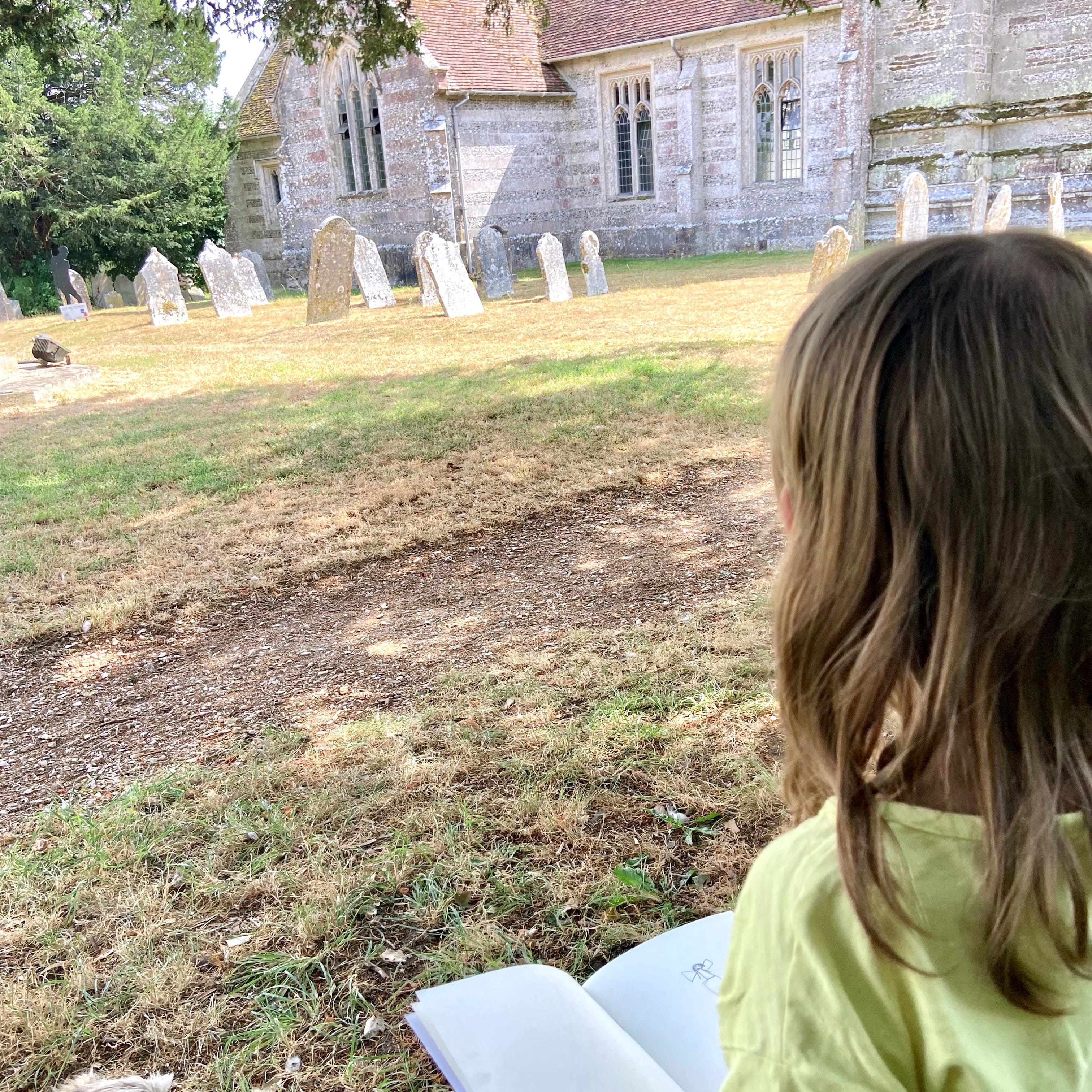
So we introduced a simple three Rs checklist in her diary, with three slots each week when we would do something involving reading, writing and arithmetic. I explained the approach to her, and she liked being able to see clearly what was expected. The activities would be short, meaningful and, wherever possible, fun.
It wasn’t all smooth sailing once the initial enthusiasm wore off, but the resistance seemed easier to work through this time. We had a clear and limited expectation rather than a daily schedule that felt as though it could keep encroaching on her time.
With maths in particular, I have been exploring a more practical, mathematical-thinking-based approach. We have drawn chocolate bars on graph paper, inspired by Charlie and the Chocolate Factory, which naturally led us into multiplication and times tables. We have also played number-sense games using cubes hidden beneath a cup, or dividing toppings between pizza segments. Repeatedly playing these games has helped build her confidence and skills in a way that pages of sums, which used to make her panic and groan, simply didn’t.
A key moment happened yesterday. After she had written a dictated piece and I gave her some spelling and punctuation feedback, she said with a proud smile, “Mum, by the way, have you noticed that I am not getting upset and feeling bad about myself when you give me the corrections anymore?”
I think this reflects not only her developing maturity, but her growing trust in herself and in me, and the trust that this rhythm, which suits us both, has helped create. She can expect the work to be manageable, and feedback no longer seems to carry the same emotional weight.
I’m noticing changes in me, too. Some of the anxiety I have felt about whether I am doing enough has fallen away. I now feel more able to have “one foot in both worlds”, so to speak: I am not a full unschooler, but neither do I believe in an intense, rigid approach to formal education. I am finding a way of working that reflects my principles, my daughter’s needs and the reality of our lives.
I suspect some of my earlier anxiety came from the invisible audience I wrote about recently. What will people think if my child isn’t doing multiplication by age eight? Am I doing enough? Will I be judged for taking a different approach?
Ultimately, it matters less what anyone else thinks than whether I can feel confident that we are on a path that is right for us. That doesn’t mean ignoring my daughter’s development or assuming she will never need direct support. I still want to find the balance between preserving her childhood and helping her develop the skills she needs for her future. But I feel less compelled to make her learning look a certain way simply because that is what is expected.
Reflection: When you worry about what your child should be doing at their age, how much of that concern comes from what you have observed in them, and how much comes from expectations you have absorbed from elsewhere?
What becomes possible when we create different conditions?
Our local home-ed parent-led co-op has also been going from strength to strength. We now alternate weekly sessions between a book club and a seasonal or current topic. For our Charlie and the Chocolate Factory sessions, as well as profiling the characters and plot line, the children have designed their own chocolate bar wrappers, invented names and marketing phrases, written descriptions of flavours and ingredients, explored the origins of chocolate, and found out what happens when different types of chocolate melt.
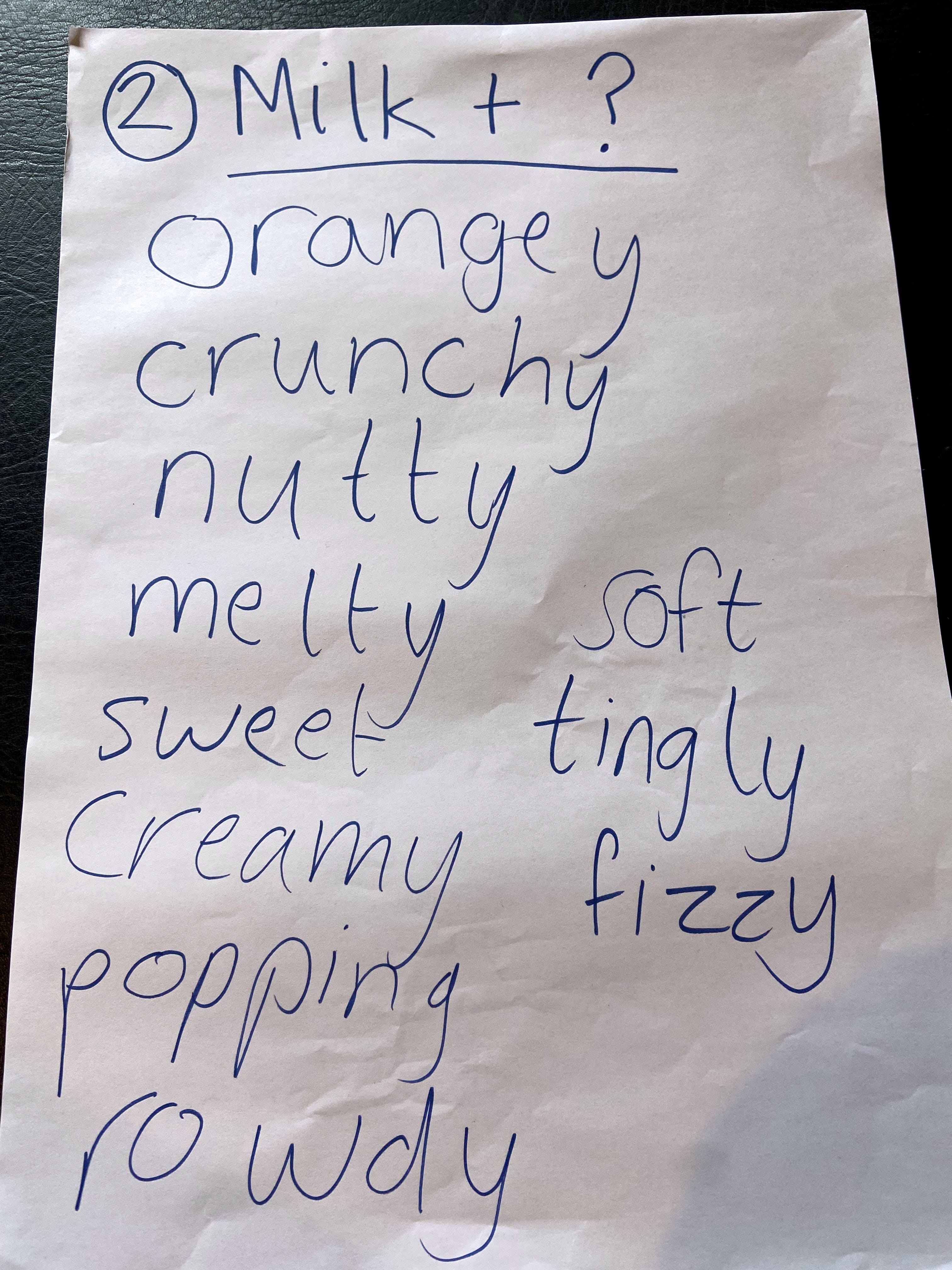
There has been art, writing, design, business, geography, natural sciences, and scientific thinking, all emerging from a shared interest rather than being taught as separate subjects. The children, who range in age from one to fourteen, have participated in ways that suit their different developmental stages and interests.
I feel this is a hark back to something education has increasingly lost. My mother was a teacher in the 1980s and 90s and saw how the introduction of the National Curriculum changed her teaching. Teachers had previously had more freedom to embrace theme-based learning, exploring a topic in ways that brought different areas of knowledge together. Going even further back, mixed-age groups also allowed children to learn from older peers and help younger ones.
I feel we lost a lot when we moved towards subject-based learning with set objectives to be achieved at particular ages. Our co-op has given me a glimpse of what becomes possible when we loosen some of those boundaries.
One thing I have particularly noticed is the relationship between my daughter and a fourteen-year-old girl who attends. My daughter looks up to her and often chooses her to help with activities instead of me. When she is alongside her older friend, she seems more inclined to challenge herself and demonstrate her skills.
The older girl benefits, too. When an activity is too easy or doesn’t particularly appeal to her, she can help set up equipment or explain something to a younger child. These opportunities are developing her independence and practical skills in a different way.
Then there are the youngest children, who might sit with the group for the first part of a discussion before gradually moving off to roll around on the floor together. It might look like a distraction, but it never actually seems to be. Everyone seems to understand that this is simply what little children need to do, and what we are doing seems motivating enough to keep the other children’s attention. At other times, the little ones sit alongside their older peers at the table, making their own versions of the drawings or writing activities through scribbles and marks.
I find it fascinating that children can share an experience without needing to participate in the same way. The youngest aren’t expected to produce the same work as the older ones, and the older children aren’t held back by their presence. Each finds their own way into what is happening.
This connects with my essay What Do We Think a Child Is? If we focus primarily on what children have yet to learn or achieve, it is easy to organise their experiences around what is expected at a particular age. But when we recognise them as individuals developing in their own ways, we can create environments where they can participate meaningfully without having to conform to identical expectations.
Of course, this doesn’t mean adults have no role. A good co-op takes planning, commitment and organisation. We need to create the conditions for these experiences to happen, but there is a difference between providing a structure that makes learning possible and trying to control exactly what every child will get out of it.
Reflection: Where might you be able to change the environment, the activity or the expectations, rather than focusing on what a child needs to do differently?
Looking back
When I look at these experiences alongside my recent essays, I can see some of the same themes running through them.
I am catching myself when I notice the imagined audience, recognising when my concerns about my daughter’s learning are driven more by what I think others might expect than by what she actually needs. I am trying to honour who she is now, rather than focusing too much on what she has yet to learn or achieve, and to support her development in ways that have meaning and motivation for her.
I want to retain trust in the learning that happens throughout everyday life, without feeling that I need to be a teacher all the time. When my daughter was little, she learnt hugely complex skills without ever having a lesson. I want to trust that more complex skills can continue to emerge, whilst recognising that I can nurture and support them along the way.
I don’t have all the answers, and I suspect I will continue to navigate these tensions as my children grow. But I am finding that when I pay closer attention to what is actually happening, rather than what I think should be happening, I can make decisions that feel more considered and more suited to our family.
Perhaps that is what these everyday experiences are teaching me: not to replace one set of rules with another, but to keep looking, noticing and adjusting as we go.
Those are this month’s field notes. Not conclusions, but glimpses of what can become visible when we look beyond the expectations we have inherited and pay attention to the learning, relationships and possibilities unfolding in everyday life.
If there’s one thing I’m taking into next month, it’s this: how much might we miss when we look for learning only in the places and at the ages we expect to find it?
Until next time,
Gem 💎
Subscribe below to receive future essays exploring what we see, what we miss, and what becomes possible when we look again at children and childhood.
I absolutely love the idea of doing a general knowledge quiz together each evening…this is definitely something I’m going to explore 🤎