



Every child has a unique way of making decisions that is correct for them. In Human Design, this is called Authority — the inner guide that helps each of us know what’s truly right. When children (and adults) follow their authority, they learn to make choices aligned with their authentic selves.
Authority arises from the energy centres in the Human Design chart. Some centres are defined (coloured), while others are undefined (white). An individual’s authority is linked to a specific centre, and understanding it helps you support their natural decision-making style.
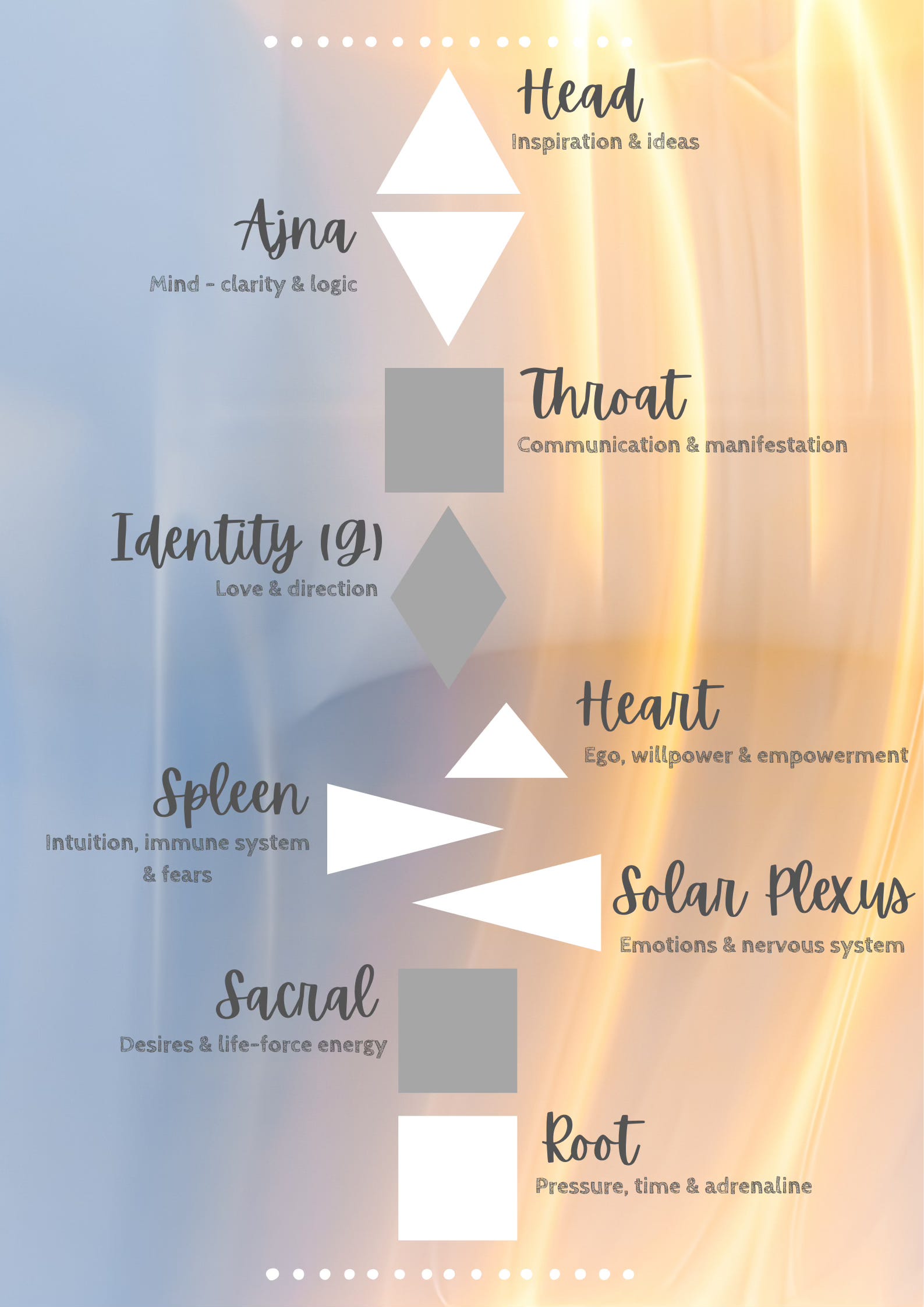
Following authority at home supports a child’s natural learning path. Instead of forcing decisions or schedules, you allow them to follow what feels right for them. This nurtures confidence, autonomy, and self-trust.
💡 Tip: Get your child’s chart (and your own) here. Look under Properties → Authority to see which centre leads their natural decision-making. For example, mine is Solar Plexus, and my daughter’s is Sacral.
Let’s explore the seven types of authority — what each one means, and practical ways to support it at home.
1. Solar Plexus – Emotional Authority 🌊
What it means: Decisions are best made after riding the emotional wave. Clarity comes over time, not in the heat of the moment.
Practical tips for home:
Encourage your child to wait for calm before making bigger decisions.
Notice what helps them feel steady: movement, music, outdoor time, or quiet space.
Present choices once emotions have settled.
Example: When Maya felt upset about joining a new club, her parents waited until the next day. By then, she could reflect clearly and say whether it felt exciting or overwhelming.
2. Sacral – Sacral Authority ⚡
What it means: Decisions come from a gut feeling — a bodily “yes” or “no” in the moment.
Practical tips for home:
Pay attention to your child’s body responses and sounds.
Yes looks like excitement, leaning in, or “uh-huh!”
No looks like stillness, leaning away, or “uh-uh.”
Offer yes/no questions or two clear options to make it easier to respond.
Help them develop body awareness so they can recognise these responses for both big and small choices.
Example: When asked what activity he wanted to do after breakfast, Sam’s mum offered two options. His body lit up at one, so they followed that — and it became his favourite part of the day.
3. Spleen – Splenic Authority 🌿
What it means: Decisions are instant and instinctive, based on what feels healthy or safe in the moment.
Practical tips for home:
Notice subtle physical cues that signal comfort or caution.
Trust your child’s first instinct — they often “know” immediately.
Encourage low-pressure experimentation so they can learn to trust their instincts.
Example: When Zara hesitated near a new playground, her dad noticed her pull back. It was her spleen letting her know to wait — later, she explored happily once she felt ready.
4. Heart – Ego Authority 💪
What it means: Decisions are guided by willpower and personal desire, often expressed spontaneously and verbally.
Practical tips for home:
Listen to what your child says in the moment — their words often reveal true motivation.
Support choices they genuinely want to commit to.
Encourage a balance between effort and rest.
Example: Leo expressed that he wanted to build a Lego castle and was happy doing this for hours. His parents supported him by giving him the space and time to create, while gently reminding him to take breaks to eat and move around.
5. G/Identity – Self Authority 🌟
What it means: Decisions come from listening to their own voice and sense of direction.
Practical tips for home:
Encourage them to talk through choices so they can hear what feels right.
Invite reflection with questions like, “Will this make me happy?” or “Does this feel like me?”
Avoid letting others’ opinions drown out their inner voice.
Example: When deciding which art project to start, Poppy’s mum encouraged her to talk it through. Hearing herself, she realised painting the landscape first felt most inspiring.
6. Environment – No Inner Authority 🏡
What it means: Decisions are guided by the environment — the right place and people help them sense what’s correct.
Practical tips for home:
Notice where your child feels calm, focused, or creative during home activities.
Offer choices in different spaces to see where they naturally thrive.
Use trusted mentors or siblings as sounding boards, but let the child ultimately sense what’s right.
Example: Through trying different options, Ollie’s parents found he focused best at a small table near the window. They made that his go-to space for art and writing, which supported his enjoyment and concentration.
7. Moon – Lunar Authority 🌙
What it means: For Reflectors, clarity comes from following the lunar cycle — decisions take time and are informed by recurring patterns.
Practical tips for home:
Slow down big decisions and observe how your child feels across a full lunar month.
Track patterns in mood, energy, and preferences over time.
Use this awareness to plan activities and transitions.
Example: When Sophie couldn’t decide whether to join a new group, her parents didn’t rush. They checked in each week, and after a few cycles, she was ready — and it felt completely right for her.
Closing
Honouring your child’s Authority helps them develop natural autonomy, confidence, and self-trust. It also makes life easier for you as a parent: fewer battles, more flow, and more aligned decision-making for everyone at home.
While this article focuses on Authority, it’s deeply connected to Type and Strategy, which together create a full map for aligned decision-making. You can explore this connection — and get practical ideas for your child’s Type — in my previous article:
What Human Design Can Teach Us About Parenting Differently

Parenting today can feel like trying to fit a one-size-fits-all pattern onto children who simply aren’t made that way. We follow assessments, curricula, and advice that promise “success,” yet too often these systems overlook the actual child right in front of us. Something feels off, and we end up questioning ourselves — are we doing it wrong, or is it …
“When we intentionally practice our Strategy and Authority, we align with our unique geometry (path), and our genetic makeup, our reason for incarnating, and our uniqueness are all expressed through us as our True Self.”
— Lynda Bunnell & Ra Uru Hu, 2011
Supporting your child to follow their Authority means nurturing self-trust, guiding them to thrive in their own way, and allowing their natural learning journey to unfold.
If this piece stirred something, I’d love to hear.
What have you started to notice about how your child makes decisions — in their body, their timing, or their voice?
And what changes when you begin to follow that, rather than guide them toward a different way?
Your reflections often help others recognise these patterns in their own children.
Subscribe below to receive future essays exploring what we see, what we miss, and what becomes possible when we look again at children and childhood.
Further Reading

